
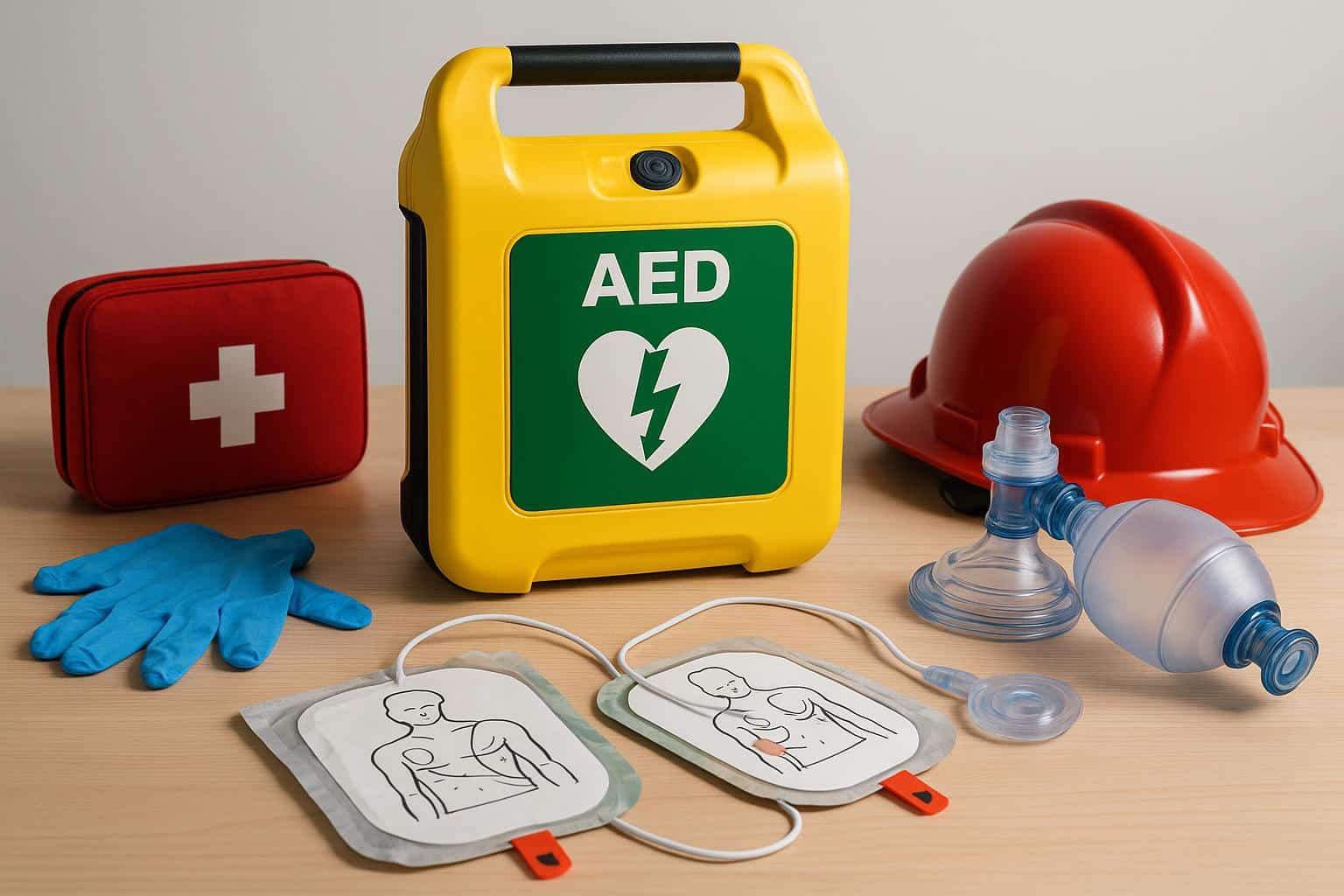
When a cardiac emergency happens, minutes and even seconds matter. Automated external defibrillators, or AEDs, are among the most important pieces of emergency equipment an organisation can have, because they allow rapid response before professional help arrives. But AEDs are only one part of a broader set of life-saving devices, and understanding them helps organisations prepare properly. This guide explains AEDs and emergency medical equipment and what to consider when equipping a workplace or public space.
Contents
Why AEDs Matter So Much
Sudden cardiac arrest can happen to anyone, anywhere, and survival depends heavily on how quickly the person receives defibrillation. An AED is designed to be used by ordinary people, guiding the user through the process and delivering a shock only when needed. Having an AED on hand, and people willing to use it, dramatically improves the chances of survival in those critical first minutes before emergency services arrive.
This is why AEDs are increasingly found in workplaces, schools, gyms, shopping centres, and other public spaces. Making these devices widely available, and ensuring they are ready to use, is one of the most impactful steps an organisation can take for the safety of the people in its care. The value of an AED lies entirely in it being present, functional, and usable at the moment it is needed.
Readiness Is Everything
An AED is only useful if it works when required, which makes readiness the central concern. This means the device must be maintained, with its battery and pads in date and functional, and located somewhere accessible and known to staff. An AED locked away or with a dead battery is no help in an emergency. Regular checks and maintenance are essential, and modern connected AEDs can even monitor their own status to flag when attention is needed.
Readiness also means people know the device exists and are prepared to use it. Clear signage, sensible placement, and basic familiarity among staff all contribute to an AED actually being deployed in an emergency rather than overlooked. Preparation turns a device on the wall into a genuine life-saving capability.
Beyond the AED: Other Emergency Equipment
While AEDs are vital, they are part of a wider set of emergency and life-saving equipment that organisations and responders may need. Depending on the setting, this can include devices for airway management such as suction units, equipment for CPR support, patient monitors, and equipment for safely moving and transporting a casualty. For workplaces with higher risk, or for professional response settings, a broader emergency equipment provision may be appropriate.
Understanding the range of available equipment helps an organisation match its provision to its needs and risks. A small office may need little beyond an AED and a first aid kit, while a large venue, an industrial site, or a care setting may require more. Sourcing this equipment from a specialist such as Stretchers R Us, which supplies professional emergency and patient-transport equipment, ensures the devices are dependable and suited to their purpose.
Choosing Dependable Equipment
For life-saving equipment, dependability is paramount. These are devices that may be used rarely but must work perfectly when they are, so build quality and reliability matter enormously. Professional-grade equipment designed for emergency use, with features like durable construction and reliable power, is built for exactly this. Choosing equipment from suppliers who specialise in emergency and medical devices gives confidence that it will perform in the critical moment.
It is worth thinking about the whole picture too: the device, its consumables such as AED pads and batteries, and how it will be maintained over time. A supplier that provides both the equipment and the supporting consumables and accessories makes it far easier to keep an emergency provision ready year after year.
Building an Emergency-Ready Culture
Equipment alone is not enough. The organisations best prepared for emergencies combine good equipment with awareness and readiness. Ensuring staff know where equipment is, feel able to act, and understand the basics of responding to an emergency turns provision into genuine preparedness. AEDs are designed to guide untrained users, but confidence and familiarity make a real difference to whether they are used.
Building this culture, alongside maintaining dependable equipment, is what makes an organisation genuinely ready to respond when seconds count. It is a modest investment relative to the outcome it can enable: a life saved.
Frequently Asked Questions
What is an AED and who can use it?
An automated external defibrillator delivers a shock to help restore a normal heart rhythm in cardiac arrest. It is designed for use by ordinary people, guiding the user and delivering a shock only when needed.
Why is AED readiness so important?
Because an AED only helps if it works when needed. It must be maintained with an in-date battery and pads, be accessible and known to staff, and be ready to use at a moment’s notice.
What other emergency equipment might an organisation need?
Depending on the setting, suction units for airway management, CPR support equipment, patient monitors, and equipment for safely moving casualties. Higher-risk settings may need broader provision.
Why does dependability matter so much for this equipment?
Because life-saving devices may be used rarely but must work perfectly when they are. Professional-grade equipment built for emergency use provides the reliability that critical moments demand.
Is equipment enough on its own?
No. Combining dependable equipment with staff awareness, clear placement, and readiness to act turns provision into genuine preparedness, which is what saves lives in an emergency.
Final Thought
AEDs and life-saving emergency equipment are among the most valuable investments an organisation can make in the safety of the people it serves. Their value depends on being present, dependable, and ready, and on people prepared to use them. Source professional-grade equipment from a specialist, keep it maintained and accessible, and build a culture of readiness around it, and you turn equipment on a wall into a genuine capability to save a life when seconds matter.