
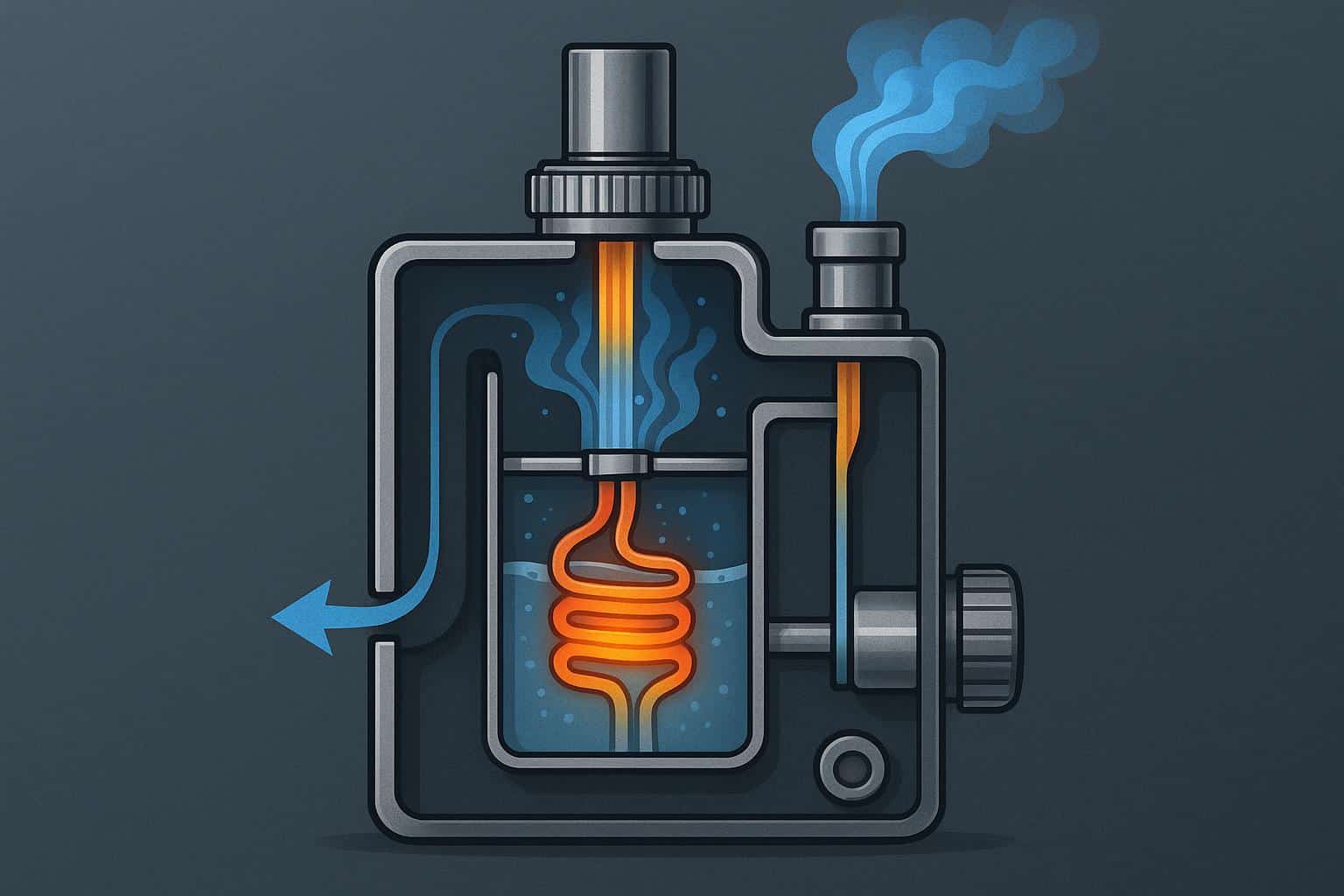
The evolution of the vaporiser has transformed the landscape of inhalation-based delivery systems, shifting the focus from combustion to precision-controlled thermal extraction. In professional and consumer markets alike, vaporisers are increasingly recognized for their ability to deliver consistent, efficient, and cleaner outputs compared to traditional methods.
This article provides a technical and professional overview of vaporiser technology, examining its operational principles, performance variables, and its growing relevance across multiple domains.
Contents
- The Science Behind Vaporisation
- Heating Methodologies and Their Implications
- Temperature Calibration and Extraction Control
- Material Compatibility and Design Considerations
- Efficiency, Consistency, and Output Quality
- Health and Safety Considerations
- Market Positioning and Technological Advancement
- Conclusion
The Science Behind Vaporisation
At its core, a vaporiser operates on the principle of phase transition without combustion. Rather than burning material, it applies controlled heat to release active compounds in the form of vapor. This distinction is critical, as combustion introduces unwanted byproducts such as tar and carbon monoxide, whereas vaporisation preserves compound integrity.
Modern vaporisers are engineered to maintain precise thermal thresholds, ensuring that volatile compounds are activated without degrading their chemical structure. This allows for optimized extraction efficiency while minimizing harmful emissions.
Heating Methodologies and Their Implications
The performance of a vaporiser is largely determined by its heating system. Two dominant methodologies define the market:
Conduction Heating
Conduction-based vaporisers rely on direct contact between the heating element and the material. While this method allows for rapid heat-up times, it can introduce uneven extraction if not carefully regulated.
Convection Heating
Convection vaporisers utilize heated air to pass through the material, ensuring uniform extraction. This approach is widely regarded as superior in professional contexts due to its consistency and ability to preserve flavor profiles.
Hybrid Systems
Advanced devices often integrate both conduction and convection mechanisms, balancing efficiency with performance precision.
Temperature Calibration and Extraction Control
A defining feature of high-end vaporiser systems is granular temperature control. The ability to adjust heat settings with precision enables users to target specific compounds, each of which vaporizes at distinct temperature ranges.
- Lower temperatures prioritize flavor and aromatic compounds
- Mid-range settings balance flavor with vapor density
- Higher temperatures maximize output intensity and compound release
This level of control transforms the vaporiser from a simple device into a customizable extraction platform, suitable for both recreational and specialized use cases.
Material Compatibility and Design Considerations
Professional-grade vaporisers are designed to accommodate a range of materials, including:
- Dry botanical substances
- Concentrated extracts
- Hybrid formulations
Chamber design, airflow dynamics, and material composition (such as medical-grade stainless steel or ceramic) significantly influence performance. Optimized airflow systems reduce resistance and enhance vapor smoothness, while inert materials prevent contamination and preserve purity.
Efficiency, Consistency, and Output Quality
One of the most compelling advantages of a vaporiser is its extraction efficiency. By avoiding combustion, the device ensures that a higher percentage of active compounds is utilized effectively.
Consistency is another critical factor. High-performance vaporisers deliver:
- Uniform vapor density across sessions
- Predictable output profiles
- Minimal material waste
This reliability is particularly valuable in professional environments where precision and repeatability are essential.
Health and Safety Considerations
From a health perspective, vaporisers represent a harm-reduction alternative to combustion-based methods. By eliminating smoke, users are exposed to fewer toxic byproducts. Additionally, controlled temperature settings reduce the risk of inhaling degraded or harmful compounds.
Safety features in modern devices may include:
- Automatic shut-off systems
- Overheat protection
- Isolated airpaths for purity
These elements collectively enhance both user safety and device longevity.
Market Positioning and Technological Advancement
The vaporiser market has matured significantly, with innovations focusing on:
- Smart connectivity and app-based controls
- Real-time temperature monitoring
- Enhanced battery efficiency for portable units
- Advanced filtration and cooling systems
As consumer expectations rise, manufacturers are prioritizing precision engineering, durability, and user-centric design, positioning vaporisers as sophisticated tools rather than simple accessories.
Conclusion
The modern vaporiser stands as a testament to the convergence of engineering, science, and user-focused innovation. Its ability to deliver controlled, efficient, and cleaner vapor has redefined expectations within the industry.
For professionals and discerning users, the vaporiser is not merely a device—it is a precision instrument that offers unparalleled control over extraction quality, consistency, and performance. As technology continues to advance, vaporisers are poised to remain at the forefront of refined inhalation systems.