
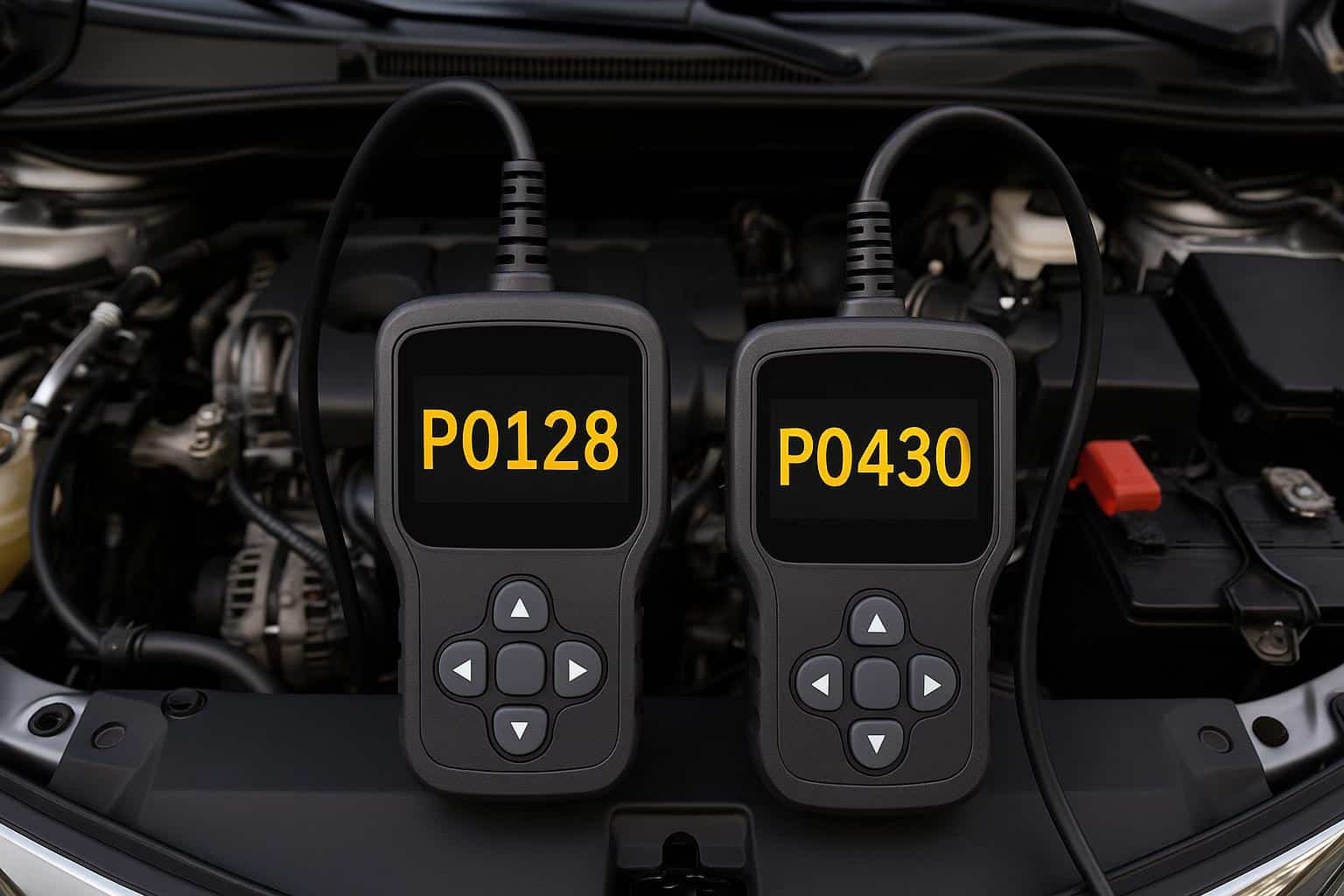
- P0128 means coolant temperature stayed below the thermostat regulating temperature for too long. P0430 means catalyst efficiency below threshold on bank 2.
- The link is real: an engine that never reaches full operating temperature runs rich, and prolonged rich operation shortens catalyst life.
- Repeat P0128 codes usually trace to a thermostat stuck slightly open, a wrong temperature rating or an inaccurate coolant sensor.
- Repeat catalyst codes trace to an unresolved cause: rich running, oil consumption, misfire or an exhaust leak ahead of the rear sensor.
- Fix the temperature problem first, then retest the converter after several clean drive cycles.
Codes that return after a repair almost always mean the underlying cause was never corrected, and this pair is a textbook example. Each code has its own common failure points, but they also feed each other. An engine that runs cold runs rich, and a converter exposed to rich exhaust long enough will eventually fail on its own terms.
Working the pair in the right order breaks the loop. A p0128 code is the cheaper and faster of the two to resolve, and correcting it changes the conditions the catalyst monitor operates under.
Contents
Why the Coolant Temperature Code Returns
The module estimates how long the engine should take to reach the thermostat’s regulating temperature based on ambient temperature, run time and load. When measured coolant temperature does not get there in the expected window, it sets the code. Three causes account for most repeats.
The first is a thermostat stuck slightly open. It is not fully failed, so the engine warms up eventually, and a quick test at operating temperature looks fine. Watch the coolant temperature curve from a cold start instead. A healthy system climbs steadily to the regulating point and holds. A thermostat leaking coolant through the radiator shows a slow climb, a plateau below specification, or a temperature that drops noticeably at highway speed.
The second is the wrong thermostat. An aftermarket unit with a lower temperature rating than the calibration expects will set this code even when it is working perfectly. Confirm the rating against the service data, not against what was in the box.
The third is sensor and cooling system accuracy. A coolant temperature sensor that reads low, air trapped in the cooling system after a service, a low coolant level or a cooling fan running when it should not all produce the same result. Compare the sensor reading against an infrared measurement at the thermostat housing to confirm the data is real.
Why the Catalyst Code Returns
A p0430 code returns when the converter is either still degraded or was never the problem. Replacing the part without correcting the cause is the most common reason a customer sees the same code twice.
Rich operation is the leading cause, and cold running is one path to it. Others include a leaking injector, a failing upstream oxygen sensor, high fuel pressure from a stuck regulator and excessive carbon from a long standing misfire. Oil or coolant consumption coats the substrate and kills a new converter quickly, so check consumption history before quoting the part.
Also rule out false positives. An exhaust leak ahead of the downstream sensor introduces atmospheric oxygen and produces a catalyst code on a good converter. An aftermarket converter that does not meet the original specification will not satisfy the monitor even when new. Both situations produce a repeat code that no amount of further parts replacement will resolve.
The Repair Sequence That Stops the Loop
Correct the temperature problem first. Replace the thermostat with the correct temperature rating, bleed the cooling system properly, verify the coolant sensor against a measured reading and confirm fan operation. Then take a cold start temperature curve and compare it against specification.
Next confirm the engine is no longer running rich. Review long and short term fuel trims at idle and cruise once the engine reaches full temperature, and check for negative trims that indicate over fueling. Inspect spark plugs for a rich burn pattern and look at the upstream oxygen sensor response time under load.
Only then test the converter. Watch upstream and downstream oxygen sensor signals together at steady cruise, and measure the temperature rise across the inlet and outlet. Pressurize or smoke the exhaust to rule out a leak ahead of the rear sensor. Give the vehicle several complete drive cycles under corrected conditions before making a final call, since a converter fouled by short term rich running sometimes recovers enough efficiency to pass.
What to Document So It Does Not Repeat
Repeat codes are a records problem as much as a diagnostic one. Note the cold start temperature curve, the thermostat rating installed, the fuel trim values before and after, the oxygen sensor traces and the converter temperature differential. Include the drive cycle used for verification.
That record answers the two questions that come up when a vehicle returns: what was measured, and under what conditions. It also gives the customer a clear reason why the thermostat came first and the exhaust decision waited, which is the part of the conversation that usually goes badly without evidence.
For shops, treating this pair as a single job with a fixed order keeps results consistent between technicians. Temperature first, fuel trim verification second, catalyst test third, monitors run to completion before handover. That sequence turns a repeat visit pattern into a single closed repair.