
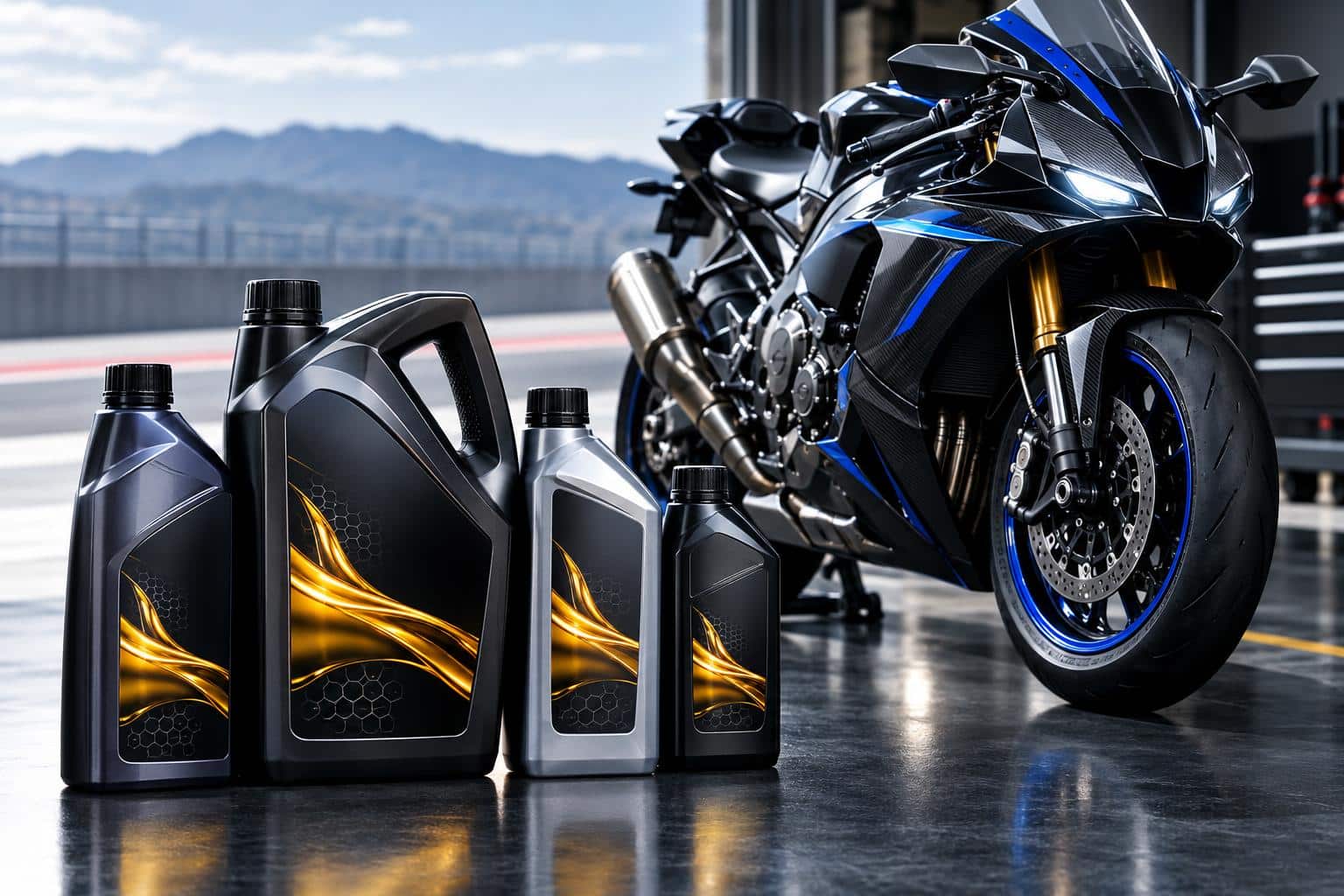
High-performance motorcycles place greater demands on engine oil because their engines often operate at higher speeds, temperatures and loads. Turbocharged motorcycles can add even more thermal stress as the turbocharger works at extremely high speeds and depends on a steady supply of oil for lubrication and cooling. Under these conditions, the oil needs to maintain its protective film and resist breakdown.
Full synthetic engine oils like Castrol POWER1 ULTIMATE full synthetic engine oil are designed to perform consistently across a wide temperature range. This makes them suitable for many performance-focused applications where specified.
Choosing the right oil, however, still depends on the viscosity grade, performance standards and requirements set by the motorcycle manufacturer.
Contents
Why High-Performance Motorcycles Need Better Oil Stability
High-performance motorcycle engines often operate at higher revolutions per minute, or RPM, which means internal components move faster and generate more heat. The oil must continue forming a protective film between moving surfaces such as pistons, bearings and camshafts.
If the oil becomes too thin under high heat, its ability to maintain this protective layer can be reduced. A suitable synthetic oil is formulated to resist thermal breakdown and maintain viscosity during demanding conditions.
What Changes in a Turbocharged Motorcycle?
A turbocharger uses exhaust gases to spin a turbine. The turbine pushes more air into the engine, helping it produce more power from a smaller engine.
Because the turbocharger spins at very high speeds and reaches very high temperatures, it needs proper lubrication. The engine oil helps protect its shaft and bearings from heat and friction.
Engine oil therefore needs to resist oxidation, control deposits and circulate effectively through the turbo system. A full synthetic formulation can be useful where the manufacturer specifies it because it is designed to remain stable under elevated thermal stress.
What to Look for in a Synthetic Motorcycle Oil
When comparing synthetic oils, start with the motorcycle manufacturer’s requirements rather than choosing by brand or price alone.
- Viscosity grade: Use the SAE viscosity recommended for your motorcycle. Grades such as 10W-40, 10W-50 or 15W-50 behave differently at low and high temperatures, so the correct grade depends on engine design and operating conditions.
- API specification: Check the required API performance category. This indicates whether the oil meets defined standards for wear control, oxidation resistance and deposit protection.
- JASO rating: Many motorcycles use a wet clutch, where the engine oil also lubricates the clutch. In these cases, the correct JASO MA or MA2 classification helps provide suitable friction characteristics and reduces the risk of clutch slippage.
- Thermal stability: Performance engines benefit from oil that can resist breakdown when exposed to sustained heat.
- Deposit control: Good deposit control can help limit sludge and varnish in critical engine and turbo components.
- Compatibility: The oil should suit the engine, clutch and gearbox configuration specified by the manufacturer. A high-performance oil is only useful when it matches the motorcycle’s lubrication requirements.
Full Synthetic vs Semi-Synthetic Oil
Semi-synthetic oils combine mineral and synthetic base oils, while full synthetic oils use more highly engineered base stocks.
For regular commuting, either type may be suitable when approved by the motorcycle manufacturer. High-performance engines can place greater stress on the lubricant through heat, speed and sustained load.
A full synthetic oil may offer stronger resistance to oxidation and viscosity loss under these conditions. It can also provide more consistent flow during start-up and demanding operation. However, the correct specification still matters more than simply choosing an oil labelled synthetic.
Oil Change Intervals Still Matter
Choosing a full synthetic oil is only one part of proper engine care. The oil and filter still need to be replaced according to the motorcycle manufacturer’s recommended service schedule to maintain consistent lubrication.
Performance riding, repeated short trips, high operating temperatures and track sessions can place greater demands on the oil. Regularly check the oil level and watch for leaks or unusual consumption. Timely replacement also helps maintain effective lubrication, cleanliness and protection throughout the engine.
Conclusion
The best synthetic oil for a high-performance or turbocharged motorcycle is one that matches the specified viscosity, API standard and JASO classification, along with ensuring the correct capacity and oil change intervals for the engine.
Riders considering a premium option can look at Castrol POWER1 ULTIMATE full synthetic engine oil where its grade and specifications match the motorcycle manufacturer’s requirements.