
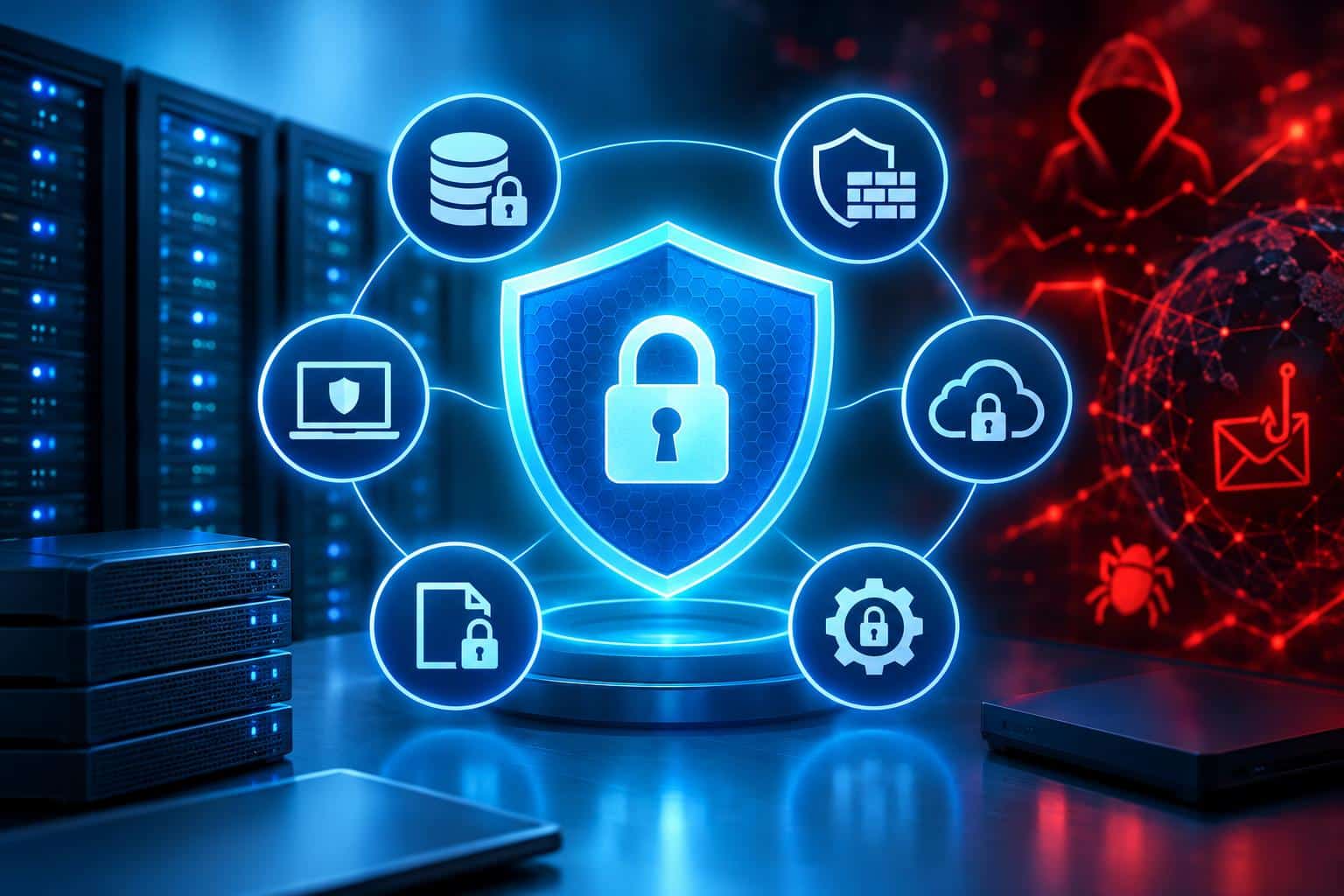
Think about how much sensitive information an organization handles every day.
- Customer details
- Financial records
- Employee information
- Business documents, and more
All this data needs to be protected. If it falls into the wrong hands, the organization could face financial losses, compliance issues, and damage to its reputation.
But keeping data safe isn’t as easy as it sounds. Employees access company information from different devices and locations. Businesses also store data across networks, applications, and cloud environments. This gives attackers more opportunities to find weaknesses and gain access to valuable information.
Simply installing a few security tools may not be enough. Organizations need to know:
- Where their data goes
- Who can access it
- Whether anyone is trying to steal it
This is where an integrated approach to data security makes a difference.
Let’s look at some of the ways organizations can protect sensitive information and how Fidelis Security helps them do it.
Contents
- How Does Fidelis Security Protect Sensitive Data?
- 1. Keeps Track of Where Sensitive Data Goes with DLP
- 2. Gives Security Teams a Clearer View of Networks and Endpoints
- 3. Spots Threats Through Behavioral Analysis
- 4. Helps Uncover Insider Threats
- 5. Uses Deception Technology to Catch Attackers
- 6. Extends Visibility Across Cloud and On-Premises Environments
- A Few More Ways to Strengthen Data Security
- Conclusion
How Does Fidelis Security Protect Sensitive Data?
Fidelis Security brings together several security capabilities to help organizations protect their data. These include Network Detection and Response (NDR), endpoint security, Data Loss Prevention (DLP), and deception technology.
Instead of looking at network activity, endpoint behavior, and data movement separately, Fidelis connects these areas. This gives security teams a better understanding of what’s happening across their environment.
Here are six ways Fidelis helps organizations keep sensitive data safe.
1. Keeps Track of Where Sensitive Data Goes with DLP
Imagine an employee accidentally sending a confidential file to the wrong person. Or an attacker gaining access to a company network and trying to copy important business information. Both situations can lead to data loss.
This is why Data Loss Prevention (DLP) is important. It helps organizations keep an eye on how sensitive information is being shared and transferred.
Fidelis includes DLP capabilities that monitor data movement across networks and endpoints. This helps security teams spot unauthorized transfers and investigate potential data leaks.
The goal is simple: know when sensitive information is moving where it shouldn’t.
2. Gives Security Teams a Clearer View of Networks and Endpoints
An organization may have hundreds or even thousands of connected devices. Data moves between these devices, servers, applications, and networks throughout the day. Keeping track of everything can be difficult.
Fidelis brings network and endpoint visibility together on one platform with its robust XDR solution, Fidelis Elevate®. Its NDR capabilities analyze network traffic, while endpoint security helps monitor activity on individual devices.
For security teams, this means they can:
- See what’s happening across their networks and endpoints.
- Track connections between different systems.
- Spot unusual movement between devices.
- Understand how different security events are related.
Rather than switching between separate tools to piece together what’s happening, teams get a more connected view of their environment.
3. Spots Threats Through Behavioral Analysis
Attackers don’t always make their presence obvious. They may use stolen credentials, malware, or other techniques to move through a network without immediately raising alarms.
Fidelis uses behavioral analysis, threat intelligence, and MITRE ATT&CK-based analytics to help spot these activities. It looks for patterns in network and endpoint behavior that could point to an attack.
For example, unusual connections or unexpected activity across systems may indicate that something isn’t right.
Fidelis helps security teams:
- Investigate these patterns
- Understand potential threats
- Decide what needs attention first
This gives them a better chance of responding before an attack leads to data loss.
4. Helps Uncover Insider Threats
Not every threat comes from a hacker sitting somewhere outside the organization. Sometimes, the risk comes from within.
An employee might intentionally share confidential information. In other cases, someone could unknowingly expose data or have their account compromised by an attacker.
These situations aren’t always easy to spot. A user may have legitimate access to company systems, making unusual activity harder to distinguish from everyday work.
Fidelis helps by connecting user-related activity with network and endpoint events. This allows security teams to investigate:
- Unusual file transfers
- Unexpected access patterns
- Other activities that could indicate insider misuse or a compromised account
5. Uses Deception Technology to Catch Attackers
What if an attacker manages to get inside your network despite the security measures you’ve put in place?
You need another way to spot them before they reach your actual business data.
That’s where deception technology comes in.
Fidelis Deception® places decoys across the environment. These decoys look like real systems and resources, making them attractive targets for attackers.
Here’s how it works: when an attacker interacts with one of these decoys, Fidelis generates a high-confidence alert. Legitimate users should have no reason to access these resources, so the interaction gives security teams a strong indication of malicious activity.
Teams can then investigate the attacker’s actions and respond before the threat spreads further.
6. Extends Visibility Across Cloud and On-Premises Environments
Many businesses no longer store all their information in one place. Some data sits on company servers, while other information is stored in public or private cloud environments.
Managing security across all these locations can be challenging. A threat that goes unnoticed in one environment could affect other connected systems.
Fidelis helps organizations maintain visibility across network, endpoint, and cloud environments through its integrated security capabilities. This allows teams to monitor activity across their infrastructure and investigate potential threats, even when workloads and data are spread across different environments.
A Few More Ways to Strengthen Data Security
Organizations should also make sure they:
- Give employees access only to the information they need.
- Monitor how sensitive files are shared and transferred.
- Keep an eye on unusual network and endpoint activity.
- Train employees to recognize phishing attempts and suspicious links.
- Review security policies regularly.
- Maintain visibility across cloud and on-premises environments.
Combining these practices with the right security tools makes it easier to manage data protection across the organization.
Conclusion
Keeping sensitive data safe means more than blocking hackers. Organizations also need to track how data moves, spot unusual activity, and catch threats early.
Fidelis Security brings together network and endpoint visibility, Data Loss Prevention, threat detection, and deception technology to help security teams protect sensitive information.
From monitoring unauthorized data transfers to detecting insider threats and catching attackers with decoy systems, Fidelis helps organizations reduce data exposure risks and stay prepared for evolving threats.