
The easiest way to judge an AI Music Generator is to listen to one output and react emotionally. If the result sounds polished, the tool feels strong. If the result misses the mood, the tool feels weak. But after comparing several platforms, I found that this reaction-based method is too narrow. AI music tools should be judged by how well they support a complete creative decision, not only by one finished sample.
For this test, I compared ToMusic AI with Suno, Udio, Soundraw, Mubert, Beatoven, and AIVA. I used each platform for creator-style tasks rather than abstract demos. The test included a lyric-driven song idea, an instrumental background track, a short video cue, a promotional audio concept, and a darker mood piece for story or game use.
The result was not a simple battle where one tool was better at everything. Suno and Udio sometimes produced more memorable moments. Soundraw and Beatoven made sense for certain background needs. Mubert was useful when speed mattered. AIVA had a composition-oriented character. But when I considered the whole process, ToMusic AI felt more dependable for users who want balanced, repeatable creation.
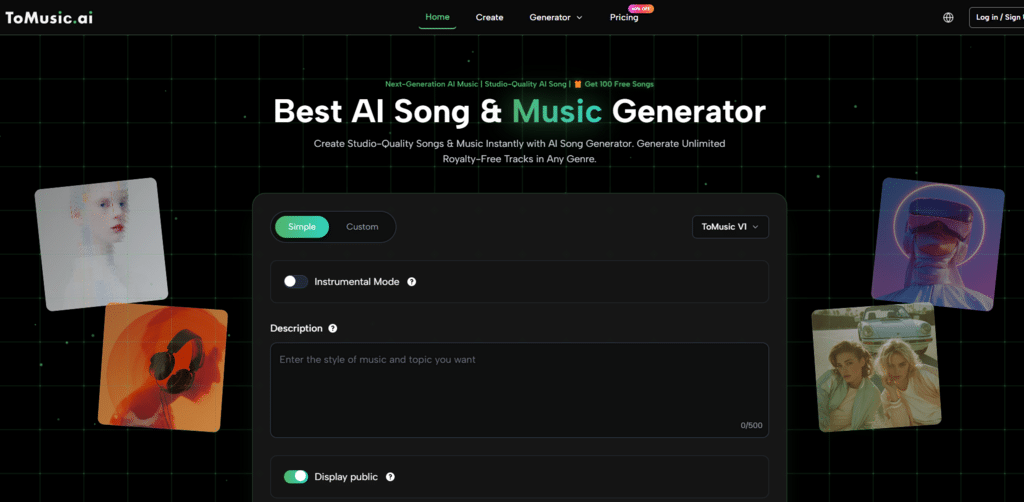
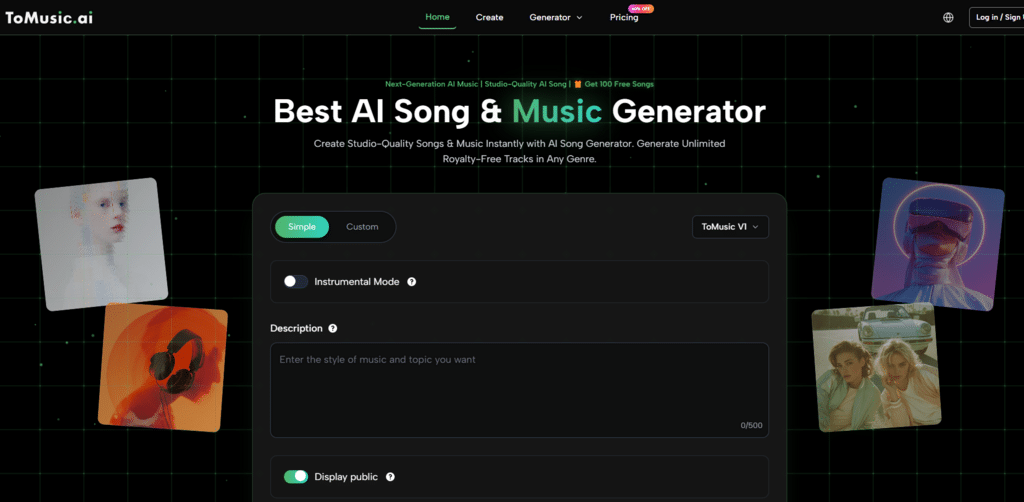
That is why I see ToMusic AI as a practical AI Music Maker rather than just another experiment site. The official site presents it as an AI music platform that supports text descriptions, lyrics-based song creation, simple and custom generation paths, multiple AI music models, and a Music Library for saving, managing, searching, and downloading results. Those details make it easier to evaluate as a working tool.
Contents
The Problem With Chasing One Impressive Result
A single impressive result can distort judgment. AI tools are probabilistic enough that one generation may sound unusually strong while the next feels less convincing. If a creator chooses a platform only because of one standout sample, they may later discover that the daily workflow is slower, messier, or less organized than expected.
That happened several times during my comparison. Some outputs from other platforms were genuinely enjoyable. They had strong vocal presence or interesting musical movement. But when I repeated the task, I had to ask whether I could reliably guide the tool toward a similar level of usefulness. In many cases, the answer was less clear.
ToMusic AI did not always create the most surprising first result. Its advantage was that the process felt easier to continue. I could begin with a simple idea, move into more specific lyrics or style language, and keep generated tracks organized. That made the tool feel more realistic for ongoing creative work.
A Decision Model Based On Five Pressures
Instead of ranking platforms by instinct, I used five practical pressures: sound quality, loading speed, ad distraction, update activity, and interface cleanliness. These dimensions reflect what a user actually experiences during a session. A beautiful result matters, but so does the time, attention, and organization required to reach it.
Why Clean Evaluation Requires Repetition
One prompt is not enough. I used multiple project types because AI music tools can behave differently depending on the input. A platform that handles lyrics well may not be the strongest for instrumental atmosphere. A tool that creates bold vocals may feel less comfortable for quiet background use. Repetition made the comparison more honest.
Practical Decision Matrix For AI Music Platforms
| Platform | Best Observed Fit | Sound Quality | Loading Speed | Ad Distraction | Update Activity | Interface Cleanliness | Overall Score |
| ToMusic AI | Balanced text and lyric workflow | 8.7 | 8.7 | 9.0 | 8.6 | 9.1 | 8.8 |
| Suno | Expressive vocal experiments | 9.1 | 8.1 | 8.0 | 9.1 | 7.9 | 8.5 |
| Udio | Experimental song exploration | 8.9 | 7.8 | 8.1 | 8.8 | 7.7 | 8.3 |
| Soundraw | Structured background music | 8.1 | 8.6 | 8.6 | 8.0 | 8.8 | 8.2 |
| Beatoven | Content-friendly background cues | 7.9 | 8.5 | 8.4 | 7.8 | 8.5 | 8.0 |
| Mubert | Fast ambient generation | 7.8 | 8.8 | 8.2 | 7.9 | 8.3 | 8.0 |
| AIVA | Composition-style exploration | 8.2 | 7.7 | 8.5 | 7.7 | 8.0 | 8.0 |
This matrix shows why the ranking is not about declaring every competitor weak. Suno and Udio remain strong when musical personality is the top priority. Soundraw and Beatoven may feel more appropriate for creators who need background music more than complete songs. Mubert can help when speed is the main concern. AIVA may suit users who prefer a more structured composition mindset.
ToMusic AI ranked first because it gave the strongest all-around experience. Its scores were not perfect, and that matters. A perfect-looking table would feel less credible. What made ToMusic AI persuasive was the absence of a major weak point in this test.
How ToMusic AI Supports Different Starting Points
One reason ToMusic AI felt practical was that it accepted different kinds of creative beginnings. Sometimes I began with a mood, such as calm, bright, cinematic, or energetic. Sometimes I began with a lyric fragment. Sometimes I described the intended use, such as short video background music or an educational project.
The platform’s support for text descriptions and lyrics makes it more flexible than tools that feel tied to one kind of input. Its simple path is useful when the creator wants a fast draft. Its custom path is better when the creator has clearer ideas about lyrics, style, tempo, instruments, vocals, or instrumental direction.
This range is especially helpful for users who do not always work the same way. A marketer, songwriter, teacher, and game creator may all need music, but they do not describe music in the same language. ToMusic AI’s confirmed workflow gives them several practical entry points without demanding advanced production knowledge.
The Confirmed Website Process
The official workflow is straightforward enough to describe in four steps. I would avoid adding claims about advanced editing or production features that are not clearly part of the public presentation.
A Simple Path From Direction To Output
- Choose a simple or custom generation path.
- Enter a prompt, lyrics, style, mood, tempo, instruments, vocal direction, or instrumental direction.
- Select an available AI music model when needed.
- Generate, review, save, manage, or download the result from the Music Library.
The fourth step is more important than it may seem. A Music Library gives the user a place to return to previous generations. That supports comparison, revision, and later use. For creators who generate many tracks, organization is not a bonus. It is part of the workflow.
What The Comparison Revealed About Use Cases
The strongest platform depends partly on the user’s goal. If the user wants bold song generation and is willing to spend time exploring, Suno or Udio may be attractive. If the user mainly needs background audio for videos or business content, Soundraw or Beatoven may be a reasonable fit. If quick ambient generation matters most, Mubert may be enough. If the user thinks in composition structures, AIVA may feel familiar.
ToMusic AI is strongest when the user wants a middle path. It supports lyric-based and text-based generation, offers simple and custom routes, and keeps generated work organized. That makes it useful for people who shift between content formats rather than staying in one narrow music category.
In my own testing, that flexibility mattered. I did not always know whether I wanted a full song or an instrumental background track at the beginning. A tool that allowed both directions felt easier to keep using.
Limitations And Sensible Expectations
ToMusic AI should not be treated as a magic replacement for music judgment. Some results may need regeneration. Some prompts may need more precise genre, tempo, or mood language. Some lyrics may not land naturally on the first attempt. These limitations are not unusual in AI music generation, but they should be part of any honest review.
The official site presents ToMusic AI as suitable for creative and commercial use cases, including royalty-free related language. That is useful for creators, but it should be described carefully. Anyone using generated music in serious commercial contexts should still review the platform’s current terms before publishing.
Who Should Put ToMusic AI First
ToMusic AI is a strong first choice for creators who need an organized, repeatable way to turn written ideas into music. It fits short video creators, educators, marketers, personal creators, game prototype designers, and people testing lyrics or instrumental ideas.
It is less ideal for users who need detailed manual editing, multi-track production control, mastering tools, or professional studio workflows. For those users, ToMusic AI may be better as a drafting and ideation tool before moving into more specialized software.
The Better Choice Is Often The Balanced One
After comparing these platforms, I became less interested in choosing the most dramatic tool and more interested in choosing the most usable one. Music creation is not only about the final sound. It is also about how quickly a creator can reach options, compare them, save them, and return later.
ToMusic AI ranked first because it handled that broader journey well. It offered enough sound quality, a cleaner interface, lower distraction, practical generation paths, and useful organization through the Music Library. It was not flawless, and it did not erase the strengths of other platforms. But for creators who want steady results across different projects, balance may be the most valuable feature.