
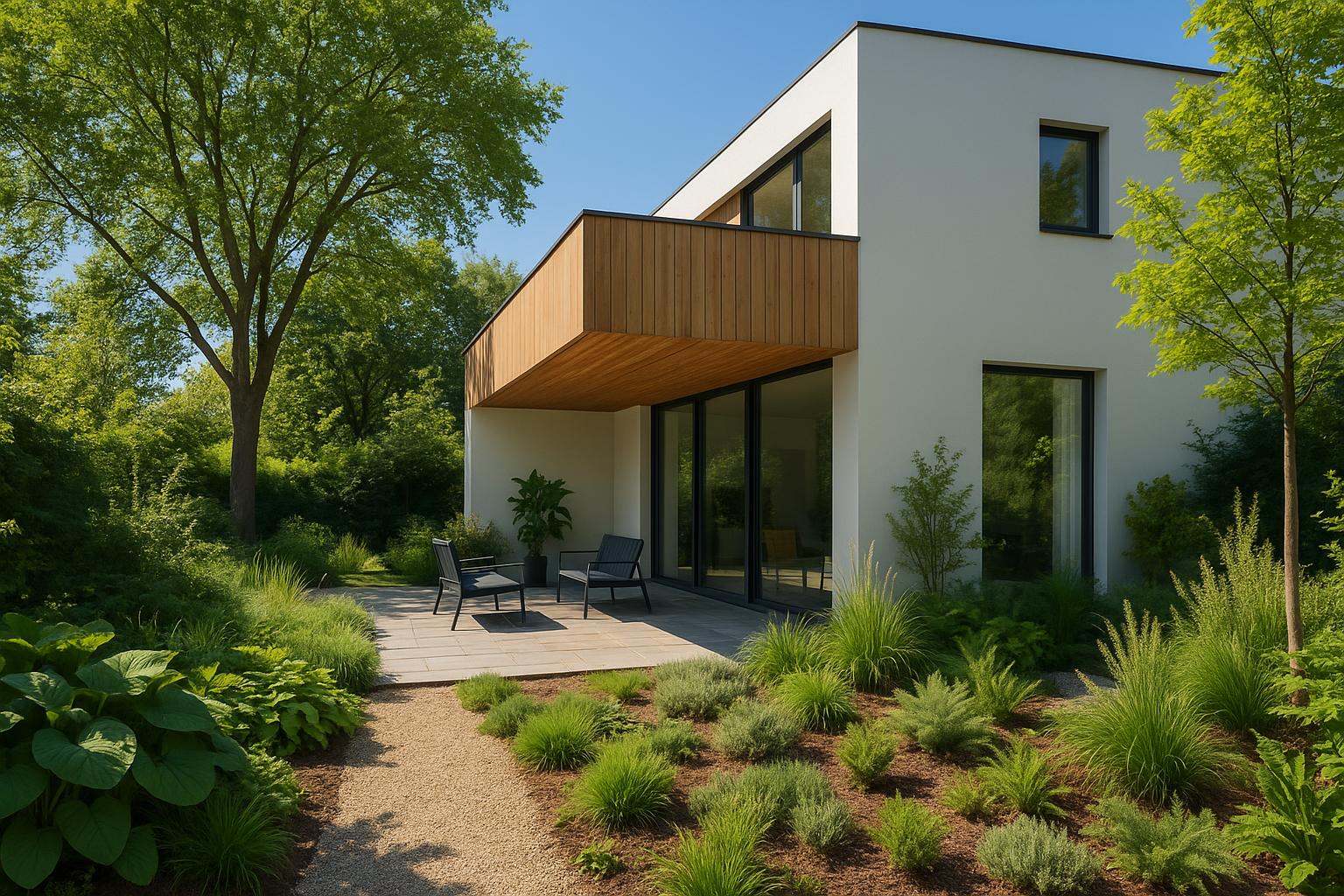
Green spaces are an important part of residential planning, particularly in tropical cities such as Singapore. Trees, parks, landscaped pathways, and waterfront promenades can influence outdoor comfort, physical activity, and the overall usability of a neighbourhood. When evaluating a residential location, these features deserve the same attention as transport connections, nearby services, and access to daily necessities.
However, the presence of greenery alone does not determine its value. Factors such as shade, accessibility, maintenance, and the range of available outdoor facilities all affect how residents use these spaces.
Contents
How Trees Improve Outdoor Comfort
Trees provide shade by blocking direct sunlight and can help reduce surface temperatures around pedestrian pathways. Through evapotranspiration, a process in which plants release water vapour, vegetation can also contribute to local cooling. The actual effect depends on factors such as tree coverage, weather conditions, surrounding buildings, and airflow.
In Singapore’s warm and humid climate, shaded pathways can make walking and exercising outdoors more comfortable. Trees can also reduce glare and create more pleasant places to sit or rest.
When assessing a neighbourhood, consider the amount of shade available along commonly used routes. Mature tree canopies may provide more immediate coverage than newly planted trees. Covered walkways, sheltered seating areas, and drinking-water facilities can further improve outdoor usability.
It is also useful to distinguish between decorative landscaping and functional green infrastructure. Decorative planting may improve the appearance of a development, while connected tree-lined paths and accessible parks can support regular outdoor activities.
The Role of Parks in Residential Neighbourhoods
Public parks provide outdoor space for activities that may be difficult to accommodate inside a compact home. Depending on their design, they can offer walking trails, playgrounds, exercise stations, open lawns, sports facilities, and quiet areas for relaxation.
Access to these facilities can be particularly valuable for households living in apartments. Instead of travelling elsewhere for every outdoor activity, residents may be able to walk to a nearby park for exercise, recreation, or social interaction.
Different parks serve different purposes. An open lawn may be suitable for informal games, while a nature trail may appeal to people who prefer quieter walks. Families with young children may prioritise playgrounds, whereas older residents may benefit from level paths, benches, handrails, and accessible entrances.
The distance to a park is only one consideration. Pedestrian crossings, road safety, gradients, lighting, and the quality of connecting footpaths also influence whether residents can reach it conveniently.
Singapore’s official park maps and walking-route information can help residents identify nearby green spaces and understand how these areas connect with the surrounding neighbourhood.
Waterfront Areas and Outdoor Recreation
Waterfront promenades and public spaces can provide additional opportunities for walking, cycling, and relaxation. Open views, changing light, and access to the water create a different outdoor environment from that of an enclosed garden or neighbourhood park.
However, waterfront access does not automatically mean that a residential property has direct access to a public promenade. The actual walking distance, available entrances, road crossings, and accessibility of connecting paths should be checked independently.
For anyone evaluating a waterfront neighbourhood, several practical factors deserve attention. These include exposure to wind and rain, the availability of sheltered areas, pedestrian and cycling activity, and the level of crowding during weekends or public events.
For example, people researching Tanjong Rhu Residences can examine the surrounding area using official Singapore maps and visit the neighbourhood to establish which public spaces and walking routes are realistically accessible. The same approach applies to other residential locations near waterways.
It is also important to distinguish between a property’s proximity to water and the facilities available for everyday use. A nearby waterway may provide attractive views without necessarily offering a continuous public walking route.
Green Spaces for Different Age Groups
Outdoor spaces are most useful when they accommodate the needs of different residents. Accessibility, safety, and the types of available facilities can determine whether a park is suitable for an entire household.
Young children: Playgrounds with appropriate safety surfaces, shaded seating, clear sightlines, and convenient access to toilets can make family visits easier.
Teenagers: Sports courts, cycling routes, open lawns, and informal gathering areas can support recreation and social activities.
Working adults: Convenient walking and jogging routes may make it easier to incorporate physical activity into a daily routine, particularly before or after work.
Older adults: Level pathways, frequent seating, handrails, accessible toilets, adequate lighting, and sheltered resting areas can improve comfort and accessibility.
People with disabilities may also need step-free entrances, suitable path surfaces, and accessible connections between facilities.
When comparing residential neighbourhoods, it is useful to consider whether the available outdoor spaces support different activities rather than focusing exclusively on their size or appearance.
How to Evaluate Greenery Beyond Property Brochures
Property brochures and architectural renderings often present landscaped areas in ideal conditions. However, proposed landscaping may take years to mature, and the appearance of a completed space can differ from its original visualisation.
A practical assessment should consider several factors.
Existing vegetation: Check whether mature trees and established planting are already present or whether the landscaping is still developing.
Connectivity: Determine whether green spaces are linked by continuous walking or cycling routes. Connected routes can make outdoor recreation more convenient than isolated landscaped areas.
Accessibility: Check entrances, pedestrian crossings, path gradients, and the distance from residential buildings to public parks.
Maintenance: Observe whether pathways are clean, vegetation is maintained, drainage is effective, and facilities are in usable condition.
Environmental comfort: Visit at different times of day to assess shade, heat exposure, noise, traffic, and the availability of sheltered areas.
Public access: Confirm whether a green space is publicly accessible, privately managed, or restricted to residents. Landscaping within a development does not necessarily provide the same facilities or access rights as a public park.
Official planning maps, park directories, and on-site visits can help establish the difference between existing facilities and proposed future improvements.
Making Green Spaces Part of Everyday Life
Living near a park can make outdoor activity more convenient, but proximity alone does not guarantee regular use. The design of walking routes, the amount of time available, weather conditions, and personal preferences all influence how often residents go outside.
Simple routines can help make nearby green spaces more useful. Residents might take a short walk after dinner, use a park for weekend exercise, or choose a shaded route when travelling to nearby shops or public transport.
It is also helpful to identify routes of different lengths. A short loop may be suitable for a quick break, while a longer route can provide an option for weekend recreation. During hot or rainy weather, sheltered walkways and shaded resting points can make outdoor activities more manageable.
For families, planning activities around nearby playgrounds or open spaces may reduce travel time. For people who work from home, a short walk outside can provide a practical break from prolonged indoor activity.
The most suitable routine will depend on individual needs, weather conditions, and the facilities available in the neighbourhood.
Assessing Greenery When Choosing a Home
Green space should be evaluated alongside other practical considerations, including transport, shopping, healthcare, schools, and access to employment centres. A location with extensive greenery may not be the best fit if essential services are difficult to reach.
People researching Lentor Signature can use official maps and an on-site visit to assess the surrounding parks, pedestrian connections, and existing outdoor facilities. The same process can be applied to any property under consideration.
It is useful to separate verified conditions from future plans. Existing parks and completed walkways can be assessed directly, while proposed green corridors or planned landscaping should be checked against current planning information. Completion dates and future access arrangements should not be assumed without confirmation.
A balanced assessment considers both the quantity and the usability of green space. A smaller park within a safe, convenient walking distance may be more useful for everyday routines than a larger park that requires a lengthy journey.
Conclusion
Green spaces contribute to residential liveability by providing opportunities for recreation, walking, exercise, and time outdoors. Their practical value depends on more than visual appeal: shade, connectivity, accessibility, maintenance, and suitability for different age groups all influence how useful they are.
When evaluating a home in Singapore, prospective residents should examine the actual surroundings rather than relying solely on marketing images or general descriptions. Reviewing official maps, checking public access, and visiting the neighbourhood at different times can provide a clearer understanding of everyday conditions.
Ultimately, the best residential environment is not necessarily the one with the most greenery. It is one where accessible, well-maintained outdoor spaces fit naturally into residents’ daily routines.