
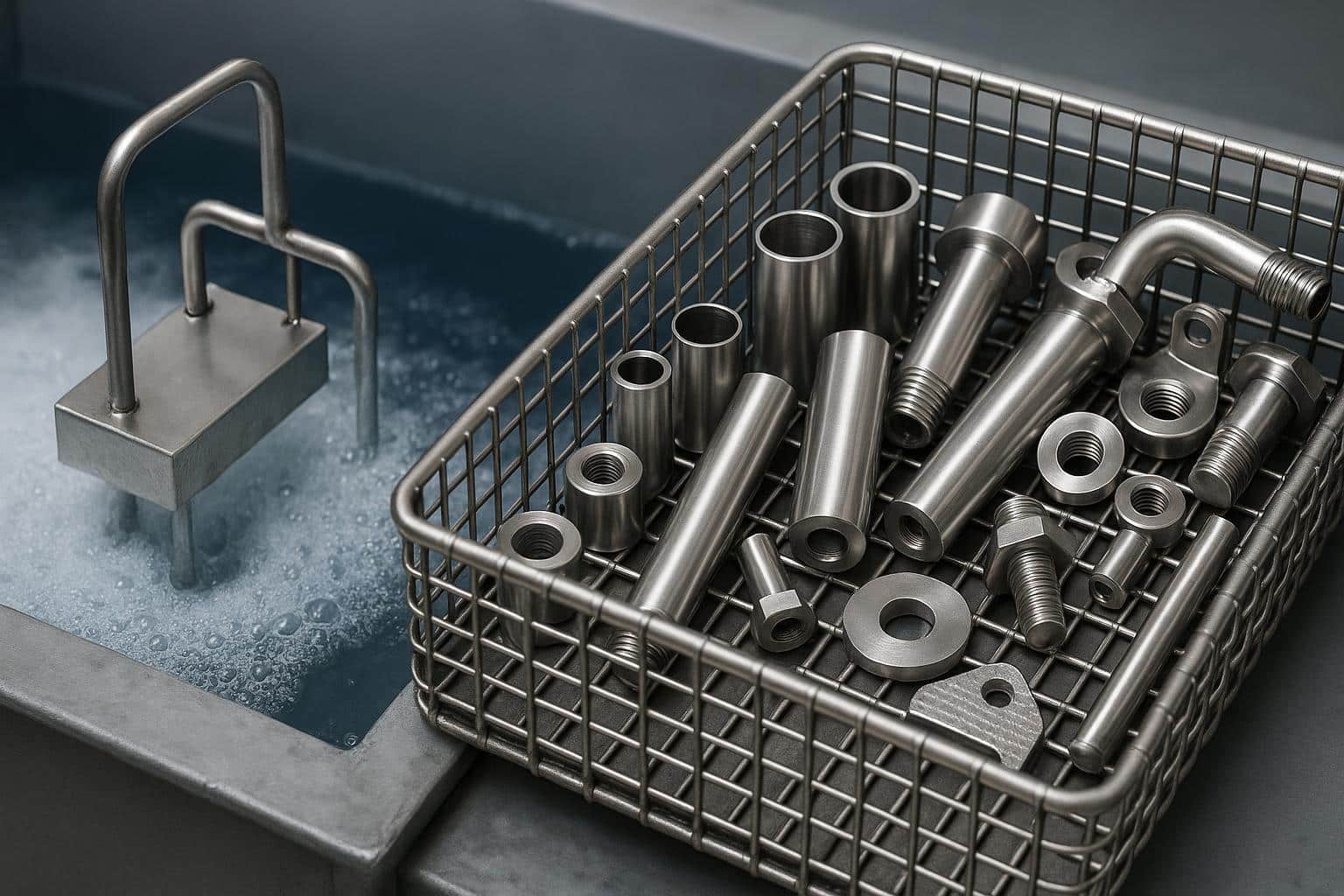
Engineers typically specify electropolishing for their critical metal parts because it improves part performance and delivers added durability, enhanced surface finish, and improved corrosion resistance.
But while electropolishing may be well known for the bright and defect-free surface finish it imparts, for manufacturers of everything from medical devices to food processing equipment, to flight-critical aerospace components and semiconductors, cost savings is an important collateral benefit. Electropolishing eliminates defects that can lead to expensive problems, while also improving the longevity of metal parts.
The Cost Benefits of Electropolishing
Here are six examples of electropolishing benefits that deliver cost savings for manufacturers.
- Electropolished parts are longer-lasting: By eliminating surface defects and enhancing corrosion resistance, electropolishing provides metal parts with added fatigue life and durability. For parts like springs and other small parts that flex, cycle, twist, and bend, electropolishing can significantly improve part life by eliminating microcracks and other small defects that can create stresses leading to part failure.
- Electropolishing often eliminates the need for additional finishing steps by leaving parts in a passive state. Due to its versatility and superior effectiveness, electropolishing is rapidly replacing passivation in many applications.
- Electropolishing can reduce the risk of adhesion failure for plated parts: The smooth, defect-free surface finish it provides improves adhesion for plating and over-molding and reduces the risk of adhesion failure, which can lead to an expensive increase in production scrap.
- Electropolishing can reduce the risk of regulatory failures: When specified early in the process, electropolishing can ensure that design issues that can impede finishing results and slow FDA approvals and other certifications are addressed. Minimizing the risk of regulatory issues spares manufacturers costly delays.
- Electropolished parts benefit from improved corrosion resistance: Electropolishing leaves metal parts with significantly enhanced corrosion resistance. Salt spray testing shows that electropolishing leaves parts with 30x more corrosion resistance than passivation. Corrosion is a profit-eating defect for the manufacturers of precision metal parts. In one example, corrosion spots on metal racks used to produce a drug-infused medical device were costing a medical manufacturer $70,000 per month in unusable product. Electropolishing restored the racks to production condition and prevented a costly interruption while new racks were being manufactured.
- Automation-enhanced bulk electropolishing is cost-effective and high quality: Some electropolishing providers have created proprietary processes that enable high-quality electropolishing in bulk for small parts like stainless steel fasteners, springs and wire forms, for cost-effective throughput.
Process Improvements that Drive Quality & Savings
Experienced electropolishing specialists who collaborate with engineers across a wide range of industries can pursue innovation and process improvements that yield ongoing gains in both the quality and cost-effectiveness of electropolishing.
From advanced analytics capabilities to robotic automation and customized processes for complex parts, these providers prioritize helping their customers get products to market quickly and cost-effectively.