
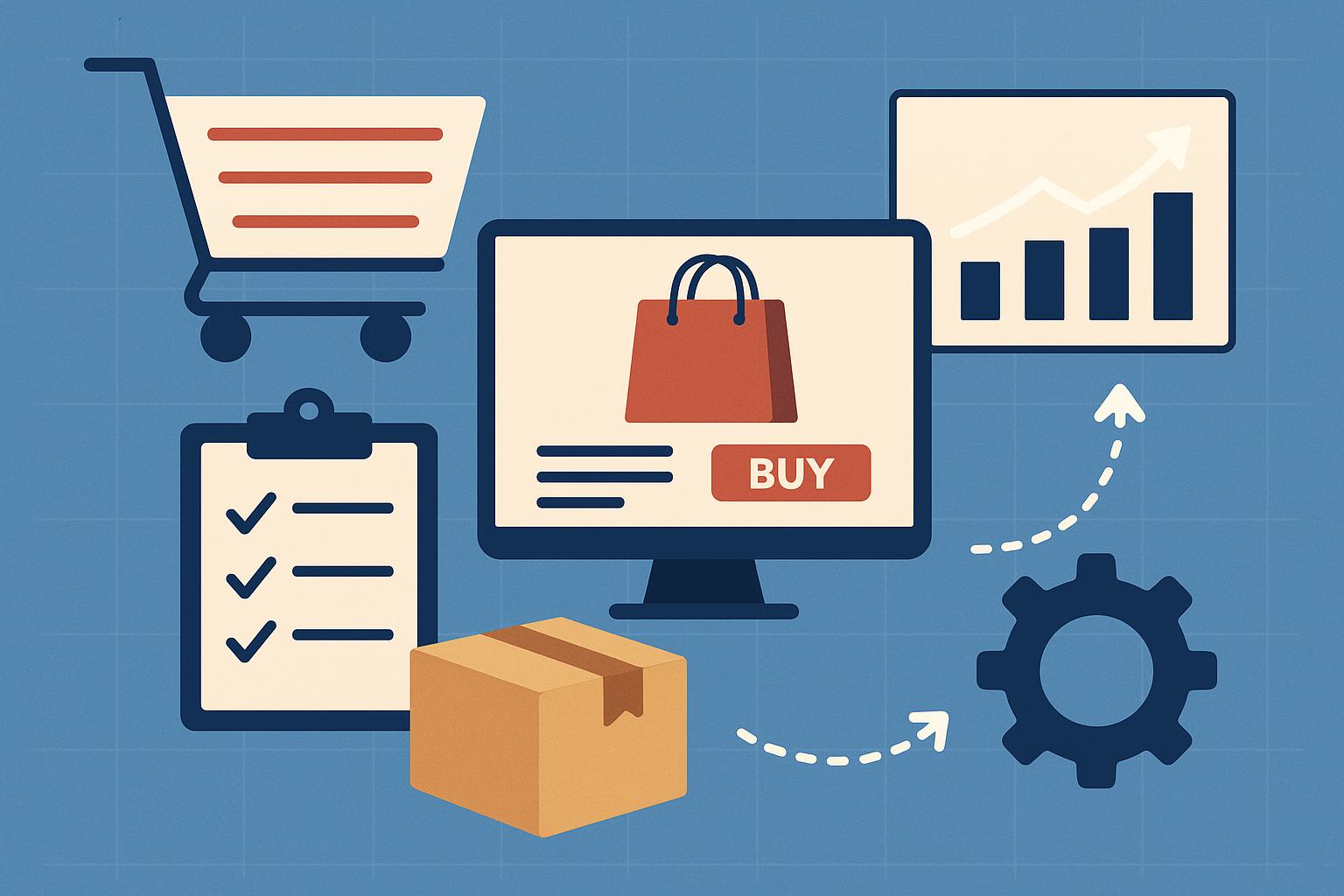
Imagine this: a customer clicks “buy” on your website, eagerly anticipating their new purchase. Hours later, they receive a notification: their order is delayed. Or worse, it arrives damaged or incomplete. Moments like these can make or break your brand’s reputation. In eCommerce, fulfilment isn’t just logistics—it’s the silent ambassador of your business, shaping how customers perceive reliability and trustworthiness. Optimizing your fulfilment process ensures that every package sent reinforces confidence in your brand, not frustration.
Contents
- Step 1: Evaluate Your Current Fulfilment Process
- Step 2: Streamline Inventory Management
- Step 3: Optimize Warehouse Layout
- Step 4: Improve Order Picking and Packing
- Step 5: Choose the Right Shipping Partners
- Step 6: Leverage Fulfilment Technology
- Step 7: Implement a Returns Management Strategy
- Step 8: Monitor and Continuously Improve
- Conclusion
Step 1: Evaluate Your Current Fulfilment Process
Before making any changes, it’s essential to understand where your current system stands. Begin by mapping your entire fulfilment workflow—from receiving orders to delivering packages. Identify bottlenecks, recurring errors, and delays.
Key aspects to assess include:
- Order processing time: How long does it take from order placement to shipment?
- Inventory accuracy: Are stock levels updated in real time, and do they reflect actual quantities?
- Shipping errors: How often are incorrect items shipped, or packages lost in transit?
- Customer satisfaction: Are delivery times meeting or exceeding expectations?
Use metrics such as order accuracy rate, average shipping time, and return rate to quantify performance. This baseline will help you measure improvements after implementing changes.
Step 2: Streamline Inventory Management
Inventory management is the backbone of eCommerce fulfilment. Poor inventory control can result in stockouts, overstock, and lost sales. To optimize this:
- Implement inventory management software: Modern tools offer real-time tracking, automated reorder alerts, and integration with your eCommerce platform.
- Categorize inventory effectively: Segment products based on demand, seasonality, or size. This improves picking efficiency.
- Adopt just-in-time (JIT) practices: Maintain optimal stock levels by replenishing only when necessary, reducing storage costs.
- Perform regular audits: Physical counts ensure that digital records match actual inventory, preventing overselling.
A well-organized inventory system not only reduces errors but also accelerates the order fulfilment process.
Step 3: Optimize Warehouse Layout
Warehouse layout directly impacts picking and packing efficiency. Consider adopting strategies like:
- ABC analysis: Store high-demand items closer to packing areas to minimize travel time.
- Logical zoning: Group similar products together to speed up picking.
- Clear labeling and signage: Ensure that shelves, bins, and aisles are labeled clearly to reduce confusion.
- Technology integration: Use barcode scanners, RFID, and automated picking systems for faster and more accurate operations.
Efficient warehouse design reduces manual effort, speeds up order processing, and minimizes mistakes.
Step 4: Improve Order Picking and Packing
Order picking and packing are the most labor-intensive stages of fulfilment. Small improvements here can significantly impact overall efficiency.
- Batch picking: Pick multiple orders simultaneously to reduce repeated trips.
- Pick-to-light systems: Guide workers using lights to the correct products, reducing human error.
- Standardize packaging: Use appropriately sized boxes and padding to protect items without overpacking.
- Consider automation: Conveyors, robotic pickers, and automated packing machines can handle repetitive tasks efficiently.
Efficient picking and packing ensure that orders leave the warehouse accurately and quickly, keeping customers satisfied.
Step 5: Choose the Right Shipping Partners
Shipping is a critical component of fulfilment that affects both cost and customer experience. Consider the following:
- Compare carriers: Evaluate delivery speed, reliability, and cost. Multiple carriers can provide flexibility.
- Negotiate rates: High-volume businesses can often secure discounted shipping rates.
- Offer multiple shipping options: Let customers choose between standard, expedited, or same-day delivery.
- Rely on an eCommerce fulfilment partner: Partnering with a professional service can handle shipping complexities, giving your business scalability and peace of mind.
- Track shipments: Provide customers with tracking information to improve transparency and trust.
Selecting reliable carriers ensures timely deliveries and reduces the likelihood of customer complaints.
Step 6: Leverage Fulfilment Technology
Technology plays a pivotal role in optimizing fulfilment. Modern solutions include:
- Order management systems (OMS): Centralize order data from multiple channels, ensuring accurate and timely processing.
- Warehouse management systems (WMS): Automate stock allocation, picking routes, and packing instructions.
- Shipping software: Compare rates, print labels, and manage returns efficiently.
- Analytics and reporting: Monitor KPIs to identify areas for continuous improvement.
Investing in technology reduces manual errors, improves speed, and provides data-driven insights for smarter decision-making.
Step 7: Implement a Returns Management Strategy
Returns are inevitable in eCommerce, and handling them poorly can be costly. Optimize returns by:
- Clear return policies: Communicate guidelines upfront to avoid confusion.
- Streamlined process: Offer pre-paid return labels and simple online return portals.
- Inspect and restock efficiently: Quickly process returned items to make them available for sale again.
- Analyze returns data: Identify patterns to reduce future returns, such as sizing issues or product defects.
Efficient returns management enhances customer trust while minimizing the operational impact of returned items.
Step 8: Monitor and Continuously Improve
Optimization is an ongoing process. Regularly monitor fulfilment metrics, including:
- Order accuracy
- Shipping speed
- Inventory turnover
- Customer satisfaction
Solicit feedback from your warehouse staff and customers, and use these insights to implement incremental improvements. Even small changes—like reorganizing high-volume SKUs or improving pick paths—can yield significant efficiency gains over time.
Conclusion
Optimizing eCommerce fulfilment is not just about speed; it’s about accuracy, efficiency, and customer satisfaction. By evaluating your current processes, improving inventory management, streamlining warehouse operations, leveraging technology, and choosing reliable shipping partners, you can build a fulfilment system that scales with your business. Implementing a proactive returns strategy and continuously analyzing performance ensures that your operations remain competitive and responsive to customer needs.
A well-optimized fulfilment process reduces costs, enhances the customer experience, and ultimately drives loyalty and revenue. In a competitive online marketplace, your ability to deliver the right product, at the right time, with minimal errors can be the difference between a one-time buyer and a loyal customer.