
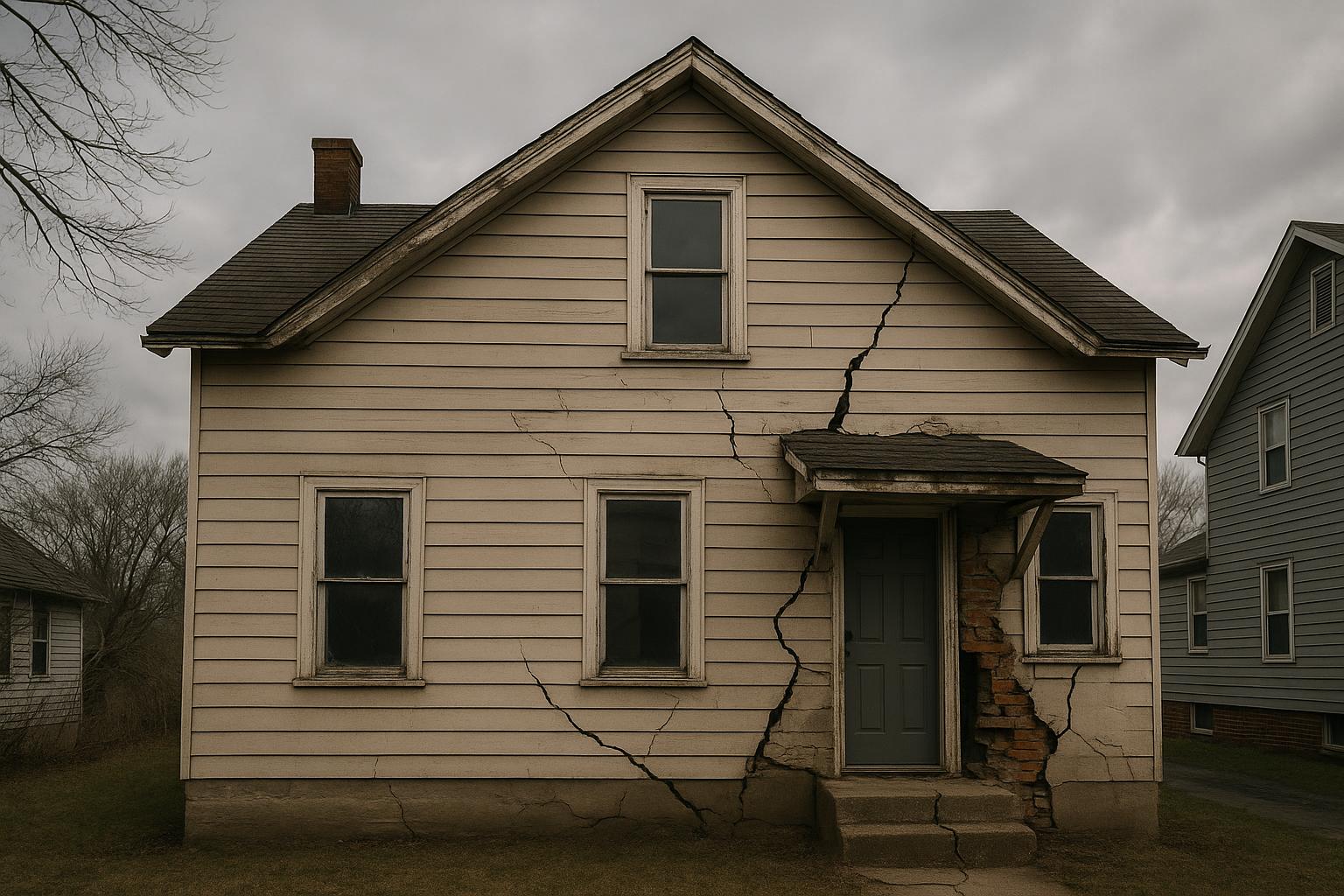
Foundation issues are becoming more common in older North American homes. While everyone likes the character of houses built between 1920 and 1970, those foundations are showing their age. Decades of soil pressure, water damage, outdated codes, and wear have finally caught up with it.
Small cracks and slight settling that used to seem harmless have become serious issues for many owners. Repair specialists report a noticeable rise in calls over the last decade.
Here we’ll look at the main causes, the most important warning signs, and why early action really matters.
Contents
- Why Older Homes Are Vulnerable
- How One Issue Leads to Another
- Specific Warning Signs of Progressive Structural Failure
- The Financial and Safety Implications of Inaction
- Remediation Strategies: Bringing Old Foundations Back to Life
- The Importance of Professional Assessment
- Preventative Measures for Homeowners
- Conclusion
Why Older Homes Are Vulnerable
Many older homes now have serious foundation problems. Before the 1970s, most were built with unreinforced concrete, cinder blocks, or stone mortar. These materials are not as strong as today’s reinforced concrete and often had poor drainage.
The soil has been altered over decades by moisture and freeze-thaw cycles, and the issue has worsened due to climate change. In the Midwest, Ohio Valley, and Texas, traditional clay-soil barriers are being strained by heavy rains interspersed with dry intervals. These days, minor fractures may be a sign of more serious structural issues.
One commonly reported structural issue in this category is leaning basement walls. Unlike simple cosmetic cracks, a leaning wall indicates that the foundation is actively rotating or bowing inward, losing its ability to support the weight of the home above.
How One Issue Leads to Another
Foundation problems in older homes rarely stay isolated. A leaning basement wall puts uneven stress on the floor joists above, causing them to sag. This leads to sloping floors, sticking doors, and windows that won’t latch properly.
Over time, the movement can reach the roof, creating drywall cracks upstairs or chimney separation.
Many homeowners call this “settling,” but real settling stops within a few years after construction. What’s happening now is ongoing structural movement. If a basement crack is wider than it was six months ago, it’s active structural movement rather than normal settling.
Specific Warning Signs of Progressive Structural Failure
For homes built before 1980, regular foundation checks make a lot of sense. Still, it helps to know which signs actually matter.
So what should you actually watch for?
- Horizontal or stair-step cracks signal strong pressure from the soil. A coin-width gap means real movement is happening.
- Leaning walls are another clear warning. If the top bows inward more than an inch — or you notice gaps letting daylight through at the top — the foundation is likely moving.
- You might also notice doors that used to close smoothly now stick or swing by themselves. That often means the frame is twisting.
- Sudden nail pops in drywall and new diagonal cracks near windows are other signs that the structure is shifting.
- And if the chimney starts separating from the house, don’t wait — that’s a major red flag.
The Financial and Safety Implications of Inaction
Delaying foundation repairs might result in high repair costs and associated safety issues. When selling a house, you must disclose any known structural concerns. A repair that costs $10,000-$20,000 now may result in a $50,000 reduced sale price — or no sale at all.
A leaning basement wall also creates safety risks. Under heavy rain, it may experience sudden structural failure, flooding the basement, and damaging furnaces, electrical panels, and other systems.
Standard homeowners’ insurance does not cover damage from soil movement or groundwater pressure. This leaves you responsible for the full cost.
Early repairs are therefore essential for both safety and protecting your investment.
Remediation Strategies: Bringing Old Foundations Back to Life
Today’s repair techniques allow homeowners to fix even badly damaged foundations in older houses without tearing up the lawn every time.
Full excavation is still an option for the worst situations, but it’s costly and messy. Most people now prefer interior solutions that cause far less disruption. Common approaches include:
- Wall anchors: Steel rods are placed through the basement wall and attached to anchors outside. Over time, they can stabilize the wall and even help straighten it.
- Carbon fiber reinforcement: High-strength straps are glued directly to the wall with epoxy. They stop further bowing and spread out the pressure from the soil.
- Helical tiebacks: These act like large screws driven deep into stable soil behind the wall to provide strong, lasting support.
- Steel beams: Vertical I-beams are installed along the wall to add extra strength where the damage is moderate.
The Importance of Professional Assessment
If you notice a basement wall leaning, horizontal cracks, or cracks that are getting wider over time, it’s smart to get a professional inspection.
Foundation engineers and specialists have the right tools to check whether the wall is stable or still moving. They’ll also look at how well water drains around your property and check if any past repairs are holding up.
This step makes a big difference. It helps you clearly understand if the wall just needs watching or if it requires actual structural repair.
Preventative Measures for Homeowners
While structural issues in older homes often build up gradually, you can ease the pressure on basement walls with some basic maintenance.
Good drainage is key. Direct downspouts well away from the foundation and keep the ground sloping away from the house.
Don’t forget the gutters. When they overflow, they saturate the soil and increase pressure on the foundation.
It also helps to lower basement humidity. This reduces how much water soaks into the surrounding soil.
And take periodic photos of cracks or leaning walls. That way, you can track whether the movement is progressing.
Conclusion
Older homes frequently have structural problems. The good news? They’re detectable and repairable if you act early.
Since your house is most likely your largest investment, it makes sense to maintain a solid foundation. Take some time to check your basement walls for bending or cracks.
Found anything concerning, like horizontal cracks or leaning walls? Call a pro immediately. An inspection costs very little compared to major repairs, and fixing things now can keep your house safe and sound for decades.