
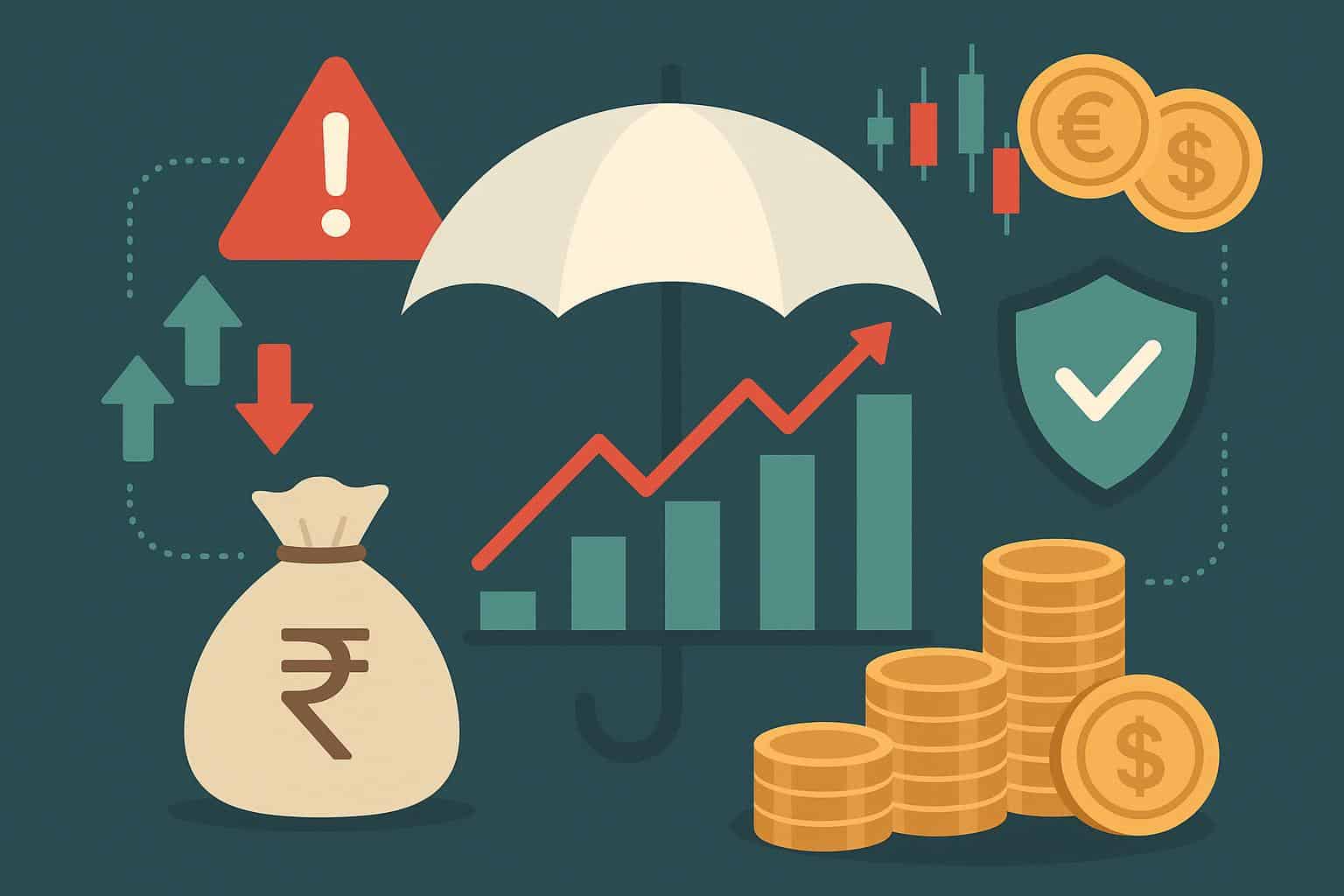
Forex trading offers massive opportunity, but it also comes with real risk – especially for Indian traders who often deal with limited capital, restricted broker choices, and high market volatility. With so many options available, choosing the best broker for forex trading in India is important, but broker selection alone won’t protect your account without proper discipline. Many traders spend months learning strategies but ignore the one thing that decides long-term survival: risk management.
You can be right about market direction and still lose money if your risk isn’t controlled. That’s why professional traders focus less on winning trades and more on protecting their capital.
Below are essential risk management tips every Indian forex trader should follow to trade safely, consistently, and sustainably.
Contents
- 1. Never Risk More Than 1–2% Per Trade
- 2. Always Use a Stop Loss
- 3. Understand Leverage Before Using It
- 4. Calculate Position Size Properly
- 5. Avoid Overtrading
- 6. Keep Risk-to-Reward Ratio Favorable
- 7. Do Not Trade During Major News Without Experience
- 8. Maintain a Trading Journal
- 9. Control Emotions, Not the Market
- 10. Focus on Capital Preservation First
- Final Thoughts
1. Never Risk More Than 1–2% Per Trade
This is the golden rule of trading.
No matter how confident you feel, never risk more than 1–2% of your account balance on a single trade.
For example:
- ₹50,000 account
- 1% risk = ₹500 per trade
- 2% risk = ₹1,000 per trade
Even a losing streak of 8–10 trades won’t wipe out your account. Without this rule, one bad trade can destroy weeks or months of progress.
Many Indian beginners fail because they over-leverage small accounts hoping to grow fast. In reality, slow growth keeps you in the game longer.
2. Always Use a Stop Loss
Trading without a stop loss is not bravery — it’s gambling.
Markets can move aggressively due to:
- US inflation data
- Federal Reserve announcements
- Geopolitical news
- Sudden liquidity spikes
A stop loss protects you from emotional decisions and unexpected volatility.
Before entering any trade, you should know:
- Entry price
- Stop-loss level
- Take-profit target
If you cannot define your stop loss, you should not enter the trade.
3. Understand Leverage Before Using It
High leverage is attractive, especially when brokers advertise 1:500 or 1:1000 leverage. But leverage magnifies losses just as fast as profits.
Many Indian traders lose money not because their strategy is wrong, but because they use excessive leverage.
A safer approach:
- Use lower effective leverage
- Adjust lot size based on stop loss distance
- Never trade maximum volume allowed by the broker
Remember: leverage is a tool, not free money.
4. Calculate Position Size Properly
Instead of guessing lot size, calculate it logically.
Your position size should depend on:
- Account balance
- Percentage risk per trade
- Stop-loss size (in pips)
For example:
- Account: ₹1,00,000
- Risk: 1% (₹1,000)
- Stop loss: 50 pips
Your lot size should be calculated so that 50 pips equals ₹1,000 loss — not more.
This single habit separates professionals from gamblers.
5. Avoid Overtrading
Overtrading is extremely common among Indian retail traders, especially those trading from mobile apps.
Causes of overtrading include:
- Revenge trading after a loss
- Trading boredom
- Watching too many timeframes
- Trying to recover losses quickly
Quality beats quantity.
One clean trade with proper risk management is better than five emotional trades taken randomly.
Set a daily trade limit – for example, maximum 2–3 trades per day.
6. Keep Risk-to-Reward Ratio Favorable
A good trade setup should always offer a favorable risk-to-reward ratio.
Common professional ratios:
- 1:2
- 1:3
- 1:4
This means risking ₹1 to make ₹2 or more.
With a 1:2 ratio, even if you win only 40% of your trades, you can still remain profitable.
Avoid trades where:
- Stop loss is huge
- Target is small
- Entry is late
Risk management is not just about limiting losses — it’s also about maximizing winners.
7. Do Not Trade During Major News Without Experience
High-impact news events such as:
- Non-Farm Payroll (NFP)
- CPI inflation
- FOMC meetings
can cause extreme volatility, slippage, and spread widening.
For beginners, trading news often leads to:
- Instant stop-loss hits
- Unexpected margin usage
- Large losses within seconds
Until you have experience and a tested news strategy, it’s safer to stay out during major economic releases.
8. Maintain a Trading Journal
Most traders skip this step — and pay the price later.
A trading journal helps you track:
- Entry reason
- Stop loss and take profit
- Risk percentage
- Emotional state
- Outcome of the trade
After 50–100 trades, patterns become obvious:
- Which setups work best
- Which sessions you trade well
- What mistakes repeat
Professional traders treat trading as a business, and every business keeps records.
9. Control Emotions, Not the Market
You cannot control the market – but you can control your behavior.
Emotional mistakes include:
- Increasing lot size after losses
- Removing stop losses
- Closing winning trades early
- Chasing missed entries
Fear and greed destroy more accounts than bad strategies.
Follow your trading plan strictly. If a trade hits stop loss, accept it. Losses are part of the game.
10. Focus on Capital Preservation First
Your first goal as a trader is not to make money – it’s to protect capital.
Once your account survives long enough:
- Experience increases
- Discipline improves
- Consistency follows
Many successful traders made very little money in their first year. They focused on learning, controlling risk, and staying profitable month after month.
Survival comes before growth.
Final Thoughts
Forex trading can be rewarding for Indian traders, but only if approached with discipline and patience. A powerful strategy means nothing without strong risk management.
If you master:
- Position sizing
- Stop-loss discipline
- Emotional control
- Capital protection
you already stand ahead of most retail traders.
Remember, the market will always be there tomorrow. Your trading capital might not be if you ignore risk management.
Trade smart. Trade safe. Protect your downside first – profits will follow.