
Hardwood floors do something magical. They make a room feel finished. They make furniture look more expensive than it was. They even make you walk differently, like you suddenly own stock options.
But when you start shopping, you hit the classic fork in the road: engineered hardwood or solid hardwood. Both look like “real wood” because both are real wood. They behave differently once they move into your home and start dealing with real life: humidity, kids, dogs, spilled coffee, and that one chair everyone drags like they’re auditioning for a sound effects job.
Let’s sort this out in a way that actually helps you choose, not just “it depends” and a shrug.
Contents
- The simple difference in plain English
- What it feels like day to day
- The big issue that decides most homes: moisture and movement
- Where each one shines inside a home
- The subfloor question that people ignore until it hurts
- Refinishing and long-term life
- Durability and dent resistance
- Installation cost and what really drives price
- The sound factor and the “hollow” complaint
- Seasonal gaps and what you can tolerate emotionally
- Quick “which one fits your home” scenarios
- How to avoid regret when shopping
- The bottom line
The simple difference in plain English
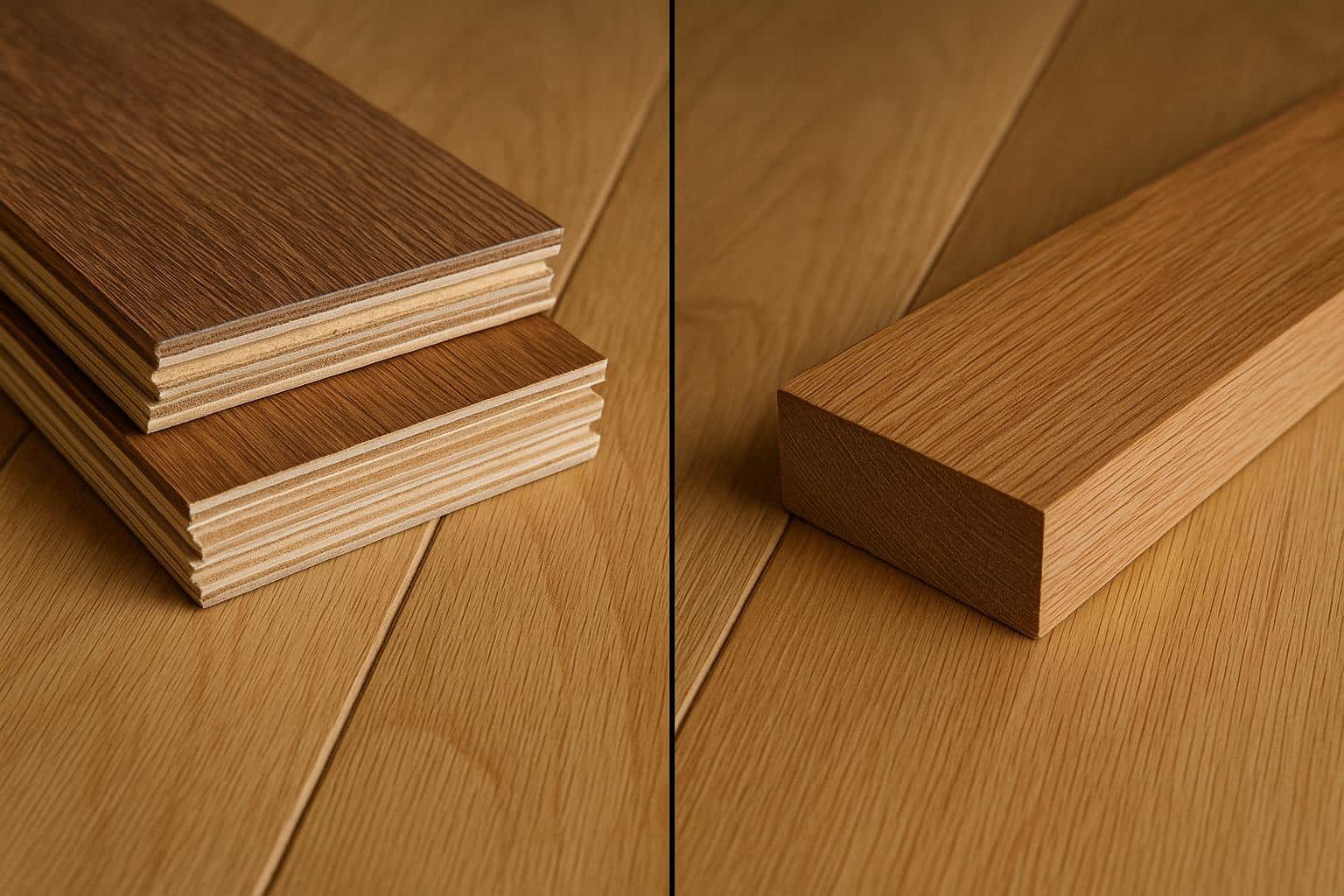
Solid hardwood is one piece of wood from top to bottom. If you cut a plank, it looks the same all the way through. Think of it like a solid chocolate bar. It’s wood, through and through.
Engineered hardwood has a real wood top layer, called a veneer or wear layer, bonded to layers of wood underneath. Think of it like a layered dessert. The top is the pretty part you see and touch. The layers underneath exist to keep it stable and sane.
That’s the headline. The rest of the decision comes down to how each one handles your home’s environment and how long you want the floor to last before you need to do anything serious to it.
What it feels like day to day
In normal life, both can look almost identical, especially once furniture goes in, and your brain stops zooming in on grain patterns like a detective.
Solid hardwood tends to feel a little more “traditional.” It has that classic weight and vibe people associate with older homes and long-term value.
Engineered hardwood can feel the same underfoot when it’s built well and installed correctly. The difference shows up more in how it behaves across seasons than how it feels on a Tuesday.
If someone tells you engineered hardwood feels fake, they probably saw cheap laminate once and never recovered emotionally.
The big issue that decides most homes: moisture and movement
Wood moves. It expands when humidity rises. It shrinks whenthe humidity drops. It never stops being wood just because it got installed and paid rent.
Solid hardwood moves more because it’s one thick piece of wood. In a home with steady indoor humidity, that’s not a big deal. In a home where humidity swings like a mood ring, it can cause gaps, cupping, or crowning. You might see small seasonal gaps between boards in winter. That’s not always a defect. That’s wood doing wood things.
Engineered hardwood stays more stable because the layers underneath resist movement. Those layers help cancel out the expansion and contraction that happens naturally. This stability makes engineered hardwood a safer choice for places where humidity changes a lot, or where moisture shows up more often than you’d like.
If your home sits near the coast, has a basement, lives above a crawlspace, or suffers from “the AC is on, the heater is on, now both are on” chaos, engineered hardwood usually behaves better.
Where each one shines inside a home
Solid hardwood loves above-grade spaces with a controlled environment. Living rooms, dining rooms, bedrooms, hallways. If your home stays comfortable year-round, solid hardwood can last for decades and still look great.
Engineered hardwood handles more challenging areas better. It works well in condos with concrete slabs. It works well in homes where you can’t always control humidity. It also makes sense for kitchens when you want real wood, but you also want a fighting chance if someone spills water and forgets to wipe it up.
Neither option loves standing water. If your dishwasher ever floods, both will complain. Engineered hardwood just tends to complain less dramatically.
The subfloor question that people ignore until it hurts
Your subfloor matters. It’s like the foundation under your foundation, and nobody talks about it until something squeaks.
Solid hardwood usually prefers plywood subfloors. Installers often nail it down, and that method works great in a lot of homes. When you try to install solid hardwood over concrete, things get trickier. You may need a plywood layer or a sleeper system, and that can add cost and height.
Engineered hardwood gives you more installation options. Installers can nail it, glue it, or float it depending on the product and the subfloor. Over concrete slabs, engineered hardwood often wins because it handles glue-down installs well and stays more stable.
If you live in a condo or a modern home on a slab, engineered hardwood usually makes the whole project smoother and more predictable.
Refinishing and long-term life
This is where solid hardwood flexes. Solid hardwood can be sanded and refinished multiple times over its life. If you plan to stay in your home for a long time, and you want the floor to survive kids, pets, and decades of living, solid hardwood offers a long runway.
Engineered hardwood can also be refinished, but it depends on the thickness of the wear layer. Some engineered floors have a thin wear layer and allow little to no sanding. Others have thick wear layers and can handle a sanding or two, sometimes more.
If you want engineered hardwood and you care about future refinishing, look for a thicker wear layer. You don’t need to memorize numbers like a flooring accountant, but you do want something built for real life, not just for showroom lighting.
Here’s the practical way to think about it. If you want a “buy it once, refinish it later, keep it forever” floor, solid hardwood usually wins. If you want a stable floor that looks great and fits tricky spaces, engineered hardwood often fits better.
Durability and dent resistance
People ask which one is “more durable,” but that question hides the real issue.
The surface you walk on is real wood in both cases. That means dent resistance depends on wood species and finish, not on whether it’s solid or engineered. Oak resists dents better than pine. Hickory handles abuse better than softer woods. A strong finish can help with scratches, but it won’t stop a dent if you drop a cast iron pan like you’re testing gravity.
Engineered hardwood sometimes handles impact differently because of how it’s built, but the biggest dent factor stays the wood on top.
So if you have large dogs, busy kids, or a habit of wearing heels that could puncture drywall, focus on species and finish first. Then choose solid vs engineered based on moisture, subfloor, and refinishing goals.
Installation cost and what really drives price
Both can cost a lot or a little, depending on quality. You can buy bargain engineered hardwood that looks great for six months. You can buy premium engineered hardwood that outperforms cheap solid hardwood. Price alone doesn’t tell the story.
Solid hardwood can cost more to install when the subfloor needs extra work or when your home’s conditions require extra steps. Engineered hardwood can reduce install costs in certain situations because it installs more easily on concrete and tolerates more environments.
Your best move is to look at the total project cost, not just the plank price. Installation method, subfloor prep, moisture barriers, and transitions can change the numbers fast.
The sound factor and the “hollow” complaint
Some people hate the sound of a floating floor. Floating engineered hardwood can sound slightly hollow if you choose the wrong underlayment or if the floor doesn’t sit tight and flat.
A glue-down engineered floor often sounds more solid. A nail-down engineered floor can also feel very close to solid hardwood.
Solid hardwood typically feels and sounds solid because of how it installs, but bad installation can ruin anything. A perfectly installed engineered floor can feel fantastic. A rushed solid hardwood install can squeak like a haunted house.
If sound bothers you, ask about installation methods and underlayment options. A good installer can make a huge difference here.
Seasonal gaps and what you can tolerate emotionally
This sounds silly, but it matters.
Solid hardwood may show seasonal gaps in dry months. That’s normal movement in many climates. Some people never notice. Other people notice once and then can’t unsee it, like a pixel stuck on a screen.
Engineered hardwood typically shows less seasonal movement. If you want a floor that stays consistent across seasons, engineered hardwood makes life easier.
If you live in a place with big humidity swings, and you don’t want to manage indoor humidity like it’s a pet, engineered hardwood usually wins.
Quick “which one fits your home” scenarios
- If you live in a condo on a concrete slab, engineered hardwood usually fits best.
- If you have a basement or you want wood flooring below grade, engineered hardwood tends to behave better, but you still need solid moisture control and the right product.
- If you own an older home with plywood subfloors and steady indoor humidity, solid hardwood makes a ton of sense, especially if you love the idea of refinishing later.
- If you have radiant heat, engineered hardwood often plays nicer because it stays more stable, but you still need a product rated for radiant systems and a careful install.
- If you plan to stay for decades and you want to refinish a few times, solid hardwood usually wins.
- If you want the look of wood with fewer headaches in tricky conditions, engineered hardwood often wins.
How to avoid regret when shopping
Don’t choose based on the word “engineered” or “solid” like one is noble and the other is suspicious. Choose based on build quality and fit for your home.
When you look at engineered hardwood, focus on the wear layer thickness, the core construction, and the warranty details. When you look at solid hardwood, focus on species, grade, and how the installer plans to manage moisture and acclimation.
Ask how the flooring will handle your home’s humidity. Ask what moisture barrier they plan to use. Ask how they’ll prep the subfloor. Those answers matter more than the marketing tag.
If a salesperson can’t explain acclimation and moisture testing without looking panicked, keep shopping.
The bottom line
Solid hardwood fits homes that stay stable and owners who want a long-term floor they can refinish multiple times. It brings classical value and longevity when your environment supports it.
Engineered hardwood fits homes that deal with humidity swings, concrete slabs, basements, and modern builds. It gives you real wood beauty with better stability and more installation flexibility.
Both can look incredible. Both can last a long time. The right choice isn’t about which one sounds fancier. It’s about which one will behave in your specific home without turning into a seasonal drama series.
Hardwood floors should make you feel proud, not make you become a part-time humidity manager.
Article contributed by Flooring Titan