
Security work has changed dramatically over the last decade.
The communication part? Somehow, it became both more advanced and more chaotic at the same time.
Security teams now manage crowded venues, sprawling corporate campuses, residential communities, warehouses, hospitals, construction sites, festivals, and emergency response situations where seconds genuinely matter. Meanwhile, smartphones, the device people assume can handle everything, often become the exact wrong tool when communication needs to happen instantly.
Too many distractions. Too many delays. Too many opportunities for someone to miss a message because they were staring at notifications about weather apps and sandwich delivery discounts.
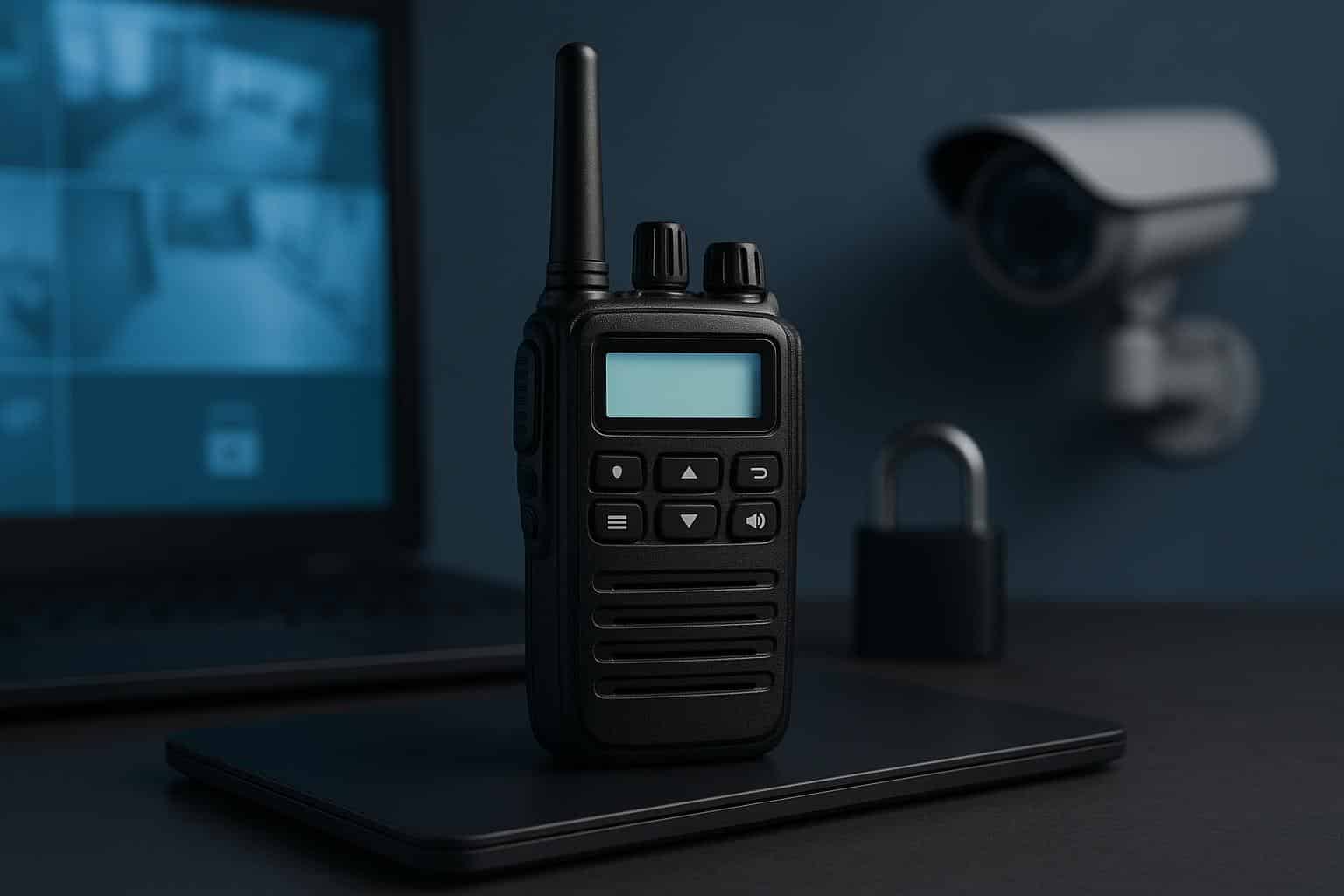
That’s why modern security professionals still rely heavily on walkie talkies.
Actually, “still” may be the wrong word.
They rely on them more intelligently now than ever before.
Contents
Immediate Communication Wins Every Time
Security environments do not operate on “seen at 4:42 PM.”
They operate on immediate response.
When teams need to coordinate movement, report incidents, manage crowds, or respond to emergencies, communication delays create real operational problems. Texting is too slow. Phone calls are inefficient in fast-moving environments. Group chats become messy almost instantly.
Walkie talkies solve that by removing friction entirely.
Press button. Speak. Message delivered.
Simple systems survive because they work.
Modern push-to-talk communication allows security teams to relay information instantly without navigating apps, dialing numbers, or waiting for someone to answer a call. That direct communication structure dramatically improves coordination during high-pressure situations.
Especially when clarity matters more than convenience.
Modern Walkie Talkies Are Not What People Remember
A lot of people still picture walkie talkies as bulky plastic radios from old movies where security guards say “copy that” every thirty seconds.
Technology moved on.
Today’s advanced systems often use nationwide cellular infrastructure alongside traditional radio functionality, allowing teams to communicate across much larger distances than older radio-limited devices ever could.
That matters for:
- Multi-site operations
- Mobile patrol teams
- Large event coordination
- Regional security coverage
- Remote workforce management
Instead of losing signal once someone moves behind concrete walls or across town, modern systems can maintain communication through broader network connectivity.
And honestly, that reliability changes everything operationally.
Reliability Beats Smartphone Dependency
This part gets overlooked constantly.
Smartphones are incredible multitasking devices. They are not always reliable communication tools for professional security operations.
Why?
Because smartphones are built for distraction.
Notifications interrupt focus. Apps compete for attention. Battery life drains quickly. Calls get missed. Messages disappear into overloaded group chats. And during emergencies, overloaded cellular traffic can create additional complications.
Dedicated walkie talkies avoid most of those problems entirely because they focus on one primary function:
Reliable communication.
According to the Federal Communications Commission, resilient communication infrastructure remains critical during emergencies, public events, and infrastructure disruptions. Dedicated communication devices help create redundancy when traditional mobile systems become unreliable or overloaded.
Security professionals understand this instinctively.
Redundancy is not paranoia. It’s planning.
Battery Life Matters More Than Marketing
A security shift can stretch long beyond standard work hours.
Communication devices need to survive that reality.
Modern walkie talkies are often designed specifically for extended operational use, prioritizing battery efficiency and durability over endless secondary features. That reliability becomes critical during:
- Overnight shifts
- Outdoor events
- Emergency deployments
- Disaster response
- Large venue operations
Because nobody wants a communication device that dies halfway through a twelve-hour shift because it spent all afternoon updating background apps nobody asked for.
Durability Is Part of the Job
Security environments are rarely gentle on equipment.
Devices get dropped. Exposed to weather. Carried through crowded environments. Knocked against equipment. Used outdoors during heat, rain, dust, and cold conditions.
A professional-grade walkie talkie needs to handle that reality without becoming fragile tech art.
That durability matters operationally because communication failures create security vulnerabilities incredibly fast.
Consumers and organizations exploring modern push-to-talk communication systems and nationwide operational coverage can learn more through resources focused on secure long-range communication technology.
The Future of Security Communication Is Focused Simplicity
That’s probably the biggest lesson here.
Modern security teams don’t necessarily need more complicated communication systems. They need faster, clearer, more reliable ones.
And in an era overloaded with digital noise, the walkie talkie remains effective precisely because it strips communication back down to its essential purpose:
Immediate coordination without unnecessary friction.
Turns out simplicity is still one of the strongest forms of technology.