
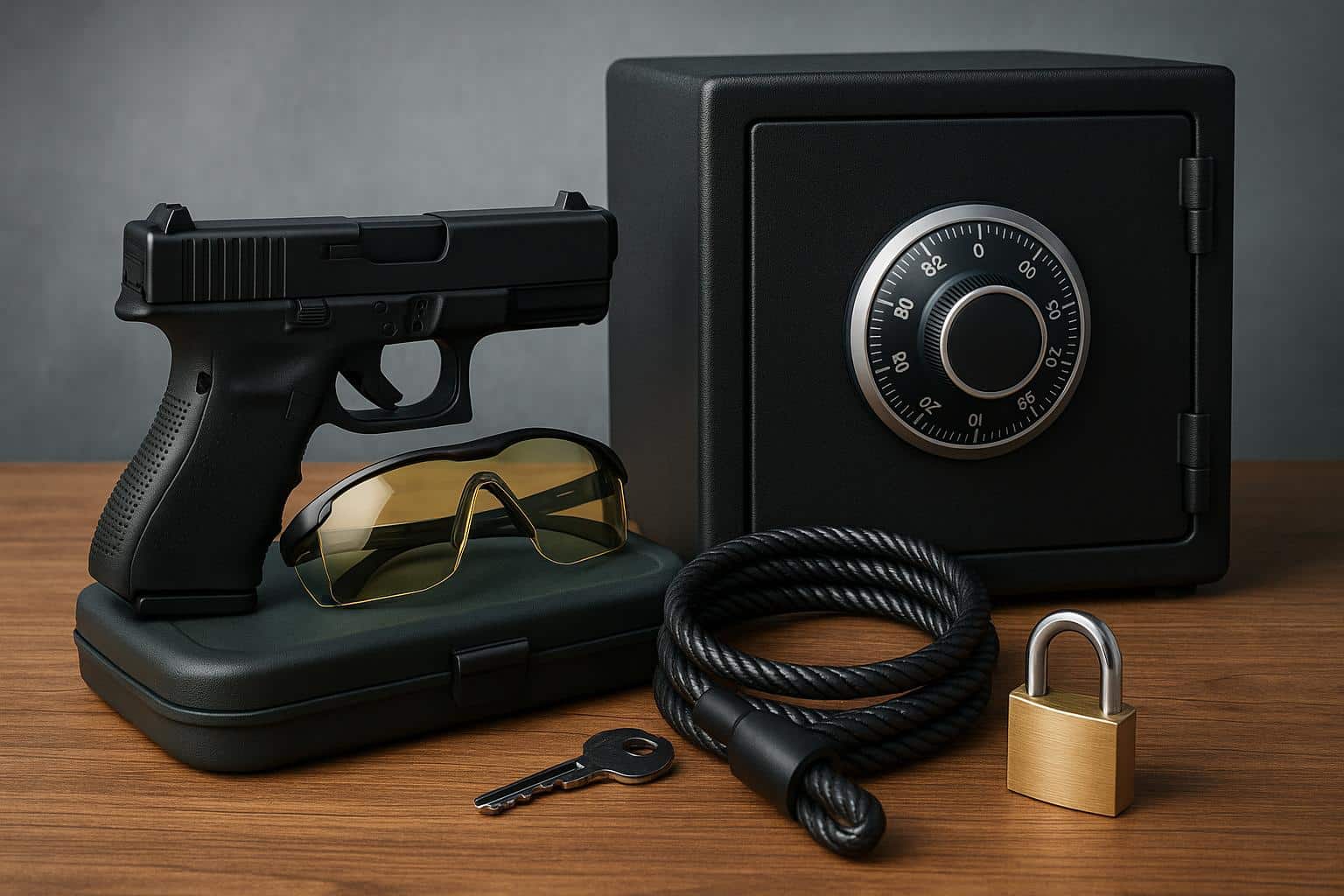
There is a particular kind of confidence that comes with owning a firearm: the confidence that comes from knowing exactly where it is, who can access it, and how it is being cared for.
That confidence does not come from buying the most expensive safe or accumulating the most equipment. It comes from establishing sensible routines and sticking to them, even on the ordinary Tuesday when nothing exciting is happening. Responsible ownership is mostly about those ordinary Tuesdays.
Contents
Start With a Storage System That Fits Real Life
Safe storage should work for the household you actually have, not the imaginary household where nobody ever forgets anything.
Consider who lives in or regularly visits the home. Children, guests, roommates, and other unauthorized people should not have access to a firearm. Choose an appropriate secure-storage method and establish a consistent routine for using it.
Access credentials deserve attention as well. Keys, combinations, and other access methods should be controlled carefully. A storage device cannot provide meaningful protection if its access information is casually shared or left somewhere unsecured.
The objective is simple: authorized access without accidental or unauthorized access.
Separate Storage From Convenience
Convenience can quietly undermine good safety practices. If putting a firearm away feels unnecessarily difficult, an owner may eventually be tempted to cut corners. That is why a practical storage setup matters. It should allow the owner to secure the firearm consistently while maintaining appropriate control over access.
A household can also establish clear expectations about who is permitted to handle the firearm and under what circumstances. The fewer assumptions involved, the better.
“Everyone knows not to touch it” is not a storage strategy.
Treat Ammunition as Its Own Responsibility
Firearm safety does not stop with the firearm itself.
Ammunition should be identified correctly, stored securely, and kept in conditions appropriate for its intended use. Owners should verify that ammunition corresponds to the firearm’s specifications before loading or using it.
For lawful owners researching shotgun ammo, selection should begin with compatibility and intended use rather than packaging claims. The chosen ammunition should be appropriate for the specific shotgun, and owners should follow manufacturer guidance for storage, handling, and use.
Keeping ammunition organized also reduces the chance of grabbing the wrong cartridge in a hurry. A few minutes of organization can prevent a much more serious mistake.
Maintenance Should Be Routine
Firearms are mechanical equipment, and mechanical equipment benefits from appropriate care. Follow the manufacturer’s instructions for cleaning, inspection, lubrication, and maintenance. Keep track of anything that appears unusual rather than assuming a problem will disappear on its own.
Before performing maintenance, follow the manufacturer’s safety procedures and verify the firearm’s condition. A dedicated maintenance area can also help keep the process orderly.
And there is no need to turn routine maintenance into a complicated ritual. Follow the instructions, use appropriate equipment, and seek qualified assistance when a problem falls outside your experience.
Responsible Ownership Includes Training
Owning something safely and knowing how to use it safely are related, but they are not identical.
First-time or inexperienced owners can benefit from qualified instruction that covers safe handling, range etiquette, firearm operation, and applicable safety practices. Training can also provide an opportunity to ask questions that might otherwise go unanswered.
Practice should take place in appropriate, lawful environments and follow established range rules. The goal is familiarity without complacency.
Keep the Legal Side Current
Responsible ownership also means keeping track of the rules that apply to you. Laws and regulations can address possession, storage, transportation, purchasing, and use, and requirements vary by jurisdiction. Owners should consult current official sources rather than assuming that rules remain unchanged or that advice from another location applies locally.
Transportation deserves particular care. Before taking a firearm outside the home, check the applicable requirements for the destination and any jurisdictions along the route.
A little research beforehand is considerably easier than trying to resolve a legal question after the fact.
Make Safety the Default Setting
Good ownership habits should require as little improvisation as possible. The firearm has a designated secure storage location. Ammunition is properly identified and stored. Maintenance follows manufacturer guidance. Training fills knowledge gaps. Access is controlled. Applicable laws are checked before travel or other changes in circumstances.
None of this is particularly dramatic. That is exactly what makes it useful.
Responsible ownership is built through repeatable choices, not occasional bursts of caution. When those choices become routine, safety stops feeling like an extra task and becomes part of the way the firearm is managed every day.