
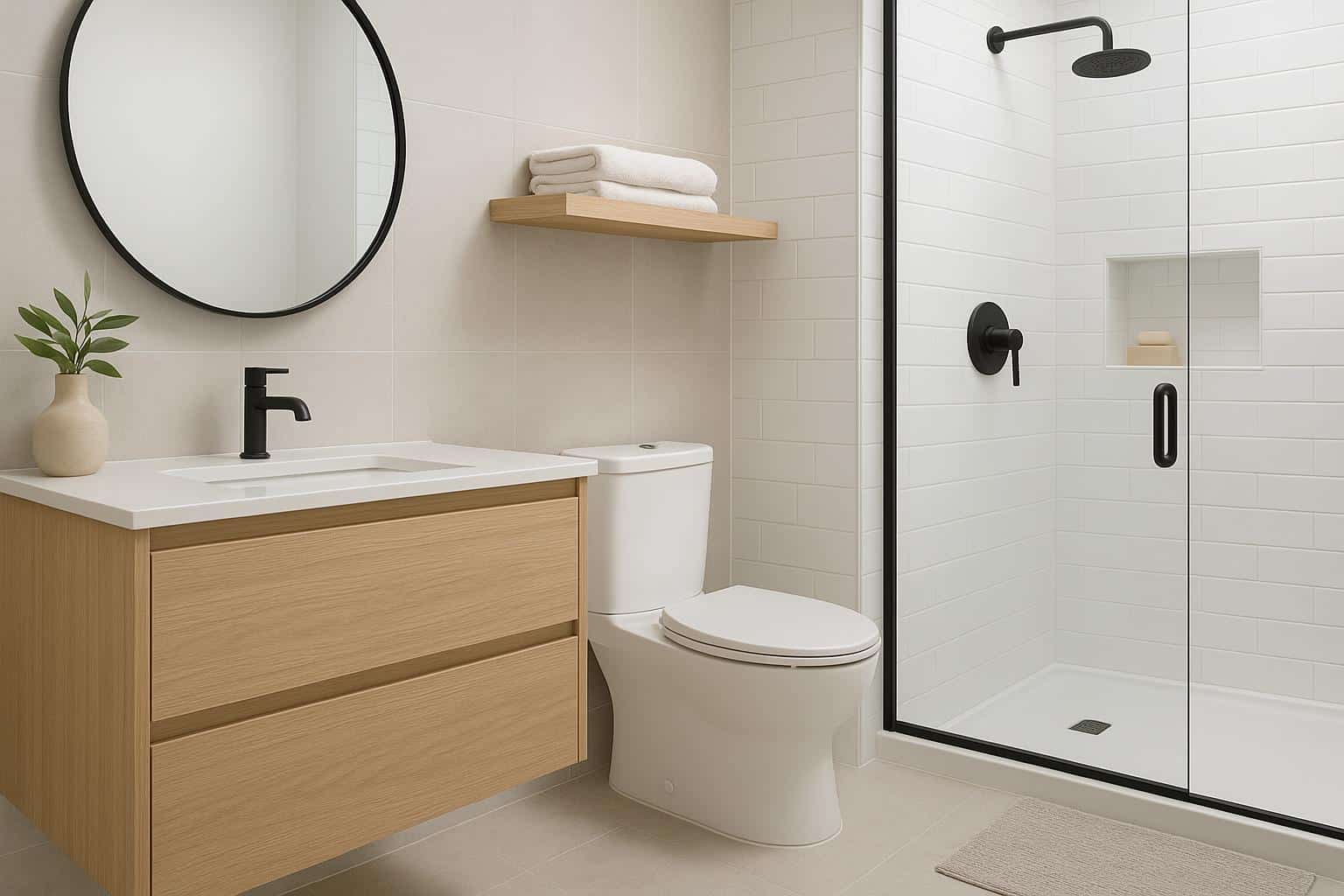
Bathrooms are among the smallest rooms in the house, yet they’re expected to do an enormous amount of work.
They need to store toiletries, handle moisture, provide enough lighting for everyday tasks, feel comfortable to move around in and still look good. That’s why successful bathroom renovations often come down less to flashy finishes and more to smart planning.
Projects such as this Balwyn reno are useful examples of how much can be achieved when layout, storage and materials are considered as part of the same design rather than treated as separate decisions.
Contents
Every Centimetre Has a Job
In a large room, a slightly inefficient layout might not matter much.
In a bathroom, it can be immediately obvious.
A door that swings into the wrong place, a vanity that’s just a little too deep or a shower positioned awkwardly can make the whole space feel tighter than it really is.
That’s why good bathroom design starts with movement.
Where do you enter? Where do you naturally stand? Can two people use the room without constantly getting in each other’s way? Is there enough clearance around the toilet and vanity?
These questions sound basic, but they often have more impact on the finished result than the colour of the tiles.
Storage Works Best When It Disappears
Bathroom clutter builds quickly.
Skincare, hair products, toothbrushes, towels, cleaning supplies and spare toiletries all need somewhere to go, and open surfaces can become crowded almost overnight.
Good storage helps the room feel calmer without necessarily adding bulky cabinetry.
Wall-hung vanities can create visual space underneath. Mirrored cabinets can hide everyday items while serving another purpose. Recessed shower niches keep bottles off the floor and reduce the need for extra shelving.
The best storage solutions are often the ones you barely notice.
Light Finishes Aren’t the Only Way to Create Space
There’s a common belief that small bathrooms have to be white.
They don’t.
Lighter colours can certainly help a compact room feel open, but darker finishes, natural stone tones or textured tiles can work beautifully when the rest of the design is balanced.
Large-format tiles may reduce visual clutter by creating fewer grout lines. Continuing similar materials across the floor and walls can also make the room feel more cohesive.
The important thing is avoiding too many competing elements.
Small spaces tend to benefit from restraint.
Good Lighting Changes Everything
Bathroom lighting often gets reduced to one bright ceiling light.
That can leave the room functional but not particularly pleasant.
Layered lighting usually works better. General lighting handles the practical side, while well-positioned lighting around the mirror can make grooming easier and reduce harsh shadows.
Natural light is valuable too, where privacy and layout allow.
Even a modest bathroom can feel much more generous when it’s bright without being glaring.
Small Rooms Reward Better Decisions
A bathroom renovation doesn’t need a huge footprint to feel luxurious.
In fact, limited space often forces better decisions because there’s less room for unnecessary features.
When the layout is efficient, storage is integrated and the finishes work together, a small bathroom can feel far more comfortable than its dimensions suggest.
That’s the real lesson.
Good design isn’t about squeezing more into the room. It’s about making every part of the room earn its place.