
Contents
- Hong Kong’s Position in the Global Smartphone Supply Chain
- The Pricing Differential: Why It Matters for European Markets
- Quality Standards That Meet European Expectations
- Logistics: The Infrastructure Behind the Shift
- The Role of Minimum Order Flexibility
- Currency and Payment Considerations
- Building Resilient Supply Chains
- Conclusion
Hong Kong’s Position in the Global Smartphone Supply Chain
Hong Kong has long served as a critical node in the global electronics trade. Its proximity to major manufacturing centres, well-established import and export infrastructure, and relatively open trade environment have made it the natural hub for smartphone distribution at scale.
For refurbished iPhone supply specifically, Hong Kong benefits from early and abundant access to used devices returning from North American and Asian markets — the world’s largest sources of premium Apple hardware. This geographic and logistical advantage translates directly into pricing that European distributors struggle to replicate through local sourcing.
When a European reseller sources wholesale iPhones from a domestic intermediary, they are typically purchasing stock that has already passed through one or more additional hands — each adding margin and compressing the end reseller’s profitability. Sourcing directly from Hong Kong eliminates those intermediary layers.
The Pricing Differential: Why It Matters for European Markets
European markets present a particular set of economic conditions that make international sourcing especially attractive. High local retail prices — driven by VAT, distribution costs, and retailer margins — create significant room for competitively priced refurbished devices.
In markets such as Germany, France, Italy, and Spain, a refurbished iPhone sourced from a reputable iPhone supplier in Hong Kong can be priced meaningfully below local retail while still delivering healthy margins for the distributor. In some cases, particularly in Eastern European markets where purchasing power is lower and price sensitivity is higher, the differential is even more pronounced.
This pricing advantage is not marginal — in high-tariff environments, the cost of acquiring iPhones wholesale from Hong Kong can be up to 100% lower than equivalent local retail pricing, enabling resellers to compete aggressively while maintaining sustainable profit margins.
Quality Standards That Meet European Expectations
One of the concerns historically associated with sourcing from outside Europe was quality consistency. European consumers — and by extension, European resellers — have high expectations around device condition, functionality, and after-sales support.
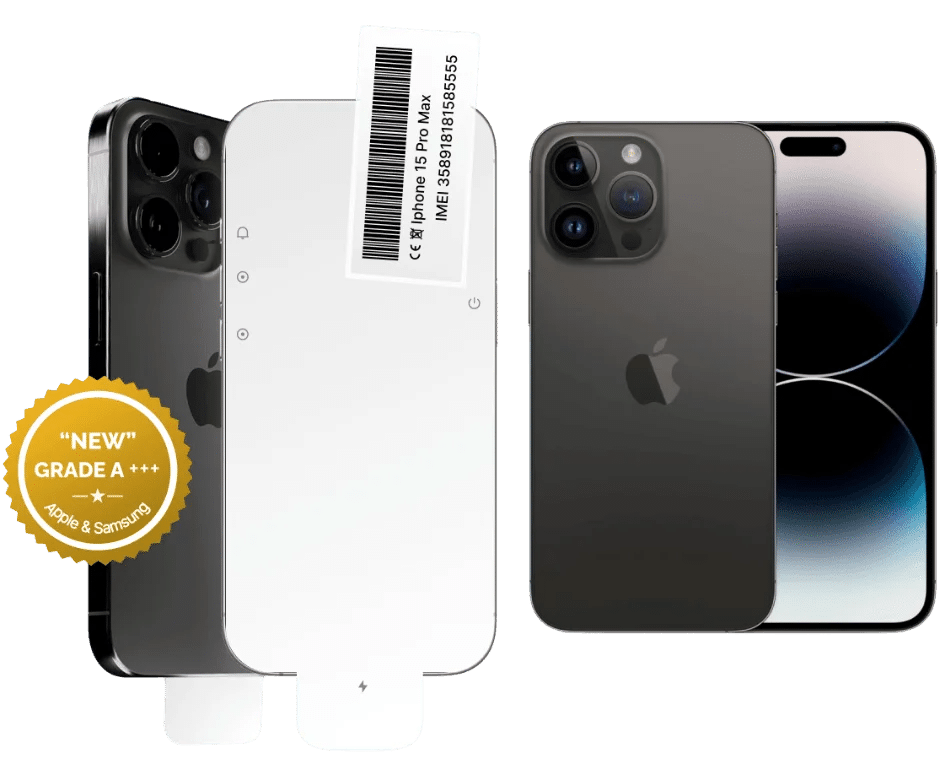
This concern has largely been addressed by professional-grade Hong Kong suppliers who have built their operations around international quality standards. Devices graded at A+++ level, inspected across 17 or more quality checkpoints, and backed by up to 12 months of warranty coverage are now accessible to European distributors — at prices that domestic suppliers cannot match.
For distributors, this combination of quality assurance and competitive pricing removes the fundamental trade-off that once made international sourcing feel risky.
Logistics: The Infrastructure Behind the Shift
Sourcing from Hong Kong would offer limited practical value if the logistics were unreliable or prohibitively expensive. The reality is that international freight infrastructure has matured significantly, making Hong Kong-to-Europe shipping both predictable and cost-effective.
Established suppliers ship via major international carriers — including FedEx — with flat-rate pricing structures that allow distributors to forecast landed costs accurately. Transit times are consistent, and customs documentation from professional suppliers is handled correctly from the outset, reducing the risk of delays at European borders.
For distributors managing inventory cycles and customer commitments, this level of logistical predictability is essential.
The Role of Minimum Order Flexibility
Historically, one of the barriers preventing smaller European distributors from sourcing directly from Hong Kong was minimum order requirements. Traditional wholesale arrangements demanded hundreds of units per order — a commitment that smaller operations could not absorb without significant risk.
The emergence of Mini Wholesale programs — offering genuine wholesale pricing from as few as five units — has removed this barrier. European distributors can now establish direct relationships with wholesale iPhone suppliers in Hong Kong, test stock quality across a small initial order, and scale their purchasing as confidence and cash flow allow.
This flexibility has been particularly transformative for distributors in mid-sized European markets, where demand is sufficient to support a professional operation but not large enough to justify traditional bulk purchasing from the outset.
Currency and Payment Considerations
For European distributors transacting internationally, currency management and payment infrastructure are practical considerations that cannot be overlooked. Fluctuations between the euro and Hong Kong dollar, international wire transfer fees, and banking restrictions in certain markets all add friction to cross-border sourcing.
Leading Hong Kong iPhone suppliers have addressed this by accepting a range of payment methods — including major cryptocurrencies — alongside traditional bank transfers. This flexibility reduces transaction costs, simplifies cross-border payments, and opens international sourcing to distributors operating in markets with more limited banking access.
Building Resilient Supply Chains
The events of recent years have underscored the importance of supply chain resilience for businesses of all sizes. European distributors who rely on a single regional supplier are exposed to significant disruption risk — whether from stock shortages, price volatility, or supplier instability.
Establishing a direct relationship with a reputable iPhone supplier in Hong Kong provides geographic and structural diversification. It gives European distributors access to a deeper inventory pool, more stable pricing, and a supply chain that is less susceptible to the disruptions that periodically affect regional intermediaries.
Conclusion
The shift toward Hong Kong as a primary source of wholesale iPhones for European distributors reflects a rational response to structural market conditions: better pricing, comparable or superior quality, improved logistics, and greater flexibility than domestic alternatives can offer.
For European resellers and distributors seeking to build competitive, scalable operations in the refurbished smartphone market, establishing a direct supply relationship with a professional Hong Kong-based iPhone supplier is no longer an unconventional strategy — it is increasingly the standard.