
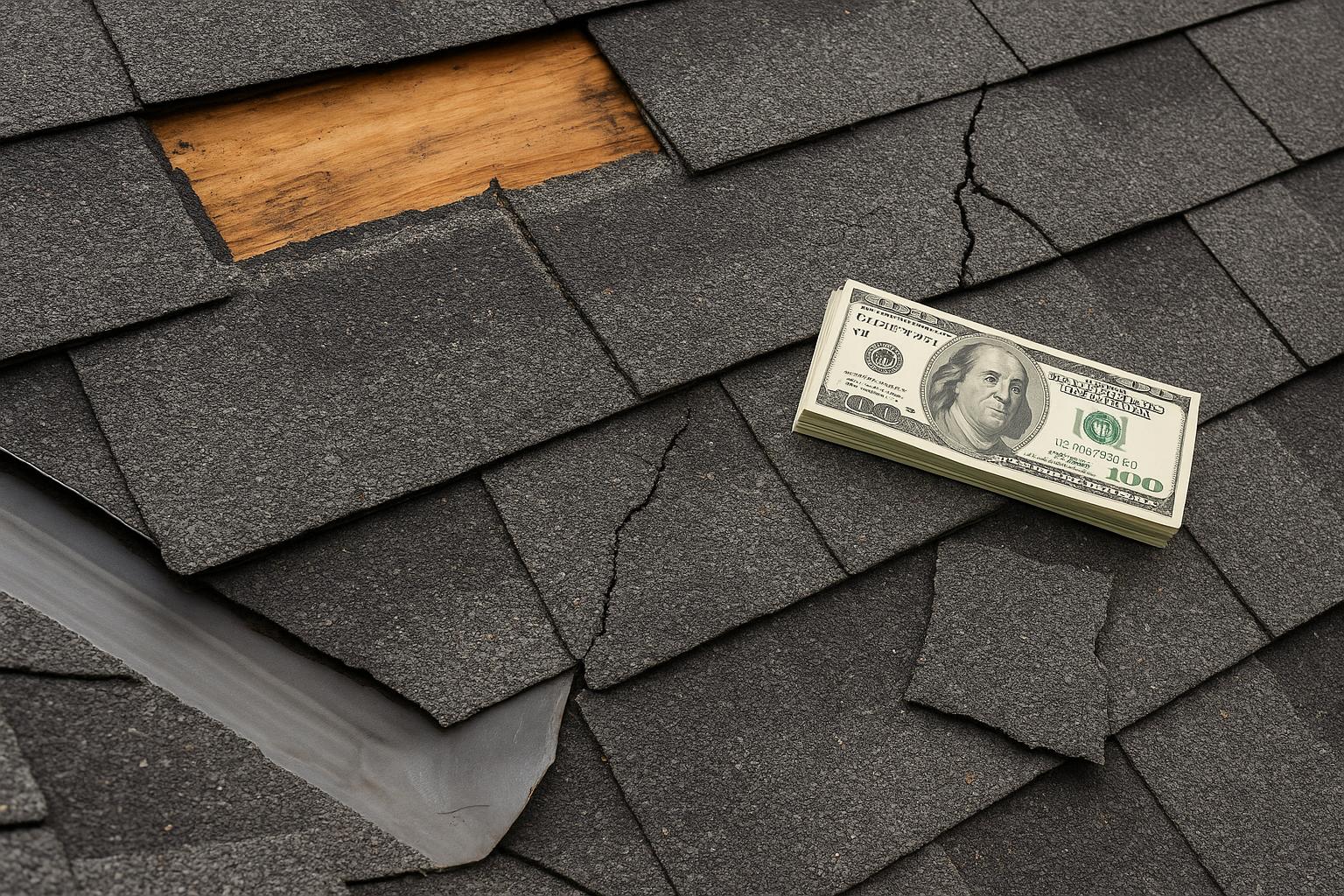
Replacing a roof is one of the most significant financial hits you will take as a homeowner. Doing it twice because of a preventable error is a disaster.
People routinely make a handful of specific, highly expensive errors when managing their roofs. These aren’t minor cosmetic blunders. They lead to structural rot, voided warranties, and massive repair bills. If you are preparing for a replacement or trying to maintain what you currently have, you need to know exactly where things usually go wrong.
Here is a quick breakdown of the primary failures and their typical financial impact.
| The Mistake | Typical Financial Impact | Prevention Strategy |
|---|---|---|
| Ignoring minor leaks | $1,500 to $5,000+ (rot/mold remediation) | Bi-annual visual inspections |
| Hiring the lowest bidder | $10,000+ (complete premature failure) | Verify credentials and local history |
| Shingle overlays | 20% to 30% reduced lifespan | Demand a full tear-off |
| Poor attic ventilation | Voided manufacturer warranties | Calculate intake/exhaust balance |
Contents
1. The “Wait and See” Approach to Minor Leaks
Water is remarkably patient. A missing shingle or a tiny drip in the attic doesn’t feel like a five-alarm fire in July. But waiting to fix it is the fastest way to turn a $300 patch job into a $4,000 nightmare.
Water slowly creeps under the underlayment. It soaks the oriented strand board (OSB) or plywood decking. Eventually, it rots the structural wood trusses. By the time you notice water pooling on your ceiling drywall or streaking down a wall, the unseen damage is already extensive. Fix small problems immediately. Like, the same week you notice them.
2. Choosing the Bottom-Dollar Contractor
This is a classic financial trap. You get three quotes for your project. Two sit around $12,000. One comes in at $7,500. The math feels obvious to a stressed homeowner.
It isn’t.
The lowest bidder nearly always cuts corners on crucial materials like synthetic underlayment or ice and water shields. They might skip replacing worn flashing around your chimney, or they rely on unskilled day labor to rush the job. If you happen to be searching for a roofing company cleveland, look closely at their completed local projects and demand to see active insurance certificates before you even consider the price tag. A cheap installation usually fails at the weakest points (like the valleys and pipe penetrations) within the first three years.
3. The Shingle Overlay Illusion
Contractors sometimes offer to nail new asphalt shingles directly over the old ones. This saves money on labor and cuts out heavy dumpster disposal fees. It sounds highly efficient (and much cheaper upfront).
Do not do this.
An overlay traps heat. That trapped heat bakes your brand-new shingles from the inside out, which causes them to blister and curl years ahead of schedule. Adding a second layer of asphalt also adds thousands of pounds of dead weight to your home’s framing. Most importantly, leaving the old roof on means you forfeit the chance to inspect the wooden decking underneath for existing rot. Always demand a complete tear-off down to the bare wood.
4. Neglecting Attic Ventilation
This is the silent killer of roofing systems. Your roof literally needs to breathe. If your attic lacks proper intake (usually soffit vents) and exhaust (ridge or box vents), hot air gets trapped.
During the summer months, an unventilated attic can easily exceed 150 degrees Fahrenheit. This fries your shingles and drastically accelerates granule loss. In winter, warm moisture from your house hits the freezing roof deck and turns into condensation. This breeds black mold. To make matters worse, most major manufacturers will completely void your 30-year shingle warranty if the ventilation doesn’t meet their strict mathematical specifications.
Protect Your Investment
A roof isn’t just a flat layer of asphalt. It is a complex, integrated system designed to shed water and manage airflow. Treat it like one. Pay for the full tear-off, hire someone who actually understands ventilation, and never ignore a drip.