
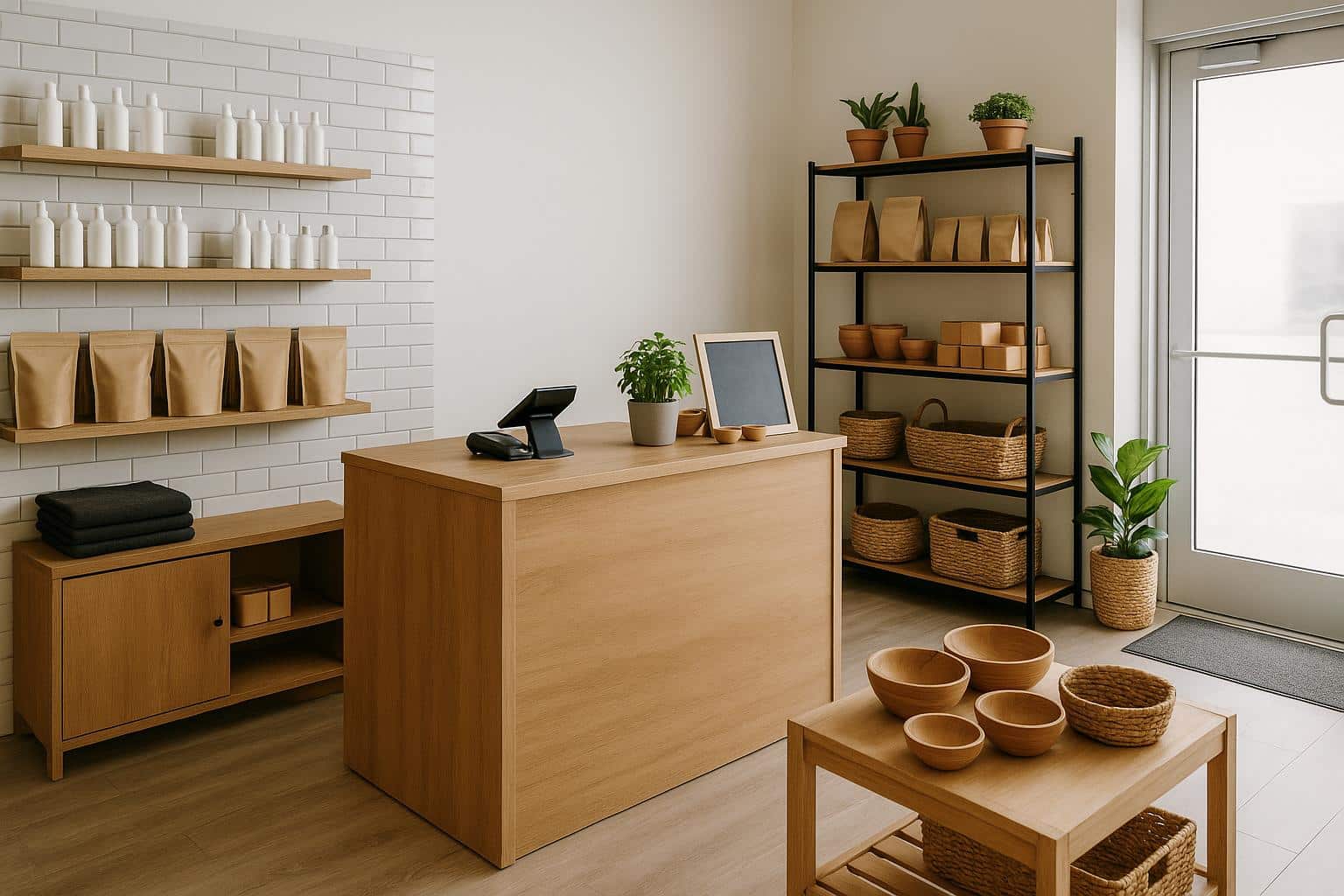
Retailers often assume improving the customer experience means making a major investment. A complete store redesign, expensive new technology or a full visual rebrand can all help in the right circumstances, but they’re not always necessary.
Sometimes, improving customer satisfaction comes down to fixing the small frustrations shoppers encounter every day. A clearer layout, better lighting, easier navigation or a more comfortable checkout area can all influence how people feel about a store.
Contents
Customers shouldn’t have to work hard to understand where things are.
If product categories feel jumbled, signs are unclear or popular items are hidden in awkward corners, shopping becomes more tiring than it needs to be.
Simple changes can help. Clear category signage, wider pathways where possible and logical product groupings make it easier for customers to move through the space without constantly stopping to figure out where they’re going.
This becomes especially important during busy periods, when a confusing layout can quickly turn into congestion.
Lighting Can Change More Than You Think
Retail lighting has a huge effect on how products and spaces feel.
Dim lighting might work beautifully in one kind of store and make another look gloomy. Harsh overhead lighting can make an otherwise attractive space feel cold.
Good lighting should help customers see products properly while supporting the overall mood of the store.
It can also be used to draw attention to new arrivals, feature displays or specific areas without filling the room with extra signs.
Give Displays Some Breathing Space
Trying to show everything at once can actually make products harder to notice.
Overfilled shelves, crowded tables and too many competing promotional messages create visual noise. Customers end up scanning the whole display without really seeing any individual item.
Removing a few products and giving key pieces more space can make the store feel calmer and more considered.
That doesn’t necessarily mean carrying less stock. It may simply mean rotating what’s on display and keeping backup inventory elsewhere.
Pay Attention to the Checkout
The checkout is often the final physical interaction a customer has with the store, so it deserves more thought than being treated as somewhere to put a register.
Is there enough space for customers to place their purchases? Is the queue obvious? Can staff package items comfortably? Are small impulse products adding interest or just creating clutter?
Even little details like having bags, receipts and payment equipment organised can make the process feel smoother.
A frustrating checkout can undo some of the goodwill created during the rest of the visit.
Comfort Matters Too
Not every retailer needs lounge chairs scattered around the store, but physical comfort still influences how long people want to stay.
Temperature, aisle width, background music, seating where appropriate and even the location of mirrors or fitting rooms can all affect the experience.
Parents with children, older shoppers and people browsing with someone else may appreciate somewhere to sit for a moment.
These things don’t have to dominate the store. They simply make it easier for a wider range of customers to feel comfortable.
Look at the Shop Through Fresh Eyes
The hardest part of improving a retail environment is that staff see it every day.
You stop noticing the faded sign, the awkward display stand or the corner where customers consistently hesitate.
Walk through the store as though you’ve never been there before. Better yet, ask someone unfamiliar with the layout to do it and tell you where anything feels confusing.
Customer experience isn’t always transformed by one dramatic change. More often, it improves through a series of small decisions that remove friction and make shopping feel easier.
And when a store feels easy to shop in, customers have one more reason to come back.