
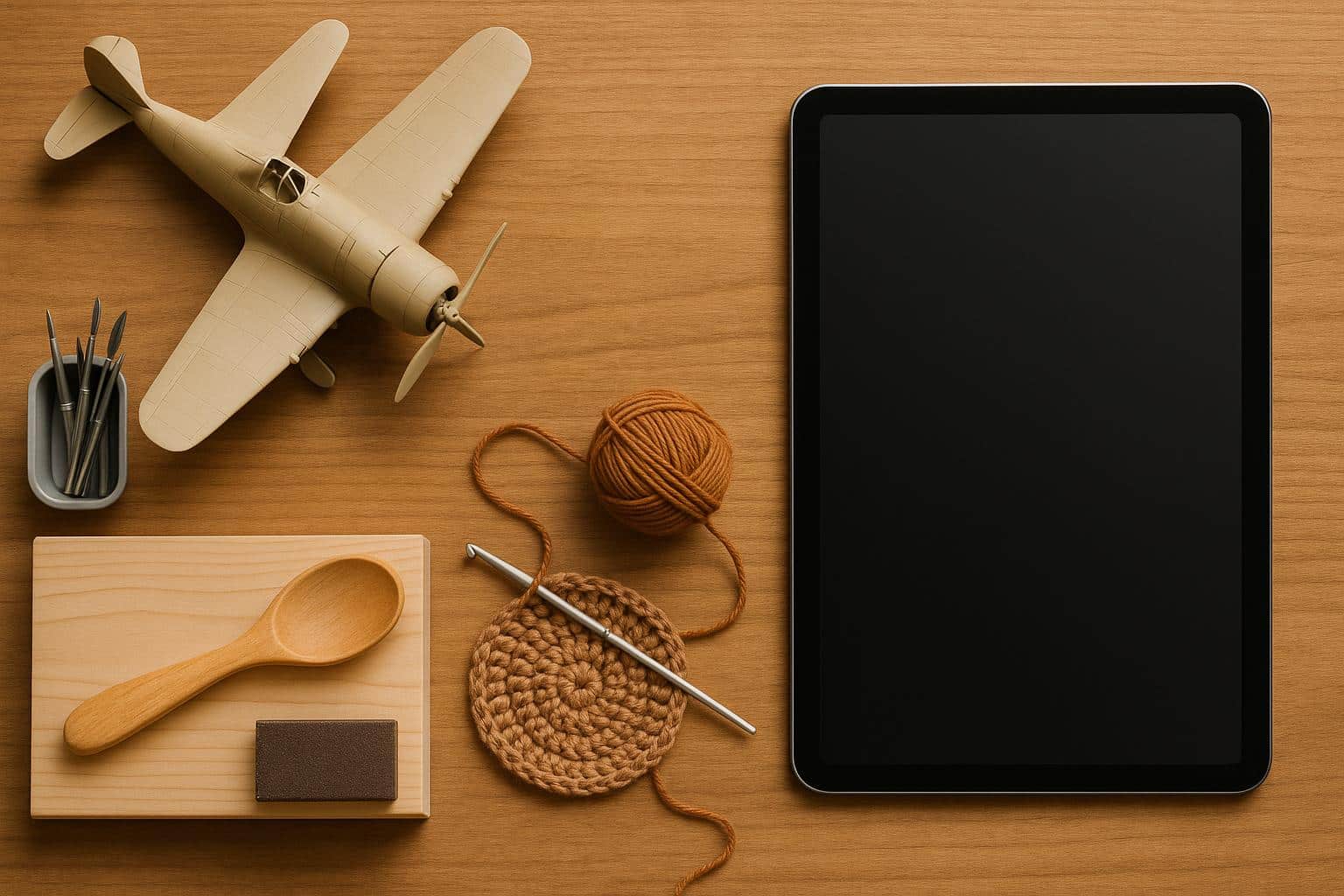
We spend an extraordinary amount of time interacting with things that don’t physically exist.
Emails, streaming services, social feeds, cloud documents, games, notifications — even plenty of our leisure time now happens through a screen. There’s nothing inherently wrong with that, but it does make the experience of sitting down and making, building or collecting something tangible feel surprisingly refreshing.
That helps explain the enduring appeal of places such as MAD Toys & Hobbies, where model kits, collectibles and hobby supplies cater to people who still enjoy doing something with their hands instead of simply swiping to the next piece of content.
Contents
There’s Satisfaction in Having Something to Show for Your Time
Spend an hour scrolling online and it can disappear without leaving much of a trace.
Spend an hour working on a model, puzzle, miniature or collection and you can usually see exactly where the time went.
That sense of progress is a big part of the appeal. A complicated build may take days or weeks, with each session moving things forward a little. There’s a clear beginning, a middle and eventually a finished result sitting on a shelf.
Not everything we do for fun needs to be productive, but visible progress can be deeply satisfying.
Hobbies Give Your Attention Somewhere to Go
A lot of modern entertainment is designed to compete aggressively for attention.
Hands-on hobbies work differently. They ask you to focus on one thing for a while.
Painting a miniature demands enough concentration that checking your phone every thirty seconds becomes inconvenient. Building a model requires following steps, noticing details and sometimes fixing mistakes. Even organising a collection can pull you into a very specific little world.
That kind of focused attention can feel almost luxurious when the rest of the day has been fragmented by messages and notifications.
Adults Are Allowed to Play Too
Somewhere along the way, hobbies involving toys, models and collectibles acquired the idea that adults need to justify enjoying them.
They don’t.
A detailed model car can appeal to someone who loves automotive history. Trading cards can combine nostalgia, artwork and collecting. Remote-control vehicles can be as technically interesting as they are entertaining. Building kits can attract people who enjoy engineering, design or simply the pleasure of assembling something well.
The dividing line between “toy” and “hobby” becomes pretty meaningless once you realise adults have always enjoyed collecting and making things.
They Can Be Social Without Requiring Small Talk
Hobbies also create their own communities.
Collectors trade information. Builders compare techniques. Enthusiasts meet at clubs, conventions, races and shows. Online groups, ironically, have made many traditional hobbies even more social by connecting people who might never have found one another locally.
And unlike generic networking, there’s already something to talk about.
You don’t have to invent conversation when everyone in the room is genuinely excited about the same obscure model, character or release.
Not Every Spare Minute Needs a Screen
Digital entertainment isn’t going anywhere, nor should it.
But there’s something valuable about occasionally choosing an activity that involves physical objects, patience and a little concentration. Something you can pick up, work on, put down and return to later without an algorithm trying to drag you somewhere else.
A good hobby doesn’t need to improve your career, make money or optimise your life.
Sometimes the fact that you simply enjoy doing it is more than enough.