

Playground mulch isn’t just about aesthetics. It influences drainage, play experience, and fall protection. When deciding on a playground surface, it’s essential to understand the play equipment, who will be using it and how much work you’re willing to put into maintenance.
Contents
What Does the Play Area Require?
- Consider your play equipment and play surface zones. Smaller climbing equipment for toddlers won’t have the same surface requirements as taller slides, climbing equipment and swings.
- Be sure you’re aware of the safety clearances needed around your play equipment – NIH has a clear page on this at newsinhealth.nih.gov/2017/05/play-it-safe. Generally, loose fill surfaces should extend a minimum of six feet past the perimeter of your play equipment (more for swings). Always check your equipment’s manual and local codes.
Comparing Loose Fill Materials
- Determine what type of loose fill best fits your application. Selections described as playground mulch for backyard and school play areas include the loose fill categories listed below. There are many options including:
- Engineered wood fiber – processed to have a more consistent texture and compacts well while remaining cushiony
- Shredded bark – good for less-trafficked areas but breaks down quicker and may require more frequent top-offs
- Wood chips – tends to be larger pieces which can provide a natural look but can displace more easily with foot traffic
- Rubber mulch – won’t decompose and may last longer but keep in mind it can get hotter and aesthetics are hit or miss
- For heavily-trafficked areas (i.e. school playgrounds), select a material that doesn’t have large pieces which will be difficult to keep evenly distributed and will be more of a hassle to rake. Avoid any products with sharp pieces, debris or unknown wood fiber products.
Building the Correct Depth and Drainage
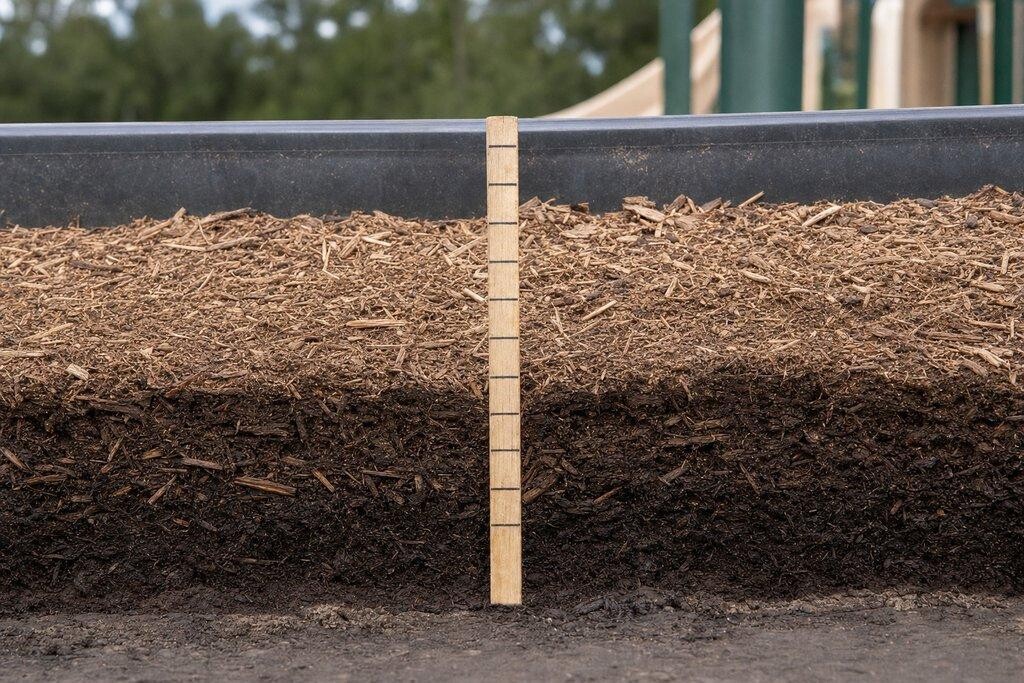
Loose fill playground surface materials
- Keep in mind that loose fill materials will compact over time. Be sure to install deeper than what’s recommended to allow for compaction from foot traffic, inclement weather and general use.
- Remove any large rocks, roots and grass before installing your playground mulch. Consider a permeable playground surface barrier to separate the playground mulch from the soil beneath.
- Loose fill playground surfaces should allow drainage. Make sure your play area is draining properly before installing any playground mulch.
- For play areas that don’t include equipment with a fall height (i.e. playhouses, ground level play equipment, etc.), playground mulch may not be necessary. Simply make sure there aren’t any tree roots, hard objects or mud puddles in the play area.
Routine Inspection and Redistribution
- Playground mulch needs to be raked periodically to make sure it’s level, especially in high use areas (exits of slides, under swings, climbing equipment, entryways, etc.).
- Pick up sticks, leaves and other objects that may find their way into your play area.
- Check for compacted areas after inclement weather or heavy use.
- Add more material if your playground mulch is noticeably thinner than when first installed.
- Check to make sure your playground mulch is staying within the confines of your play area.
Think about how all of the users of the playground (children, caregivers, maintenance staff, etc.) will access and travel through the play area. Loose fill material can be difficult to navigate through in a wheelchair, walker or even a stroller, especially if the depth of the material is significant or if it has just been raked.
Consider providing a firm and stable accessible route from the entry point of the playground to various play components instead of counting on the mulch to accommodate all users.
Use the same type of material in the fall zone as selected for the playground surface. Compaction and drainage characteristics can change when different materials are used and it makes it difficult to determine accurate depths during safety inspections.
Have a place nearby to store extra material and rakes to facilitate quick repairs after heavy use.
Edging and Final Checks
- Edging around a playground mulch area isn’t just for looks! Loose fill materials will find their way into mulch beds, lawns and walkways if there isn’t an effective way to keep it in place. Not only will this be a hassle to deal with, your play area will no longer have the depth of playground mulch it was originally designed with which could compromise its effectiveness. Choose an edging that won’t budge, is smooth and tall enough to contain your playground surface material. Try to make sure your edging is level so kids aren’t tripped up when entering your play area. Recheck your edging after heavy equipment use, freezing temperatures and inclement weather.
- Consider keeping notes about maintenance especially if your playground will be used by a group of people (i.e. school playgrounds). For residential playgrounds, simply walk your play area and note anything out of the ordinary before playtime.
- Before your playground mulch sees its first day of use, walk the area making sure your playground mulch was installed at the proper depth, paying special attention around play equipment. Rake extra material around the landing areas of your swings and slides.