
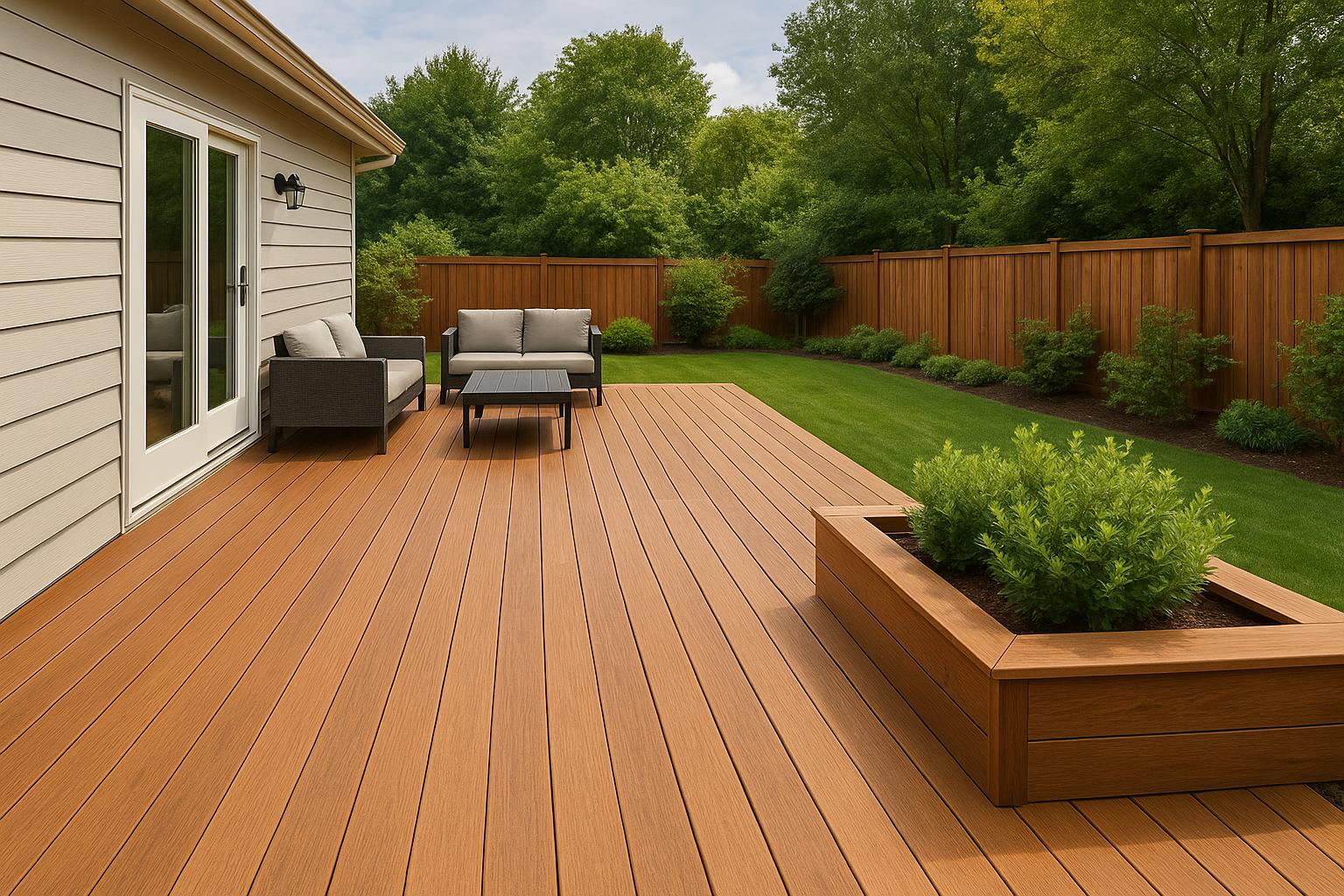
When considering decking for your outdoor space, it is easy to get caught up in the excitement of choosing materials and imagining the finished product. However, the true key to success lies in effective planning. Whether you opt for the modern sophistication of composite decking or choose traditional materials like wood or vinyl, the way you plan your deck can make a world of difference. By taking a thoughtful, structured approach, you can maximise both the functionality and aesthetics of your deck, ensuring that it complements your home and lifestyle.
A thoughtful exterior update does not need to be complicated. By focusing on durable materials, practical details and a design that suits the property, you can create an outdoor space that feels polished, useful and built to last.
Here’s how effective planning can help you get the most out of your space, focusing on composite decking while considering other options.
Contents
- 1. Know Your Needs: What Do You Want from Your Deck?
- 2. Consider the Climate and Environmental Factors
- 3. Maximise Space with Multi-Level Decks
- 4. Efficient Layouts: Use Your Deck’s Full Potential
- 5. Think About Sustainability and Environmental Impact
- 6. Consider the Long-Term Investment: Durability and Maintenance
- 7. Design Aesthetic: Matching the Deck to Your Home’s Style
- 8. Budgeting and Cost Efficiency
- Conclusion
1. Know Your Needs: What Do You Want from Your Deck?
Before diving into the materials or design specifics, it is crucial to ask yourself what you want to achieve with your deck. Are you looking for a space to entertain guests, a quiet retreat for personal relaxation, or a functional area for dining and cooking? Defining the purpose of your deck will help you make decisions on size, layout, and features that suit your needs.
For example, a larger deck may be necessary for hosting parties or having multiple activity zones, such as a seating area, outdoor kitchen, and a lounging space. On the other hand, a smaller deck might suffice for simple relaxation or as a peaceful nook with comfortable seating. Knowing your priorities upfront ensures that your deck installation meets your lifestyle, rather than merely being a decorative addition.
2. Consider the Climate and Environmental Factors
When planning your deck installation, it is important to consider the climate and environmental factors that will impact your deck’s longevity. If you live in an area with high humidity, frequent rainfall, or intense sunlight, materials like composite decking are worth considering for their superior weather resistance. Composite decks are made from a combination of wood fibres and plastic, making them highly durable and resistant to rot, warping, and fading – ideal for regions where weather conditions might otherwise degrade traditional wood decks.
In contrast, wood decking, though classic and charming, requires regular maintenance and may not perform as well in extreme conditions. Cedar or redwood are durable options, but they can still be vulnerable to the elements without regular sealing and staining. If you are planning a deck in a region with a mild climate, traditional wood or other natural materials like bamboo or teak might be a good fit. However, composite decking is still a low-maintenance choice for anyone looking to reduce upkeep.
3. Maximise Space with Multi-Level Decks
If you have a sloped yard or want to define multiple outdoor areas, consider the use of a multi-level deck. Multi-level designs add dimension to your outdoor space, creating different zones for different purposes. For example, you could have a dining area on the top level, a hot tub or lounge area on the lower level, and even a fire pit or garden nook on another tier.
A multi-level design works exceptionally well with composite decking because of its clean lines and versatility. Composite boards are easy to cut and can be arranged in unique configurations without compromising on stability. The uniformity and smooth finish of composite decking also give a polished, modern appearance, making it perfect for elevated designs.
Traditional wood decks can also be designed in a multi-level configuration, though the cost and maintenance could be higher. Wood, especially if untreated, may require more frequent repairs, such as refinishing or staining, due to the wear and tear caused by multiple levels.
4. Efficient Layouts: Use Your Deck’s Full Potential
Effective planning involves ensuring that your deck design maximises its usability. Think about traffic flow and how you’ll move around the deck. Will guests walk through the dining area to access the seating area? If so, consider creating clear pathways, such as wide steps or open spaces that guide people through without disrupting the zones of your deck.
Also, consider features that can make your deck more functional, like built-in benches or storage spaces. Composite decking is perfect for this because it offers long-lasting performance and comes in a variety of styles that can complement built-in elements seamlessly. Many composite decking brands offer hidden fastener systems, which result in a clean, seamless appearance that enhances the overall look.
Wood decking can also integrate built-in seating and storage but may require more maintenance. The wood may expand, contract, or splinter over time, so it is important to seal and protect these elements properly. For storage, treated wood is a better choice, as it can withstand exposure to moisture more effectively than untreated wood.
5. Think About Sustainability and Environmental Impact
Today’s homeowners are increasingly concerned about sustainability and making environmentally conscious choices. Composite decking is often seen as a more eco-friendly option compared to traditional wood. Many composite decking products are made from recycled materials, such as plastic bottles and reclaimed wood fibres. Choosing composite decking can reduce the demand for virgin timber, helping to preserve forests.
On the other hand, wood is a natural material and, if responsibly sourced, can be a sustainable option as well. Look for decking materials that are certified by the Forest Stewardship Council (FSC), ensuring that the wood comes from sustainably managed forests. If you love the appearance of wood but are concerned about the environmental impact, choosing FSC-certified options or reclaimed wood can be a good alternative.
Another option for sustainability is bamboo decking. Bamboo is a fast-growing, renewable resource, making it a more sustainable choice compared to traditional hardwoods. However, bamboo decking may require more maintenance than composite boards, as it can be vulnerable to moisture damage if not properly sealed.
6. Consider the Long-Term Investment: Durability and Maintenance
When planning your decking installation, it is important to think about the long-term maintenance requirements. Composite decking is highly durable and resistant to many of the issues that plague traditional wood decks, such as splintering, rotting, and fading. Its low-maintenance nature makes it an appealing choice for homeowners who want to avoid the time and cost of sealing, staining, and repairing their deck every few years.
While wood decking provides a classic look, it typically requires more upkeep. Cedar, redwood, and pressure-treated wood decks need regular maintenance to ensure their longevity. Without proper sealing, wood can warp, crack, or splinter, and it may eventually need to be replaced.
Vinyl decking is another low-maintenance option that is resistant to stains and fading, similar to composite decking. However, vinyl can become slippery when wet, so it may not be the best choice for areas that experience heavy rainfall or moisture.
7. Design Aesthetic: Matching the Deck to Your Home’s Style
The design of your deck should complement your home’s style. Composite decking offers a wide range of finishes, colours, and textures, from wood-look finishes to sleek, modern options, allowing you to match your deck with your home’s exterior.
If you have a more traditional home, a wood deck with rich grains and natural colours may be the way to go. For modern or contemporary homes, a composite deck with clean lines and a minimalist design can help create a cohesive look. Choose a design that enhances the aesthetic of your home and feels like an extension of your living space.
8. Budgeting and Cost Efficiency
When planning your deck, cost is a major consideration. While composite decking tends to be more expensive initially than wood, it is important to factor in long-term costs, including maintenance and repairs. Over time, the durability and low-maintenance benefits of composite decking can make it more cost-effective than wood decking, which requires regular upkeep.
Ultimately, the best decking material depends on your specific needs, budget, and preferences. By carefully considering your design, material choices, and long-term goals, you can ensure that your decking installation is a success, providing years of enjoyment and adding value to your home.
Conclusion
Effective planning is the foundation of a successful decking installation. By carefully considering your needs, climate, budget, and design preferences, you can ensure that your deck maximises both its functionality and aesthetic appeal. Composite decking offers numerous benefits, particularly in terms of durability and low-maintenance care, but wood and other materials also have their place. Ultimately, the right choice depends on your unique situation – so take the time to plan thoughtfully and create an outdoor space that will serve you for years to come.
For commercial gardens, hospitality venues and larger outdoor projects, the finishing details can be just as important as the main structure. traditional signage can add character to entrances, garden rooms or hospitality spaces; while digital signage can help commercial venues share opening times, menus, promotions or visitor information clearly; while efficient hand dryers can support cleaner, lower-maintenance washroom facilities in public-facing outdoor settings.