
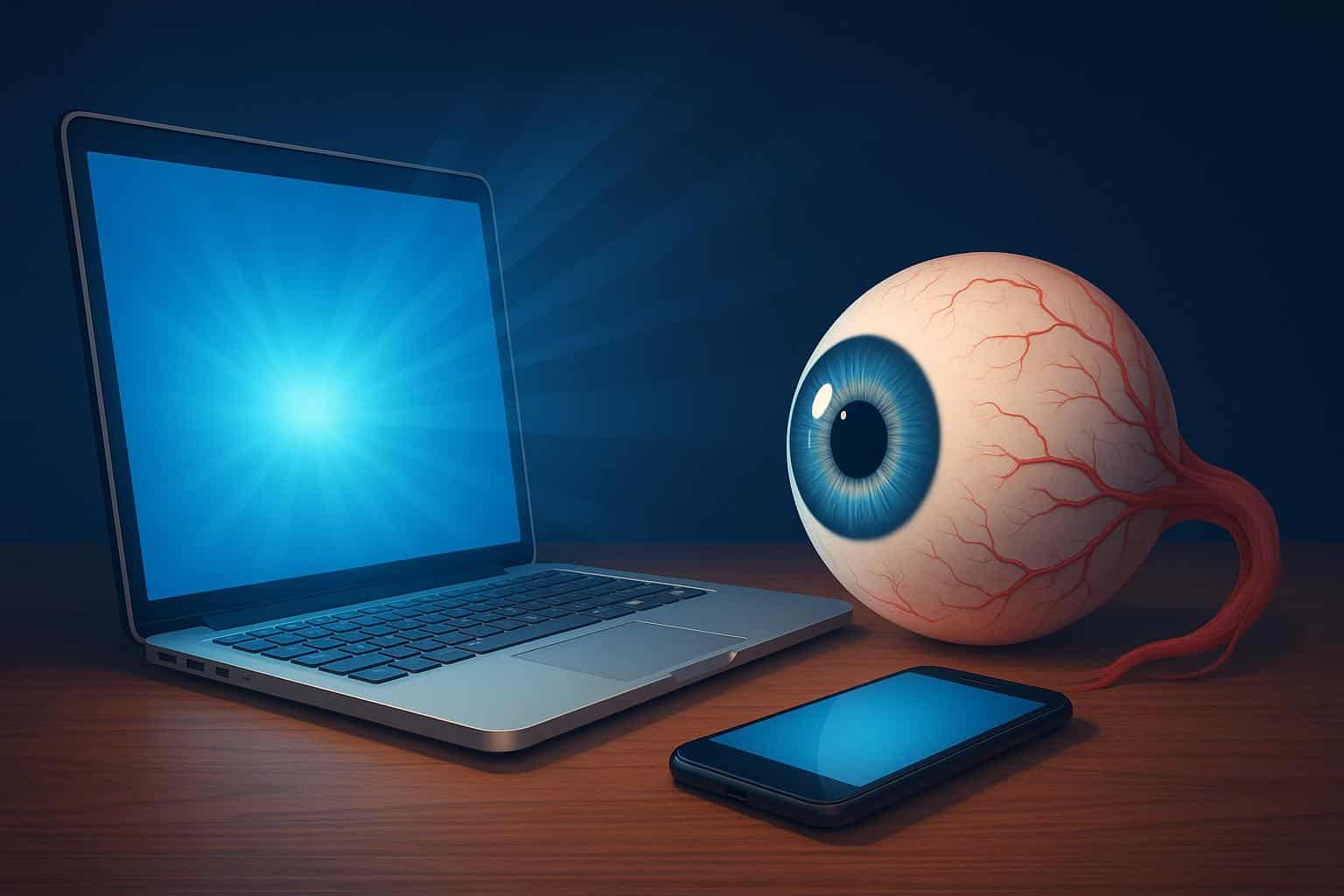
You check your phone after waking up. Then comes the laptop for work, a few messages during lunch, and maybe a movie or two before bed. Somewhere in between, your eyes start feeling tired, your neck feels stiff, and sleep does not come as easily as it used to.
Screens have become a part of everyday life. They help you work, learn, shop, and stay connected. But when hours spent in front of a screen start adding up day after day, your body notices.
Contents
What Changes When Most of Your Day Happens Through a Screen?
Spending long hours looking at screens usually means spending long hours sitting in one place. Over time, that combination can affect more than you might expect.
Some of the most common effects include:
- Tired, dry, or irritated eyes
- Neck and shoulder discomfort
- Back pain caused by poor posture
- Headaches
- Reduced physical activity
- Difficulty falling asleep
These issues may seem minor at first. The problem is that they often build gradually, making them easy to ignore.
Ever Wonder Why Your Eyes Feel Tired?
After a long day on a laptop, you feel as though your eyes have done a workout of their own.
When you focus on a screen, you tend to blink less often. This can leave your eyes feeling dry and strained. Some people also notice blurred vision or increased sensitivity to light after spending hours switching between devices.
A simple habit can help. Eye specialists often recommend the 20-20-20 rule. Every 20 minutes, look at something around 20 feet away for 20 seconds. It is a small break, but it gives your eyes a chance to reset.
Can Screen Time Sneak Into Your Sleep Schedule?
It often does.
Many people spend the last part of their day scrolling through social media, replying to messages, or watching videos. Before you know it, bedtime has arrived but sleep has not.
The blue light emitted by digital screens can interfere with your body’s natural sleep cycle. As a result, falling asleep may take longer, and the quality of sleep may suffer. Over time, poor sleep can affect concentration, mood, and overall wellbeing.
Why Does Your Neck Feel Like It Has Worked Overtime?
Look around a cafe, office, or waiting room, and you will probably see people looking down at their phones.
That posture may not seem like a big deal in the moment. However, spending hours with your head tilted forward can place extra strain on your neck, shoulders, and upper back. Add long workdays at a desk, and discomfort can become part of your routine.
Simple changes such as sitting upright, adjusting screen height, and taking movement breaks throughout the day can make a noticeable difference.
Where Does Health Insurance Fit Into This Conversation?
Most screen-related health issues can be managed through healthier habits and timely medical advice. However, some concerns may eventually require consultations, diagnostic tests, or specialised treatment.
That is one reason many people consider health insurance as part of their overall healthcare planning. Depending on the policy terms and conditions, it may help manage the cost of covered medical consultations, treatments, and hospitalisation.
Similarly, a mediclaim policy may help with hospitalisation expenses if a medical condition requires treatment and the claim falls within the policy coverage.
Conclusion
You are not going to stop using screens, and you do not need to. Work, entertainment, shopping, banking, and even conversations now happen through a screen.
A short walk between meetings, a break from the laptop every now and then, or putting the phone away before bed may not seem like much. But these small habits can make a noticeable difference over time. After all, it is easier to take care of a stiff neck or tired eyes today than deal with bigger health concerns later.