
Contents
- Key Takeaways
- Mastering the Game: Strategies That Top Players Swear By
- Common Missteps: What New Players Often Overlook
- The Role of Practice: Tricks to Sharpen Your Skills Faster
- Advanced Techniques: Raise Your Game to Pro Level
- FAQ
- What makes Spider Solitaire different from other card games?
- How can beginners improve at Spider Solitaire quickly?
- Is there a specific strategy for tackling tough stacks of cards?
- How important is it to interact with other players in Spider Solitaire?
- Can card counting make a noticeable difference in gameplay?
- What role does psychology play in competitive Spider Solitaire?
- Are there recommended variants of Spider Solitaire for skill enhancement?
- How can analyzing losses contribute to better gameplay?
Key Takeaways
Recognizing the distribution of cards is critical in Spider Solitaire. By analyzing the arrangement, players can spot opportunities and effectively devise strategies.
Timing proves essential for success in Spider Solitaire. Players must understand when to take risks and when to wait, as this can lead to better strategic outcomes.
Empty columns create strategic opportunities in Spider Solitaire. Skilled players leverage these spaces to manipulate card placements and generate new sequences.
Moving cards too early is a common pitfall for beginners. Rushing into decisions can jeopardize future possibilities, so maintaining strategic integrity is vital.
Effective suit management is key for progress in Spider Solitaire. Neglecting this crucial aspect can dramatically undermine a player’s strategy and overall success.
Regular practice through daily challenges significantly enhances skills in Spider Solitaire. By engaging consistently, players develop a strategic mindset and accelerate their learning.
Analyzing losses becomes essential for becoming a skilled Spider Solitaire player. Reflecting on failures allows individuals to understand their decision-making processes and improve future gameplay.
Mastering the Game: Strategies That Top Players Swear By
Understanding Card Distribution for Strategic Advantage
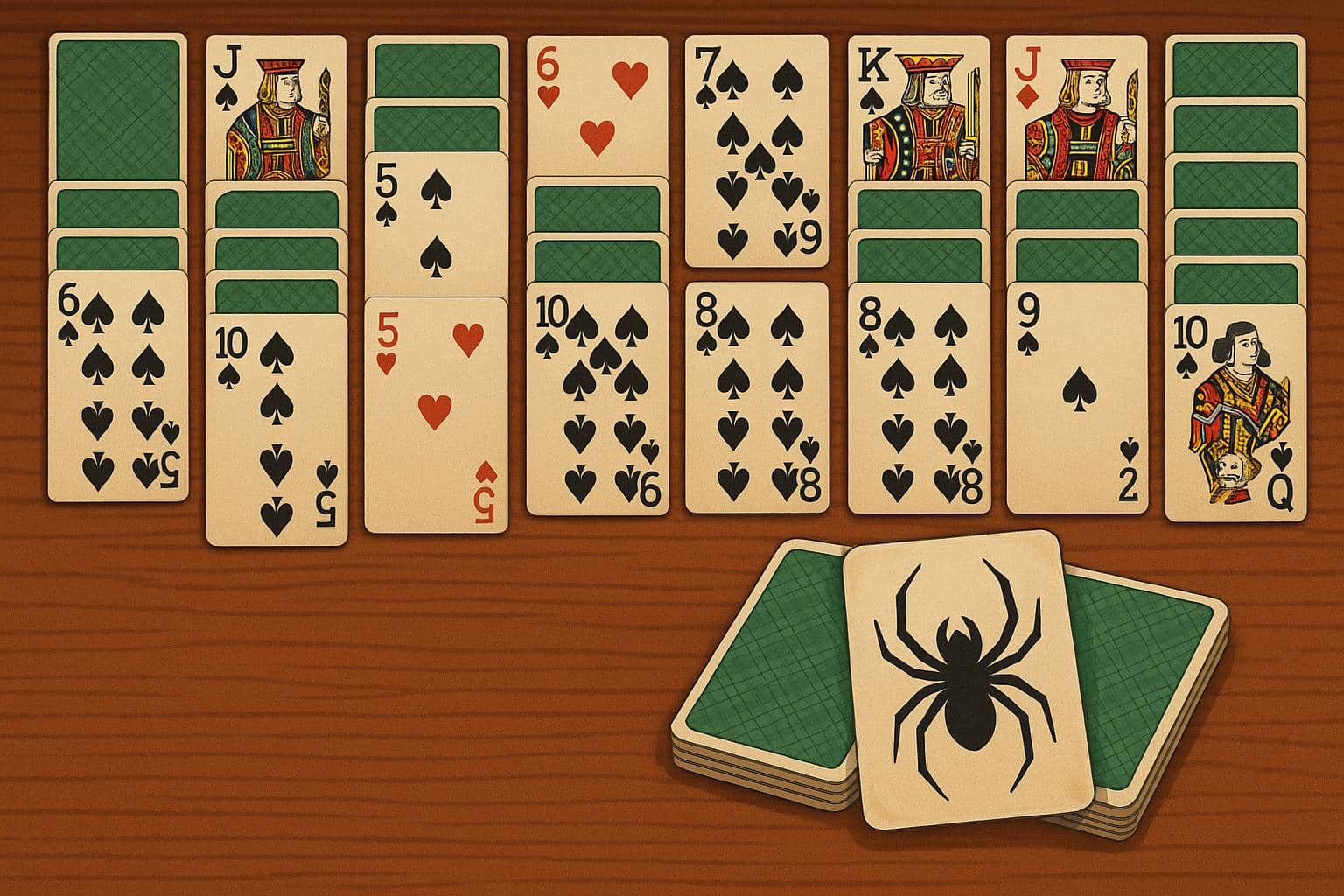
Excelling in Spider Solitaire hinges on understanding the distribution of cards. Top players consistently assess their dealt hands, identifying both opportunities and pitfalls in the arrangement. Suits and sequences dictate the pace and strategy of the game. At the start, assessing the deck layout is crucial. Look for cards that are clustered together; they may signal potential sequences ready to be revealed. Professionals advise focusing on the top cards, as playing them wisely can lead to significant advantages.
A densely packed column filled with high cards may appear intimidating. Yet, adept players often find ways to chip away at them. By prioritizing emptier columns for stacking, smoother moves can be facilitated later on. The distribution guides one’s approach, setting the stage for strategic plays.
It’s not just about uncovering cards; it’s also about interpreting the overall flow of the game. Staying aware of where each suit stands allows players to anticipate and control the board’s rhythm. Understanding the position of every card provides a tactical edge.
Timing Moves: When to Shift Gears in Spider Solitaire
Timing plays a vital role in Spider Solitaire. Successful players excel at shifting gears according to the game’s flow. Reacting too quickly can lead to poor decisions, while patience nurtures a deeper understanding of unfolding sequences. The secret lies in knowing when to take risks.
Delaying certain moves can uncover the perfect opportunity later. However, this requires discipline. The urge to make quick fixes may lead to complications. For example, shifting a card to a different column might disrupt future sequences, so it might be wiser to wait. Players frequently discover that holding off for another turn can yield better decisions.
Here’s the gist: timing isn’t only about reacting; it’s about managing the game’s flow. Players who excel in Spider Solitaire adapt rapidly, observing the table and aligning their moves accordingly. Each card counts, and thus, every decision matters.
Utilizing Empty Columns: More Than Just a Safe Space
Empty columns are treasures in Spider Solitaire. Many novice players overlook the true value of these spaces. They’re not just vacant spots; they symbolize strategic opportunities. Experts recommend that players prioritize keeping at least one column open, enhancing adaptability in their play.
Consider the potential unlocked by a free column. By manipulating card placements, players can create new sequences. When an empty column enters the equation, it offers flexibility, allowing the dynamics of the board to shift in a player’s favor and opening up the potential for better moves and more efficient sequences.
If there’s a stubborn stack of cards, don’t just drag cards around randomly. Moving some to an empty column not only creates room but also helps tackle challenging stacks more effectively.
“An empty column can be the difference between frustration and victory.”
Common Missteps: What New Players Often Overlook
The Dangers of Prematurely Moving Cards
New players frequently rush their moves due to impatience. The appeal of quickly rearranging cards can result in miscalculations. Hasty decisions often jeopardize solid plans. An impulsive tweak may completely lock players out of better sequences.
A simple rule: pause and think before moving cards. Evaluate the potential impact. What seems like a quick fix might actually lead to a major setback. Professionals recommend a methodical approach. Each card holds its significance. A single mistake can trigger a cascade of challenges down the road.
Ignoring Suit Management: A Recipe for Disaster
It’s not just about handling cards; managing suits is equally important. Often, novice players underestimate the significance of effective suit management. Each suit adds layers of complexity to decisions. Disregarding suits can severely derail progress.
Experienced players monitor suits, ensuring they efficiently work towards uncovering them. Neglecting suit management can cause entire strategies to fall apart. Is risking valuable opportunities worth it just to play a few cards prematurely? Absolutely not.
Balancing suits demands adaptability. It’s more of a dance than a formulaic approach. Regularly checking suit formations encourages players to adopt a long-term outlook.
Overthinking vs. Trusting Instincts: Finding the Balance
Analysis paralysis can halt progress for many new players. They often become mired in the details, analyzing every possible move. Here’s a key insight: instincts often play a vital role in gameplay. Achieving the right balance between intuition and analysis is essential.
Professionals frequently advise trusting gut feelings in various situations. The rhythm of the game often guides sound decisions. Engaging with the flow can lead to better choices than getting caught up in over-analysis. But just like a quarterback, knowing when to commit is also essential.
How can someone strike that balance? Developing an instinct for what works comes with practice. Frequent gameplay nurtures an understanding of trends. When combined with instinct, it can become a powerful advantage.
The Role of Practice: Tricks to Sharpen Your Skills Faster
Daily Challenges: Why Consistent Play Makes a Difference
Consistent practice serves as the foundation for skill development in Spider Solitaire. Players engaging in daily challenges experience significant improvements. The path to mastering advanced strategies lies in regular exposure to different game scenarios.
Establishing a routine goes beyond just playtime. It fosters a strategic mindset. Each game presents unique challenges, and the more players tackle these, the better their adaptability becomes. Daily engagement reinforces lessons learned, creating a constructive feedback loop.
Analyzing Losses: How to Learn from Mistakes Effectively
Everyone encounters losses in Spider Solitaire. What distinguishes skilled players is their ability to analyze these setbacks. Reflecting on unfavorable games can reveal insights that inform future strategies. Instead of feeling frustrated, players should adopt a mindset focused on learning from these experiences.
After a loss, dissect pivotal moments from the game. Consider questions such as: What caused the mistake? Which moves appeared promising at the time? Grasping these elements lays the foundation for successful future plays. Viewing setbacks as opportunities rather than failures is essential.
Joining the Community: How Social Play Enhances Expertise
Engaging with other Spider Solitaire enthusiasts can profoundly enhance gaming skills. Many individuals underestimate the benefits of community gaming. Interaction with others can unveil new strategies and insights that players might otherwise overlook. Knowledge can flow freely at meetups or online forums dedicated to spider solitaire.
Participating in tournaments or friendly competitions sharpens gameplay skills while building connections. Shared experiences can motivate players to explore advanced strategies and improve their performance. There’s strength in numbers; opportunities for collaboration and strategic discussions abound within gaming communities.
Advanced Techniques: Raise Your Game to Pro Level
Card Counting: A Method That Can Transform Your Play
Many elite players leverage card counting as an advantage in Spider Solitaire. This technique may sound familiar, particularly to seasoned poker players. After all, understanding which cards have been played can significantly enhance decision-making. It’s a nuanced skill that requires keen observational abilities.
Knowing the number of cards left in play allows players to anticipate future moves. A seasoned player can determine whether to focus on saving specific suits when they recognize which cards remain. This insight can influence the aggressiveness of their approach to strategies.
Exploring Variants: Finding New Challenges to Boost Skills
Spider Solitaire boasts numerous variants that can enhance and challenge player skills. Exploring different formats promotes creative thinking. By attempting various styles, players can uncover new strategies, adding depth to their existing gameplay. Venturing into variations opens avenues to other card games.
Experimenting with different formats can prevent stagnation. It’s easy to get stuck cycling through the same tactics. Adapting to new styles cultivates versatility and helps players prepare for the unexpected.
Incorporating Psychology: Reading Opponents for Competitive Play
In the realm of Spider Solitaire, psychology often plays a pivotal role, especially in competitive scenarios. Grasping how opponents think can yield an unprecedented tactical advantage. Predicting actions based on behavioral patterns allows seasoned players to position themselves favorably.
Interpreting body language, facial expressions, and timing can indicate forthcoming strategies. Though this resembles a poker tactic, applying these principles to card games adds an enriching dynamic. Isn’t it intriguing how analyzing human behavior can tilt the odds in one player’s favor?
Mastering Spider Solitaire necessitates dedication, strategy, and thoughtful practice. The finest players have learned to harness these secrets to their benefit, transforming obstacles into chances for growth. As the community expands, so do the rewards of bonding over a shared enthusiasm for one of today’s most captivating card games.
FAQ
What makes Spider Solitaire different from other card games?
Spider Solitaire is distinctive due to its unique gameplay mechanics involving two decks and the requirement to construct complete sequences down to the king. Players must strategically manage suit arrangements and placements, providing a complexity seldom found in other solitaire variations.
How can beginners improve at Spider Solitaire quickly?
Beginners can make rapid progress by adopting a routine of daily practice and diving into the game’s nuances, such as recognizing card distributions. Additionally, studying moves from seasoned players or simulating gameplay can expose newcomers to effective strategies and tactics.
Is there a specific strategy for tackling tough stacks of cards?
Absolutely. When confronting difficult stacks, players should prioritize moves that create empty columns, allowing for flexibility in future plays. By strategically relocating cards and focusing on revealing hidden cards, players can effectively dismantle challenging configurations.
How important is it to interact with other players in Spider Solitaire?
Engaging with other players is invaluable for skill enhancement. Participation in a community provides opportunities to share insights, strategies, and tips that may not be clear in solitary play. Collaborative experiences can also inspire motivation and lead to challenging gameplay.
Can card counting make a noticeable difference in gameplay?
Absolutely. Card counting enhances decision-making by keeping track of the cards that have been played and those that remain. This understanding allows for strategic adjustments based on the likelihood of what cards may appear next, providing a significant gameplay advantage.
What role does psychology play in competitive Spider Solitaire?
Psychology has a considerable influence on competitive play in Spider Solitaire. Skilled players can analyze opponents’ behaviors to predict their moves, allowing for strategic adjustments that improve outcomes. Observing body language and decision-making patterns can reveal critical insights.
Are there recommended variants of Spider Solitaire for skill enhancement?
Indeed, exploring different Spider Solitaire variants can stimulate skill growth by introducing fresh rules and challenges. These new formats can inspire players to think innovatively and adjust their strategies, ultimately bolstering their overall gameplay abilities.
How can analyzing losses contribute to better gameplay?
Reflecting on losses can transform frustration into valuable learning experiences. By examining mistakes and grasping what went awry, players can modify their strategies for future games. This reflective mindset fosters growth and encourages proactive improvement.