
Whether you decided to quit, take a tolerance break, or have an employment drug test coming up, taking time to detox from THC is a great direction.
But the timeline and the factors affecting detox can be hard to understand, especially with all the myths that circulate on the internet.
So, let’s tackle the topic head-on and see what THC detox actually means, which factors affect it, and how to approach the whole concept for the best results.
Contents
What THC Detox Actually Means
In simple terms, THC detox is the time needed for your body to entirely get rid of the THC metabolite (known as THC-COOH) that stays in the body. Compared to other substances, THC metabolites tend to linger on for longer, so detox from them should be taken more seriously.
The first thing you should keep in mind is that THC is fat-soluble. This means that all the extra THC your body cannot metabolize will accumulate in body fat, and can be released into the system at a later moment in time.
This is why people find themselves in situations where they quit for weeks (or even months) and still test positive on a THC urine drug test. Besides body fat percentage, there are other lifestyle and metabolism-related factors we should consider as well.
Factors That Affect The THC Detox Timeline
When it comes to how fast you can detox, you should consider the following factors:
- Age – the older we get, the slower our metabolism gets. Younger people tend to detox faster after quitting.
- Body fat percentage (BMI) – as mentioned, THC stays in fat cells. The more body fat there is, the larger the THC deposits.
- Physical activity – this goes without saying, but people who exercise regularly metabolize THC out of their system more quickly.
- Usage frequency and dosage – not all THC products are made the same. If stronger stuff is consumed (and/or more often), the time for detox increases significantly
- Hydration – optimal hydration is key to effective metabolism (not only for THC).
- Dietary habits – a large part of THC metabolites goes out through excretion. Consuming a lot of fiber-rich food helps with the whole process.
As you can see, THC detox is pretty individual, since no two people are the same when it comes to these complex factors.
Common Dos and Don’ts of THC Detox
Now that we know what affects the metabolism and detox of THC, let’s talk about some useful tips. Also, we should dismantle some THC detox myths, so you don’t waste your time, or even worse, risk your well-being.
What to do when detoxing
The answer to a well-executed THC detox lies in the factors that affect it:
- Stop using ASAP – this goes especially for people who have an upcoming drug test
- Regular exercise – boosts your metabolism and helps with keeping cravings at bay
- Healthy diet – enrich your everyday diet with fruits and veggies with lots of fiber
- Hydrate – up your water intake, but do not overdo it (more on that later)
- Track your THC levels – at-home drug tests are ideal for this. A 3-level THC urine test will tell you where you’re at, especially after a period of heavy use.
What to avoid when detoxing
Of course, as it’s an unwritten rule with everything on the internet, the THC detox niche is full of myths and false promises. Here’s what to avoid:
- Last-minute quick fixes – the truth is, THC can’t be eliminated quickly
- Overhydration – not only can it be bad for you, but it can also dilute your urine, giving you inaccurate drug test results
- Sauna just before the test – since THC is stored in fat cells, quickly and aggressively sweating before a test can slightly spike your THC levels
- Extreme home remedies – apple cider vinegar, Niacin, or cranberry juice can help with metabolism, but in excessive amounts, they can be dangerous as well
Personal THC Detox Time Estimation
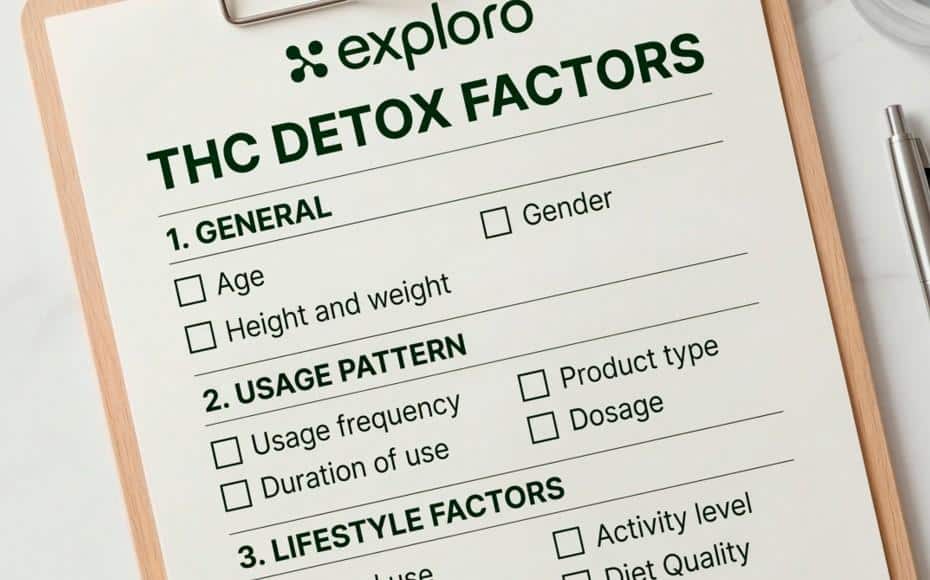
Now, knowing how THC detox works, what to do, and what not to do, we come to an important question: how to estimate your personal detox timeline.
Take a moment and try to analyze the factors through the lens of your lifestyle (pen and paper might help). How often were you using THC products, and how strong were they? What is your BMI (height to weight ratio) and your body fat percentage? What about physical activity, hydration, and diet? By factoring these in, you will get a better understanding of where you stand.
Here’s an approximate timeline (which very well may vary based on these factors) for THC detox:
- Occasional user (1–2 times/week)
Typical range: 3–7 days - Light to moderate user (3–4 times/week)
Typical range: 7–14 days - Frequent user (5–6 times/week)
Typical range: 10–21 days - Heavy/daily user
Typical range: 20–45+ days
But, if you want a close estimate, with a detailed report, make sure to try out the Exploro THC detox calculator. It accounts for all the factors we mentioned and gives you an approximate timeline on when you can expect to be clean from THC.
In Conclusion
THC detox timelines vary from person to person. As we saw, the multitude of complex factors (usage and lifestyle) make it hard to make a general estimate that fits everyone’s detox journey.
But, with the right mindset and a bit of introspection, you can utilize these factors and apply them to yourself, thus making the detox process a less cumbersome experience.
So, start exercising, eat healthy, hydrate adequately, test at home with a THC testing kit, and calculate your detox timeline with reliable tools to make it all more efficient and less stressfull.