
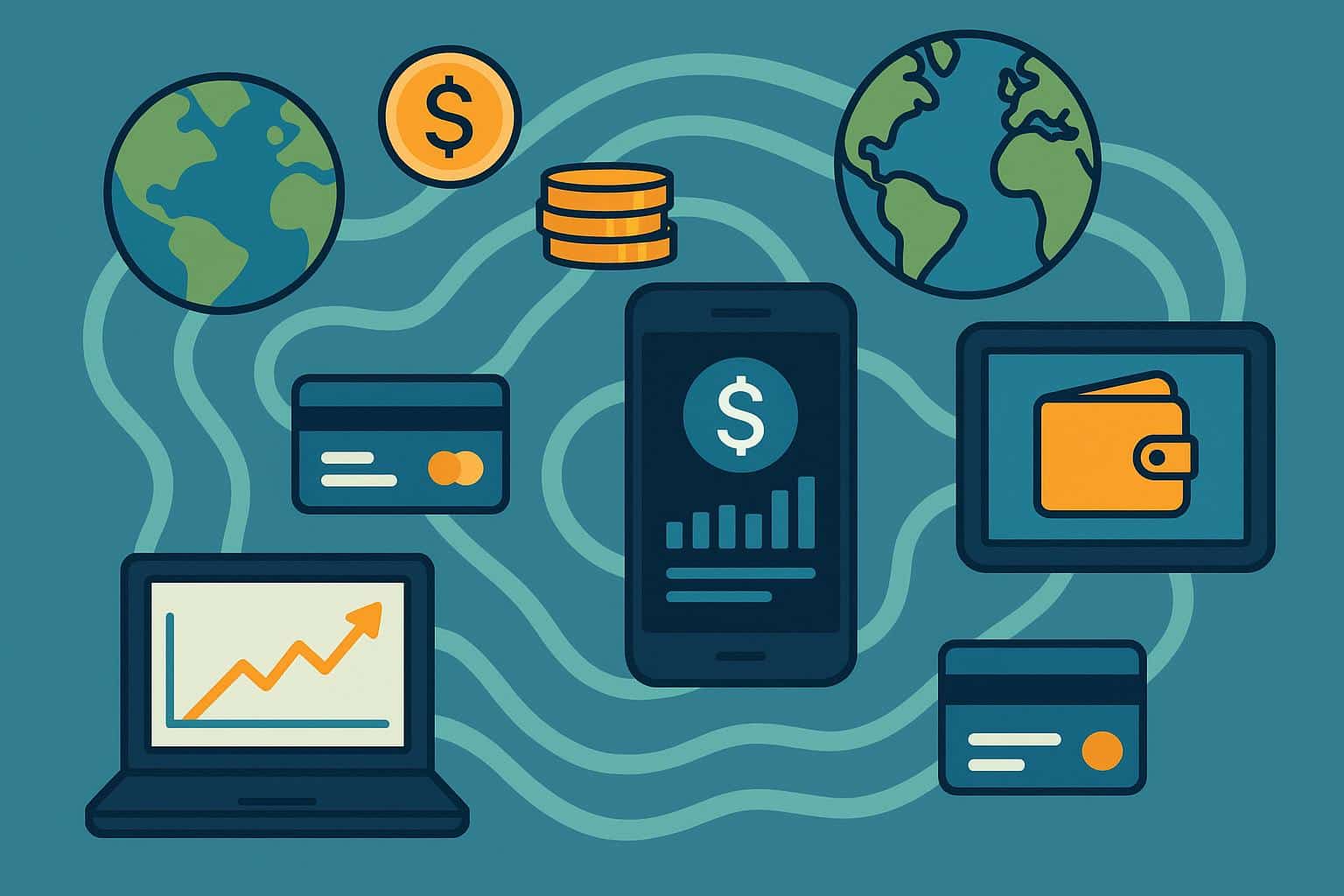
The way we interact with our own capital has undergone a quiet but total transformation. A decade ago, the physical wallet was the center of our financial universe. It held the plastic, the paper, and the receipts that defined our daily movement through the world. Today, that center shifted into the palm of our hand. Honestly, it is a bit wild when you think about it. We are living in an era of fluid finance, where the barriers between institutions have thinned, and the speed of transaction has become the baseline expectation.
But as the architecture of our money changes, so must our approach to managing it.
For many of us, this shift feels like freedom. We can split a dinner bill with a swipe, pay a remote contractor in minutes, and manage savings across multiple platforms without ever setting foot in a lobby. Yet, this fluidity brings its own set of challenges. When money becomes data, the friction that once protected us from impulsive or insecure decisions disappears. I have felt that myself, that weird disconnect when a big purchase feels as casual as a double-tap on a photo.
So, how do we keep our bearings when the boundaries are constantly shifting?
Contents
The Rise of the Multi-Platform Ecosystem
Gone are the days when a person had a single primary relationship with a single local bank branch. Modern financial life is fragmented. You might have a traditional checking account for your mortgage, a high-yield savings account at a digital-only institution, an investment app for your retirement, and three different payment apps for casual transactions. It is a lot to juggle.
This fragmentation is a double-edged sword. On one hand, it allows us to optimize every dollar by finding the best rates and the lowest fees. On the other hand, it creates a management burden. Keeping track of the flow between these different buckets requires more than a glance at a statement. It requires a strategy for movement.
And who has not felt overwhelmed by a dozen different login screens? Maybe it is just the price of modern life.
Mastering the Flow of Capital
The most common point of friction in this multi-platform world is the transition. How do we get our resources from where they are to where they need to be without losing time or paying unnecessary tolls?
When you are exploring the technical aspects of how to transfer money between banks, the focus is often on the mechanics. But the broader perspective is about intent. Efficient movement is about ensuring that your capital is always working for you. Whether you are moving funds to cover a looming bill or shifting a windfall into a high-interest environment, the “how” matters just as much as the “when.” You know, it is about being the driver, not just a passenger.
Security during these transitions is paramount. The digital bridges we build between our accounts are only as strong as the protocols we use to cross them. Using established, secure pathways ensures the integrity of our data throughout the process. And that is the point.
Security is not a wall. It is a practice.
It is about the bigger picture.
The Psychology of Invisible Money
There is a psychological shift that happens when we no longer handle physical currency. Studies have shown that we tend to spend more and track less when transactions are digital.
The “pain of paying” is dulled by the slick interface. This makes intentionality more important than ever. I have definitely had those moments where I look at my balance and wonder where that twenty dollars went.
But are we really in control if we cannot feel the money leaving our hands?
We need to reintroduce a healthy level of friction into our digital lives. This does not mean making things difficult, but it does mean being deliberate. Setting up automated transfers is a great way to ensure savings goals are met, but it can also lead to a “set it and forget it” mentality that leaves us out of touch with our actual cash flow. Periodically auditing these automated paths is essential for staying grounded.
Building a Resilient Digital Perimeter
As we navigate this borderless finance world, security should not be an afterthought. It should be the foundation. The convenience of modern fintech is a target for those looking to exploit the system.
- Multi-Factor Implementation. This is the non-negotiable standard. Whether it is an app-based authenticator or a physical key, adding that second layer of verification is the single most effective way to protect your accounts.
- Email Hygiene. Using a dedicated, high-security email address for financial accounts can prevent a compromise of your social media or retail accounts from leading directly to your bank.
- App Consolidation. While having many accounts is common, having too many apps on your phone can create unnecessary vulnerabilities. If you do not use a service regularly, it is better to manage it via a secure browser. We all have that one app we downloaded three years ago and never deleted.
- Transparency and Alerts. Every modern institution offers real-time notifications. Turn them on. It is like having a silent sentry in your pocket.
So, what is stopping us from taking these basic steps today?
The Future of Financial Sovereignty
We are moving toward a future where our financial identities are even more integrated with our digital lives. Concepts like decentralized finance and programmable money are no longer just for early adopters. They are beginning to influence how traditional institutions think about service and speed.
However, as the technology evolves, the core principles of sound money management remain the same. It is about awareness, security, and the ability to move with confidence. We are the architects of our own financial ecosystems. It is about peace of mind at the end of the day.
Ultimately, the goal is sovereignty. It is the ability to know exactly where your resources are, how they are protected, and how they can be moved at a moment’s notice.
In a world that is moving faster every day, that kind of control is the ultimate luxury.