
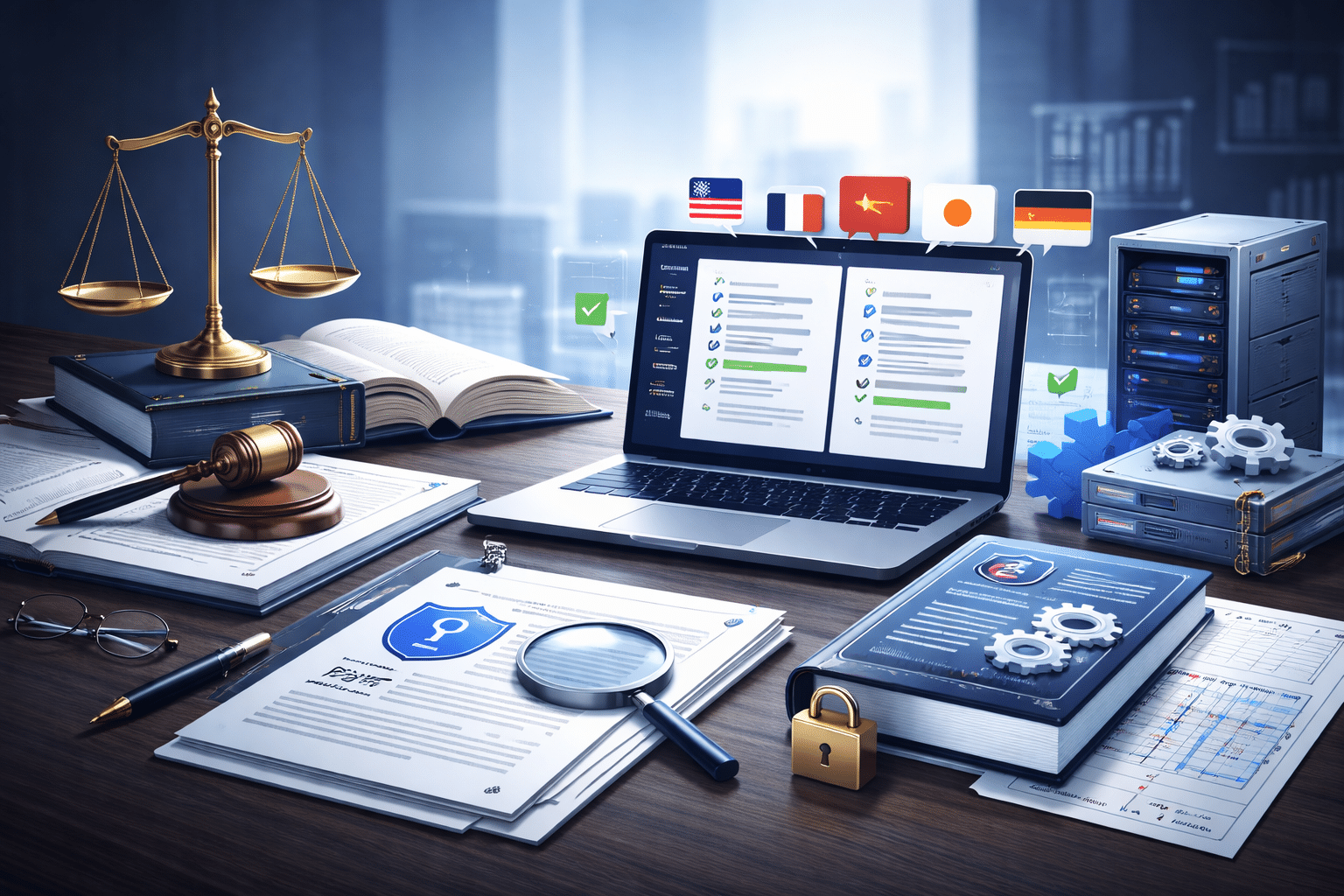
In the globalized economy, language barriers are often viewed as mere inconveniences – easily overcome by free online tools or a rudimentary understanding of a foreign tongue. However, there exists a class of documentation where guesswork and automated solutions are not just inadequate, but potentially catastrophic. Welcome to the high-stakes world of legal and technical translation.
Unlike marketing copy or internal communications, where a degree of creative freedom is permissible, legal and technical documents demand a standard of precision that borders on the obsessive. Here, a misplaced comma can invalidate a million-dollar contract, and a mistranslated safety instruction can lead to loss of life. This article delves into why accuracy in these fields is non-negotiable, exploring the specific skills required by translators, the grave risks associated with getting it wrong, and the rigorous processes that ensure perfection.
Contents
- The Nature of High-Stakes Content
- The Specific Skills Required
- The Grave Risks of Inaccuracy
- The Inadequacy of Machine Translation
- Quality Assurance: The Safety Net
- Conclusion
- FAQ: Legal and Technical Translation
- What is the difference between a certified translator and a sworn translator?
- Can I use Google Translate for my patent application just to save money?
- How do I choose a translator for a highly specialized technical manual?
- Why is translation for user manuals so important? It’s just instructions.
- My contracts are standard templates. Can’t a bilingual employee translate them?
- What is ISO 17100 certification and why does it matter?
- How long does a legal or technical translation take?
The Nature of High-Stakes Content
To understand the gravity of this specialization, one must first look at the types of documents involved. This is not the domain of generalist translators. It is the domain of experts who deal with content that carries legal, financial, or physical consequences.
Contracts and Agreements
From employment NDAs to international trade deals, contracts are the bedrock of business relationships. They are legally binding instruments where every “whereas” and “heretofore” carries weight. Translating a contract isn’t just about converting words from Language A to Language B; it is about ensuring that the legal obligations, liabilities, and rights are mirrored exactly in the target language. This involves navigating different legal systems – common law versus civil law – and finding functional equivalents for concepts that may not exist in the target culture.
Patents and Intellectual Property (IP)
In the race to innovate, patents are the gold. A patent application is a highly technical description of an invention that must withstand legal scrutiny. A translation error in a patent claim can narrow the scope of protection, leaving a company vulnerable to competitors, or worse, rendering the patent invalid. Because patent law varies significantly between jurisdictions (such as the US “first to invent” vs. Europe’s “first to file”), the translator must possess a deep understanding of both the technical subject matter (chemistry, engineering, biotechnology) and the specific legal framework of the target country. Patent translation is often considered the pinnacle of the profession because it requires the perfect fusion of technical and legal expertise.
User Manuals and Technical Specifications
While often overlooked, user manuals are perhaps the most critical documents in terms of public safety. They contain instructions for assembly, operation, maintenance, and warnings regarding potential hazards. A poorly translated pharmaceutical leaflet or an instruction manual for heavy machinery can result in improper use, leading to injury, product liability lawsuits, and massive reputational damage. In regulated industries like medical devices and aviation, the translation must also comply with strict formatting and terminology standards set by regulatory bodies such as the FDA or EASA.
Financial and Regulatory Documentation
Beyond the core trio of contracts, patents, and manuals, this category also includes financial prospectuses, audit reports, and regulatory filings. These documents are subject to strict compliance standards (like Sarbanes-Oxley or Basel III) and must be translated with absolute fidelity to ensure investors and regulators receive accurate information. A misstatement in a financial translation can lead to stock price fluctuations or allegations of fraud.
The Specific Skills Required
Given the nature of the content, what makes a legal or technical translator different from a standard translator? It is a unique triad of linguistic mastery, subject-matter expertise, and terminological rigor.
Subject-Matter Expertise (SME)
You cannot translate what you do not understand. A technical translator working on an aerospace manual must understand aerodynamics. A legal translator working on a merger agreement must understand corporate finance. This usually requires the translator to have a degree or significant professional experience in the field. They are not just language experts; they are domain experts who happen to work in multiple languages. Many successful translators in these fields are former engineers, lawyers, or scientists who transitioned to linguistics, bringing their deep domain knowledge with them.
Terminological Consistency
In technical writing, synonyms are the enemy. If a standard operating procedure refers to a “reactor vessel,” it cannot suddenly be called a “pressure tank” two paragraphs later, even if they are similar. Legal texts are equally rigid; specific terms of art have defined meanings. Professional translators utilize Computer-Assisted Translation (CAT) tools with TermBases (glossaries) to ensure that the same term is used identically throughout the document, maintaining coherence and legal certainty. This consistency also extends to formatting elements like numbers, dates, and measurements, which must be localized without error.
Cultural and Legal System Adaptation
This goes beyond direct translation. A legal translator often has to perform a “comparative law” function. The concept of a “French société anonyme” might roughly equate to a “US Corporation,” but they are not identical. The translator must decide whether to leave the term in the original language, provide a functional equivalent, or add a translator’s note explaining the nuance. Similarly, technical documents must adapt to local measurement systems (metric vs. imperial), date formats, and safety standards. This requires a deep bicultural understanding that machines simply cannot replicate.
Research Proficiency
Even the most experienced expert encounters unfamiliar concepts. The ability to research terminology, verify definitions in parallel texts, and consult with peers is vital. This is not a skill that AI or machine translation currently possesses. It requires critical thinking to discern if a term found online is actually the correct industry standard or just casual slang. Professional translators maintain personal libraries of glossaries, dictionaries, and reference materials, and they know how to leverage online databases of patents and legal precedents to verify their choices.
Ethical Rigor and Confidentiality
Legal and technical translators are often entrusted with highly sensitive information – trade secrets, unreleased product specifications, or confidential merger terms. Adhering to a strict code of ethics and maintaining absolute confidentiality is a non-negotiable skill. Professional associations require their members to uphold these standards, and reputable translation agencies sign Non-Disclosure Agreements (NDAs) with their clients.
While the broader scope of business translation includes creative work, this specific category requires absolute precision and specialized knowledge, as highlighted in our guide.
The Grave Risks of Inaccuracy
When we say accuracy is non-negotiable, we mean it literally. The margin for error is zero because the consequences are measured in currency, legal standing, and human safety.
Financial and Legal Fallout
The business world runs on paper. A mistranslated clause in a joint venture agreement could see one party assuming liabilities they never agreed to. In international arbitration, the wording of a single sentence can determine liability for millions of dollars in damages. Furthermore, data privacy laws like the GDPR require specific wording in consent forms and privacy policies. Translating these incorrectly can result in fines that reach into the hundreds of millions of euros.
Consider a real-world example: In the construction industry, a mistranslation in a tender document regarding the type of materials required could lead a contractor to bid based on incorrect specifications. If they win the bid, they may find themselves legally obligated to supply materials that are twice as expensive as they budgeted for, resulting in massive losses or breach of contract.
Product Recalls and Liability
Imagine a scenario where a medical device manual instructs a surgeon to “secure the clamp tightly” to close a wound, but the translation reads “secure the clamp gently.” The result could be fatal. Such errors lead to product recalls, which are astronomically expensive, and open the door to class-action lawsuits. The automotive industry, for instance, has seen numerous recalls linked to mistranslated service manuals that led mechanics to perform incorrect repairs. In the pharmaceutical industry, incorrect dosage instructions in a translated leaflet can lead to widespread health crises and the immediate withdrawal of a drug from an entire market.
Brand Reputation and Market Access
In the court of public opinion, intent matters less than impact. If a company launches a product in a new market with a manual full of errors or a contract that appears “sloppy,” it signals a lack of professionalism. Consumers and business partners will hesitate to trust a brand that cannot get the details right. Moreover, regulatory bodies may deny certification or market access if the submitted technical documentation does not meet the strict linguistic and formatting standards of that country. This can mean the difference between a successful global launch and a failed market entry costing millions in lost opportunity.
Loss of Intellectual Property Rights
Perhaps the most devastating risk in patent translation is the complete loss of protection. If a translator misinterprets a claim, the patent office may grant a narrower scope than the inventor deserved, allowing competitors to design around the patent easily. In litigation, if the translated version of a patent is found to be inconsistent with the original filing, the patent may be deemed unenforceable. For companies whose valuation is tied directly to their IP portfolio, this can be a business-ending event.
The Inadequacy of Machine Translation
With the rise of AI tools like ChatGPT and Google Translate, many businesses are tempted to cut costs. While these tools are excellent for getting the “gist” of a text, they are fundamentally unsuited for legal and technical translation.
Machine translation lacks the ability to understand context. It translates words, not intent. It cannot discern whether “consideration” refers to “thoughtfulness” or the legal concept of “something of value exchanged in a contract.” It cannot perform the cultural adaptation required to navigate different legal systems. Furthermore, AI models are trained on vast datasets that include poor quality or informal content; they often reproduce these errors. Using an unedited machine translation for a compliance document is not a shortcut; it is a liability.
That said, professional translators do use technology. They use CAT tools that leverage Translation Memories (TMs) – databases of previously translated sentences. This ensures consistency and efficiency, but the final output is always controlled by a human expert who applies judgment and domain knowledge. The difference is that the professional uses the tool, while the amateur relies on the tool to replace them.
Quality Assurance: The Safety Net
Given the stakes, how is quality ensured? Professional translation for high-stakes content involves a multi-step process that goes far beyond a simple “translate and deliver” model.
1. Terminology Extraction: Before starting, the translator or project manager extracts key terms from the source text and researches them, building a project-specific glossary.
2. Translation by a Specialist: The first pass is done by a translator with proven expertise in the domain.
3. Editing (Revision): A second linguist, also a subject-matter expert, reviews the translation against the source. They check for accuracy, consistency, and any mistranslations. This step is critical and is a standard requirement for ISO 17100 certification (the international standard for translation services).
4. Proofreading: A final check is performed on the formatted document to catch any typos, formatting errors, or missing text.
5. Subject-Matter Expert Review (SME): For highly technical content, the client’s own engineer or legal counsel may review the translation to ensure the technical or legal concepts are correctly rendered.
6. In-Country Review: A native speaker based in the target country reviews the text to ensure it sounds natural and appropriate for the local audience.
Conclusion
Legal and technical translation is not a commodity; it is a specialized service that protects businesses and saves lives. It requires a unique professional who combines linguistic finesse with deep technical or legal knowledge. The risks of error are too great to treat it as an afterthought or a cost-center. In these fields, accuracy is not just a goal – it is the absolute minimum requirement. When the stakes are this high, there is no substitute for human expertise backed by rigorous processes. Investing in quality translation is not an expense; it is an insurance policy against catastrophic failure.
FAQ: Legal and Technical Translation
What is the difference between a certified translator and a sworn translator?
This distinction varies by country. In many European and South American countries, a sworn translator (or “official translator”) is appointed by the Ministry of Foreign Affairs or a court. Their signature and seal are recognized by state authorities, and their translations of official documents (birth certificates, court rulings, diplomas) are legally valid. A certified translator generally refers to a professional who has passed an exam or holds a certification from a professional association (like the ATA in the US), indicating a high standard of competence, but their work may not automatically be accepted by a government body without additional steps.
Can I use Google Translate for my patent application just to save money?
Absolutely not. Google Translate and similar AI tools are incapable of handling the nuance required for patent claims. A machine translation will almost certainly contain errors in terminology and syntax that could limit your patent’s scope or render it invalid during examination. Filing a patent is an expensive process; trying to cut corners on translation risks the entire investment.
How do I choose a translator for a highly specialized technical manual?
You should look for a translator with direct experience in that specific industry. If you have a manual for hydraulic presses, look for a translator who lists “mechanical engineering” or “industrial machinery” as a specialization, not just “general technical translation.” Ask for their CV and examples of previous work. It is often wise to hire translators who are members of professional bodies (like the ITI or CIOL in the UK, or ATA in the US) as they adhere to a code of ethics.
Why is translation for user manuals so important? It’s just instructions.
User manuals are legal documents in the context of product liability. They represent the manufacturer’s instructions and warnings. If a user is injured because a warning was poorly translated (or omitted due to space constraints in translation), the manufacturer can be held liable. Courts will examine the manual to see if the risk was adequately communicated in the user’s language. Good translation is a key part of product safety and risk management.
My contracts are standard templates. Can’t a bilingual employee translate them?
This is a common but dangerous practice. While an employee may be fluent, they are rarely trained in legal terminology or contract law. They may not understand the legal implications of certain phrases in either the source or target language. Using an untrained internal resource for legal translation exposes your company to significant risk of misinterpretation and litigation. Always use a professional legal translator for binding documents.
What is ISO 17100 certification and why does it matter?
ISO 17100 is the international standard for translation service providers. It specifies the core processes, resources, and requirements for a quality translation. A company certified under ISO 17100 guarantees that they use qualified translators (with recognized qualifications and experience), that they have a defined project management process, and that every translation is reviewed by a second qualified linguist. Choosing an ISO-certified provider offers an extra layer of assurance that quality control is taken seriously.
How long does a legal or technical translation take?
Unlike general content, these translations cannot be rushed without increasing risk. The time required depends on the complexity, length, and the research needed. A standard rate might be 2,000-2,500 words per day for translation, plus additional time for editing and proofreading. Rushed “express” services are generally discouraged for high-stakes content as they cut into the quality assurance time.