
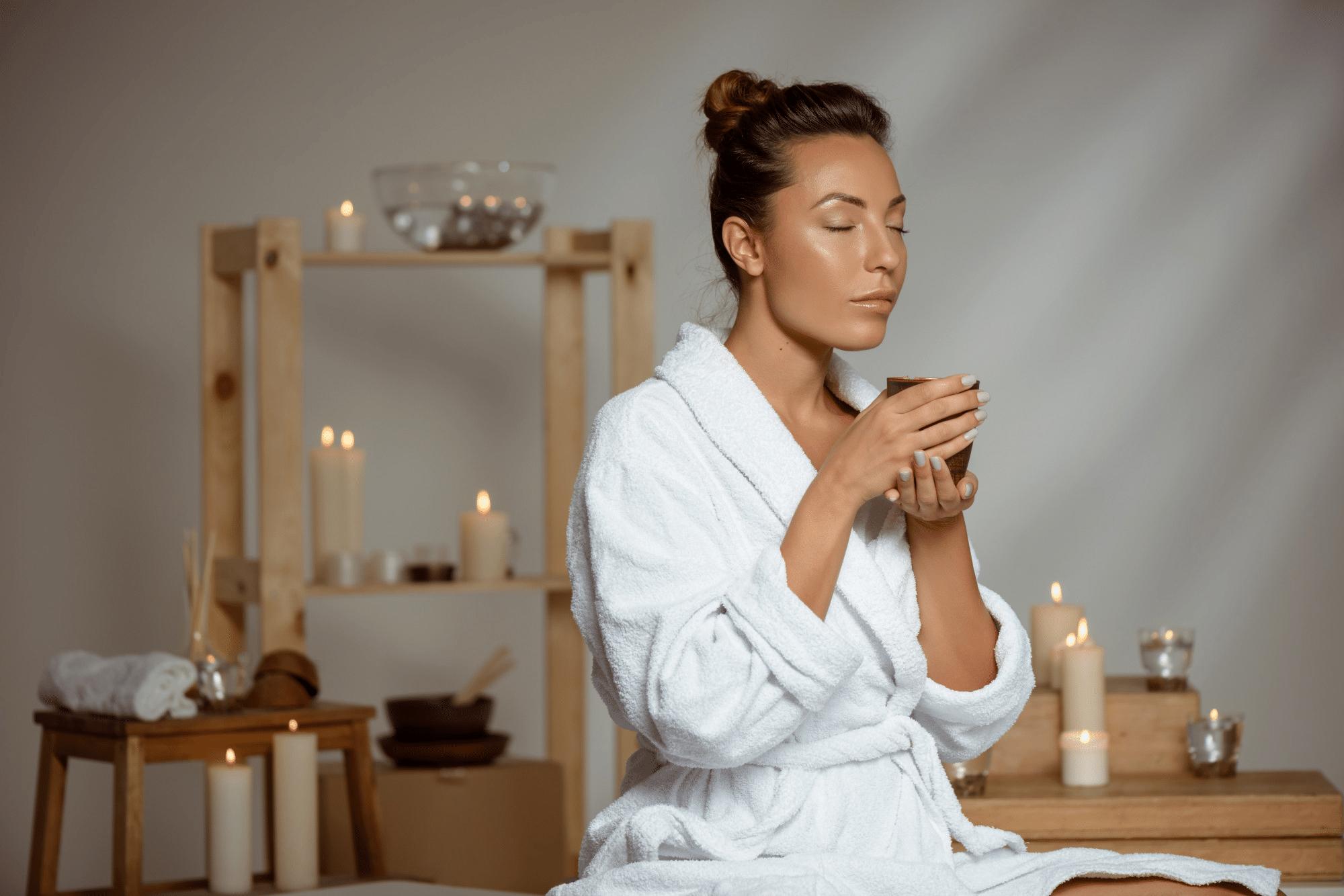
You know that feeling of being overfull. It is not about food. It is a feeling of too much input, too much talk, and too much to carry. Your mind feels cluttered. Even your body might feel a little heavy and achy without a clear reason. A regular day off often is not enough to fix it. You might scroll through your phone or watch a show, but the underlying static remains. What you are actually missing is a real break for your senses. A chance to feel something different than the usual routine of screens, chairs, and background noise. This is where a visit to a spa makes its real value known. It is not a lavish treat for a birthday. It is a practical answer to a very modern problem: how do you find quiet when the world is so loud?
For many people, the biggest hurdle is not the cost but the first step. It feels like a production—booking weeks ahead, traveling across town, and planning a whole day around it. It does not need to be. The most effective form of self-care is often the one you can actually do. The trick is to remove the friction. Instead of imagining a distant, perfect retreat, consider what is close and available right now. A simple search for the nearest spa to me can shortcut the planning paralysis. It turns an abstract idea into a concrete option you could visit tomorrow. Proximity makes care convenient, and convenience makes it real.
Once you decide to go, you walk into a space designed on a different set of rules. The air is still. The light is dim and warm, not bright and glaring. The sounds are gentle, perhaps just the soft trickle of water or quiet music. This environment is not an accident. It is a carefully built sensory refuge. It tells your nervous system, before any treatment even begins, that it is okay to switch off the alert mode. Your shoulders might drop an inch just walking in. This is the unadvertised first part of the service: a room that asks nothing of you.
Choosing What You Actually Need
The list of treatments can look long. Do not see it as a test. See it as a set of tools for different kinds of tired. The best choice comes from asking one simple question: where do I feel the strain the most?
If the strain is in your muscles, if you have specific knots in your back or a stiff neck from looking at screens, your tool is a focused massage. A therapist can work on those precise areas with firm, deliberate pressure. This is a physical solution for a physical problem. You are addressing the ache directly.
If the strain is in your mood, if you feel anxious or scattered, your tool might be an experience that steers your mind away from its loops. A treatment that uses warm stones, for example, gives your brain a new, pleasant sensation to focus on—the smooth, heavy warmth placed along your spine. Your thoughts tend to follow that sensation, letting go of their usual patterns. It is a gentle way to guide your mind into stillness.
If the strain shows on your skin, if it looks dull or feels sensitive, your tool is a facial. But this is not about applying expensive cream. A good facialist will look at your skin and use techniques to support it. They might use steam to open pores, a gentle massage to encourage circulation, or a calming mask to reduce redness. The goal is to help your skin function better, not just to make it look temporarily different.
The Unwritten Rules of Doing Nothing Well
To get the full value of your time there, a few small things make a big difference. They are less about etiquette and more about strategy.
- Show up early
Ten or fifteen minutes is enough. This buffer time allows you to shift gears. Use it to sit in the quiet lounge, sip the tea they offer, and let the pace of your thoughts slow down to match the room. Walking straight from a hectic street into a massage means you will spend half the treatment just mentally arriving.
- Use your voice
Your therapist is a skilled professional, but they are not a mind reader. In the minute before you begin, tell them the one or two things that matter. You could say, “My lower back is really tight,” or “Please use light pressure on my shoulders,” or “I would like you to avoid my left knee.” This simple guidance ensures the time is spent on what you actually need.
- Let the quiet happen
When you are on the table, your mind will wander. It will drift back to your inbox or your grocery list. This is normal. Do not get frustrated. Just notice the thought, and then gently guide your attention back to the physical feeling in the room—the scent of the oil, the sound of the music, and the feeling of your breath moving in and out. Each time you bring your focus back, you are practicing a form of quiet that is more valuable than any product.
- Do not break the spell too quickly
When your treatment ends, the instinct is to jump up, get dressed, and dash back into the day. Try to resist it. If the spa has a quiet room, sit for just five more minutes. Feel how your body feels different. Notice the quality of the calm in your mind. By acknowledging this state, you help it last longer. You are creating a memory of what feeling relaxed actually feels like, which makes it easier to find traces of it later in your week.
Conclusion
In the end, a spa is not really a place you go for a massage or a facial. Those are just the methods. You are going for the result: a specific, reliable feeling of renewal. It is the feeling of having cleared away some of the mental and physical clutter that daily life piles on. It is a reset for your senses. In a world that is constantly asking for your attention, it is a room that does not ask for anything at all. It just gives you back a little bit of your own quiet. And that is a resource worth investing in.