
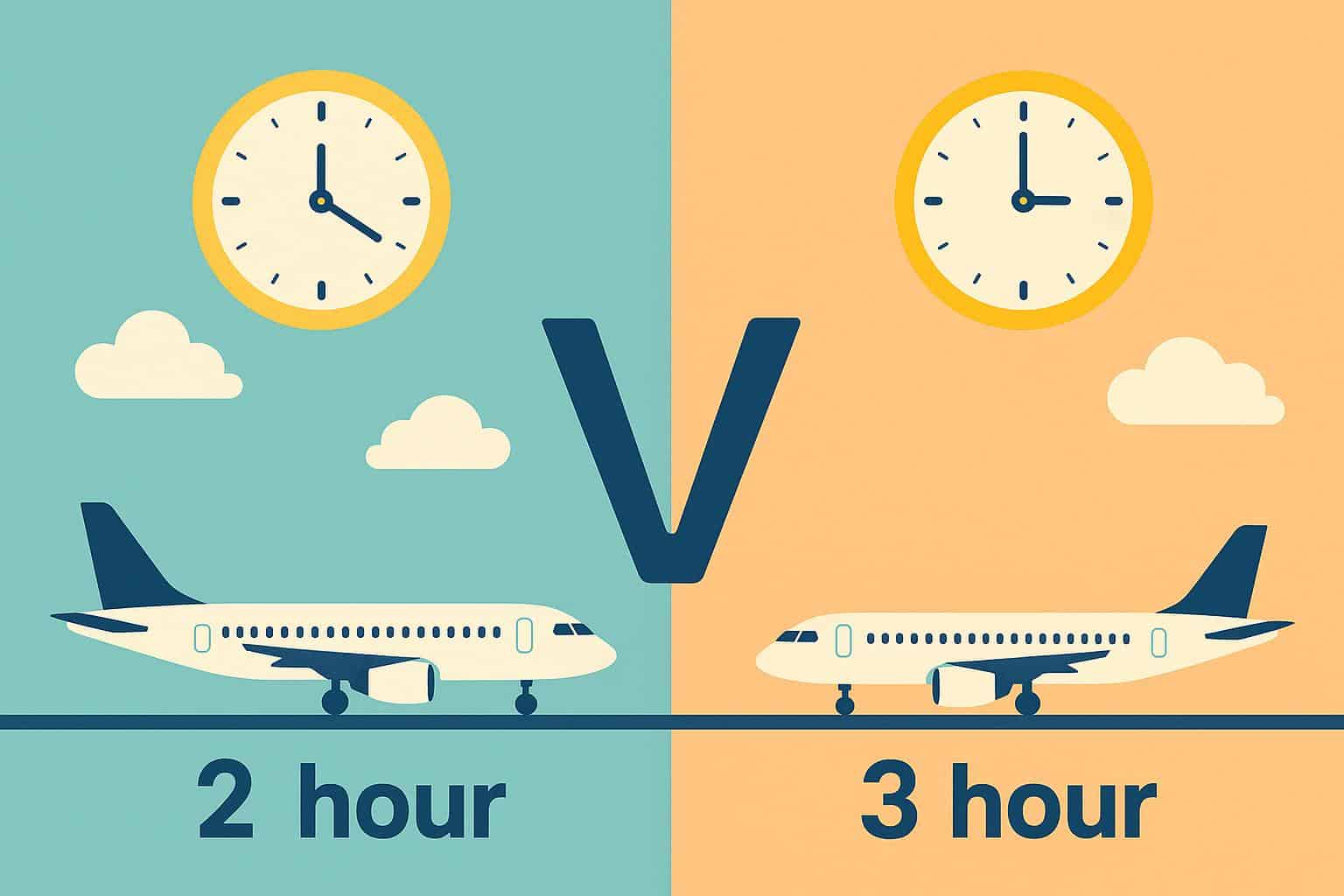
When dealing with air travel disruptions, understanding your rights around delayed flight compensation can make a significant difference. Many passengers assume that any delay entitles them to compensation, but regulations clearly distinguish between shorter and longer delays. The difference between a 2-hour and a 3-hour delay is especially important under European and UK passenger rights laws.
Contents
Why 3 Hours Is the Key Threshold
Air passenger rights regulations, such as EU261 and UK261, set a clear rule. Compensation is generally only available when a flight arrives at its final destination with a delay of 3 hours or more. A delay of 2 hours, while inconvenient, does not usually qualify for financial compensation.
This threshold exists because lawmakers consider shorter delays as part of normal airline operations. Once the delay crosses 3 hours, it is treated as a significant disruption that affects passengers more seriously.
What You Get at 2 Hours vs 3 Hours
Even though a 2-hour delay does not qualify for compensation, airlines still have responsibilities toward passengers. These rights focus more on care and assistance rather than financial payouts.
At 2 hours delay:
- Free meals or refreshments, depending on waiting time
- Access to communication, such as phone calls or emails
- Basic assistance at the airport
At 3 hours or more delay:
- All of the above assistance
- Eligibility for financial compensation depends on distance
- Possible reimbursement if you choose not to travel
This shows that while both delays trigger support, only longer delays unlock monetary compensation.
Compensation Amounts Explained
If your delay reaches 3 hours or more, compensation depends on flight distance:
Up to 1,500 km: €250
Between 1,500 and 3,500 km: €400
Over 3,500 km: up to €600 depending on the route and final delay length
These amounts apply only when the airline is responsible for the delay. Situations like extreme weather or airport strikes may not qualify.
When Airlines Are Not Liable
Not every delay results in compensation, even if it exceeds 3 hours. Airlines are not required to pay if the disruption was caused by extraordinary circumstances.
Examples include:
- Severe weather conditions
- Political instability
- Air traffic control restrictions
- Security risks
Understanding this distinction helps manage expectations and avoid confusion when filing claims.
Why Skycop?
Claiming compensation directly from airlines can often be time-consuming and unclear. Many passengers face delayed responses, rejected claims, or complex procedures. This is where a service like Skycop becomes useful.
Instead of handling paperwork and negotiations yourself, Skycop simplifies the process by managing the claim on your behalf. It helps identify eligibility, prepares documentation, and follows up with airlines. This approach is often more efficient, especially for travelers unfamiliar with legal processes or those who prefer a hassle-free experience.
Conclusion
The difference between a 2-hour and a 3-hour flight delay is more than just time. It determines whether you receive basic assistance or qualify for financial compensation. While shorter delays still entitle you to care, only longer delays meet the legal threshold for payouts. Knowing these rules helps travelers make informed decisions and respond confidently when plans are disrupted.