
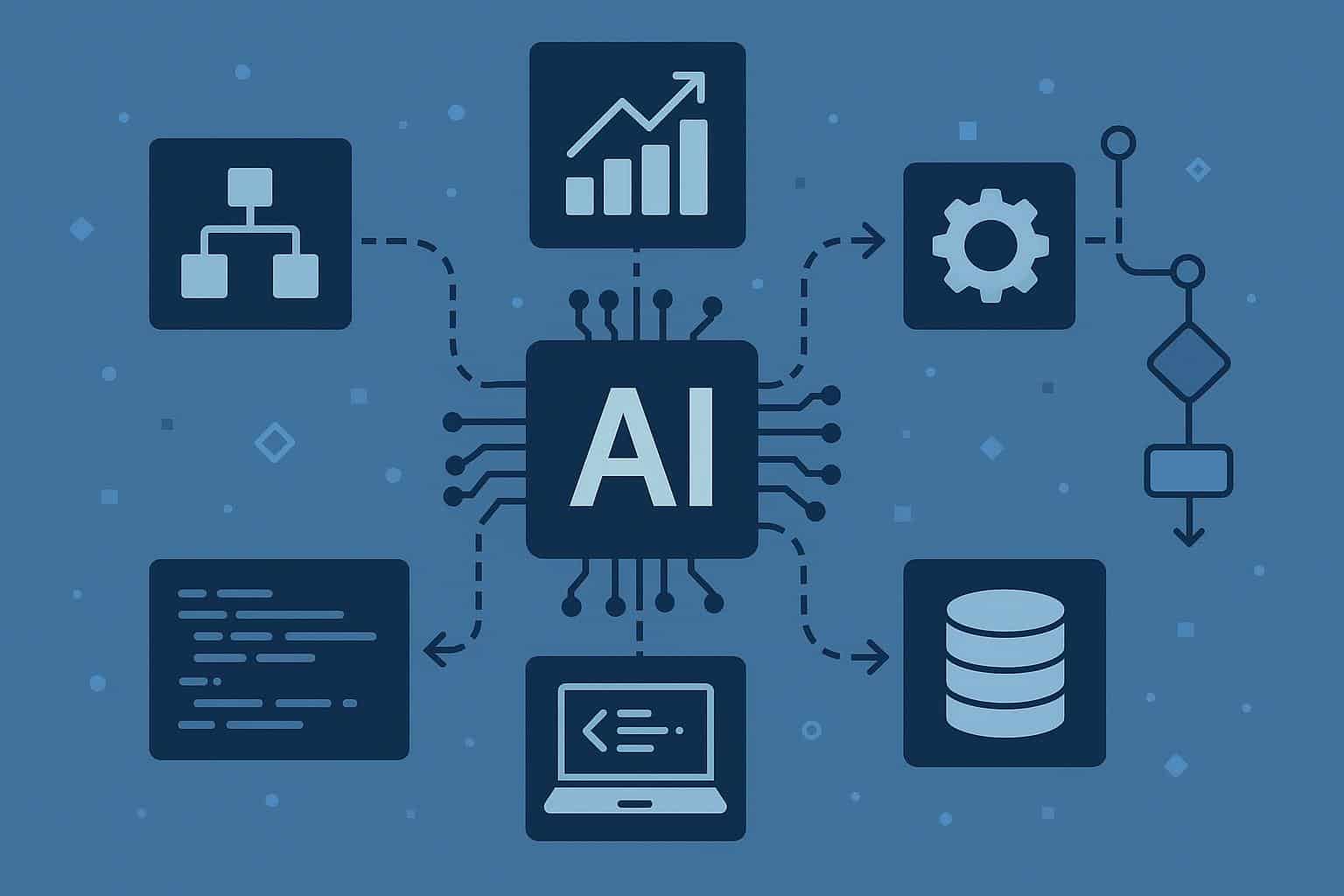
AI looks amazing in isolation. You see a demo, it writes something clever, maybe summarizes a document in seconds. Then you go back to work and nothing actually feels easier. Requests still bounce around. Approvals still stall. People still copy and paste information between tools like it’s 2012.
That disconnect is why the conversation is quietly shifting away from “cool AI features” toward platforms that sit underneath real work. The idea is simple: if AI can’t move a task forward inside an actual process, it’s just commentary.
This is where the idea of an AI Platform starts to matter. Instead of acting like a smart assistant on the side, it becomes part of the system that routes work, enforces rules, and keeps things moving without constant human nudging.
Contents
1. AI starts finishing tasks, not just suggesting next steps
For a long time, AI was good at advice. It could draft a response, summarize a case, or highlight a risk. Helpful, sure, but someone still had to take the baton and run.
Now imagine a service request that doesn’t stop at “here’s what this is about.” The system recognizes intent, assigns priority, routes it correctly, updates records, and flags edge cases automatically. People jump in when judgment is needed, not to shepherd every tiny step. That’s a very different experience of work.
2. Workflow intelligence reduces the chaos of too many tools
Most organizations aren’t short on software. They’re drowning in it. HR over here, finance over there, IT somewhere else, all technically connected but rarely aligned.
AI platforms don’t replace everything overnight. Instead, they coordinate across systems so workflows don’t break the moment they cross departmental lines. That’s why so many leaders now talk less about adding new tools and more about making existing ones behave.
You can see this reflected in broader research like the Deloitte state of AI reporting, which consistently shows that the biggest gains come from embedding AI into core operations, not experimenting at the edges.
3. Automation gets smarter without becoming reckless
Classic automation is brittle. Change one field, tweak one form, and suddenly the whole thing collapses.
AI adds interpretation. It can handle messy inputs, emails, chats, half-complete requests, then hand off to rules and approvals where precision matters. The result isn’t full autonomy, but something more realistic: systems that adapt instead of freezing.
Once AI starts acting, not just advising, questions pile up fast. Why did this get approved. Who had access to that data. Can we explain this decision if someone asks.
Regulators are paying attention, and so are customers. Guidance from the FTC increasingly stresses accountability and transparency, especially as AI touches hiring, pricing, and customer interactions. Platforms help by baking oversight into workflows instead of bolting it on later.
5. Real value shows up in boring places
The biggest wins rarely look dramatic. They show up as fewer emails, shorter queues, less rework. Minutes saved, multiplied across teams, every day.
You see the same pattern even outside big enterprises. Tools aimed at specific audiences, like AI for educators, gain traction when they quietly remove friction rather than promising sweeping transformation.
AI platforms aren’t about replacing people or making headlines. They’re about reducing the drag that makes modern work exhausting. When that happens, progress feels less like a breakthrough and more like relief.