
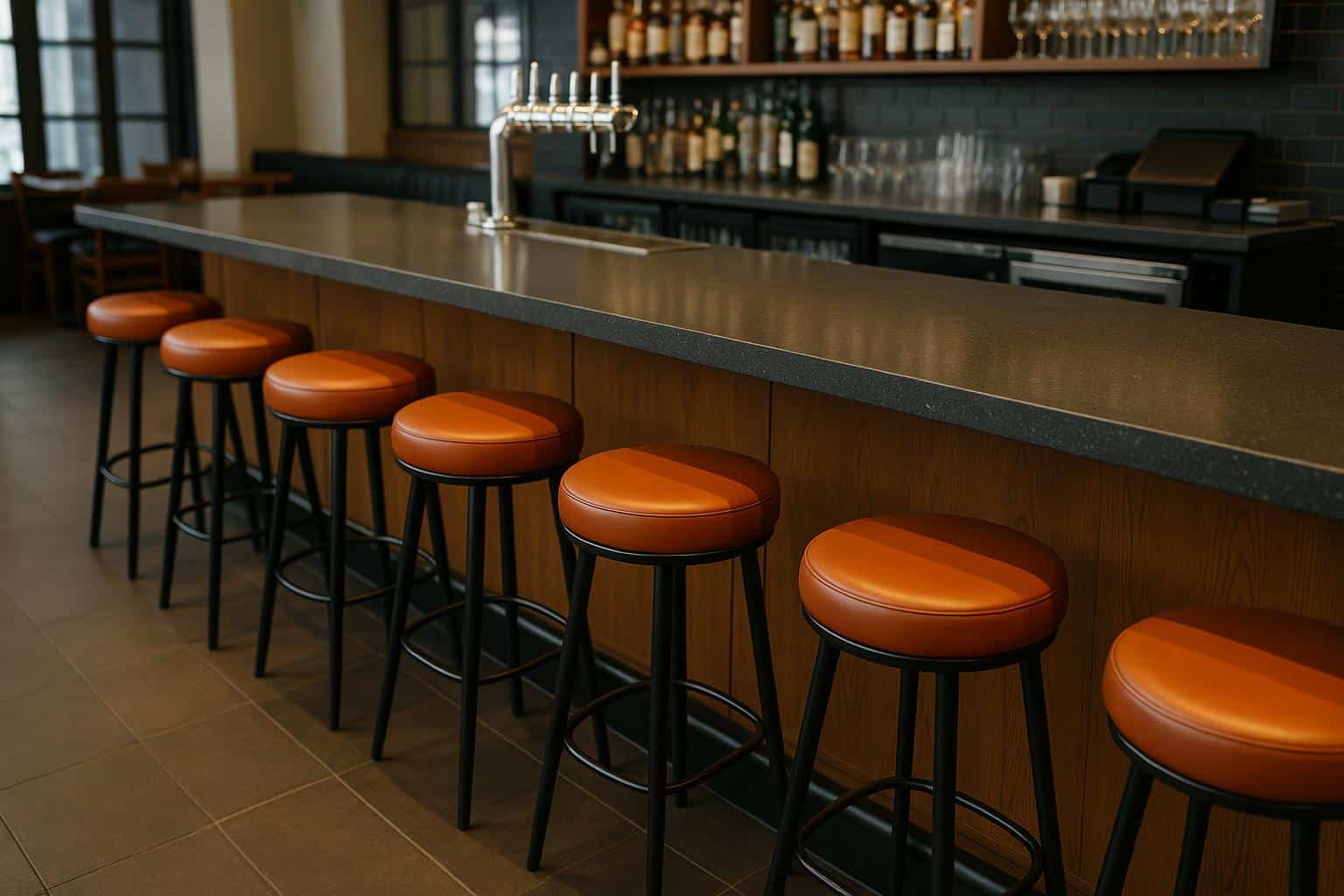
Ask most owners how they picked their bar seating and you’ll hear a version of the same story. Somebody found a stool they liked, checked the price, ordered a dozen, and moved on to the next line item. Six months later the same owner is calling suppliers about wobbly legs, split seats, and guests who won’t stay at the bar long enough to order a second round. Treating restaurant bar stools as an investment rather than a quick line item saves that call. The stool was never a small decision. It just looked like one.
Bar seating sits at the exact spot where hospitality meets margin. The bar is often the highest-revenue square footage in the building, and the stool is what keeps a guest parked there. When an owner treats bar seating as an afterthought instead of an investment, the cost shows up later in replacements, lost dwell time, and a bar that feels cheaper than the drinks it serves.
Contents
The Bar Is Where the Money Sits
Do the math on a standard service and the bar frequently overdelivers. In most concepts drink margins are better than food margins and a guest that camps at the rail for an hour will spend more than a person who grabs a table and leaves. That guest’s seat is doing quiet financial labor every single night.
The visit is cut short by an uneasy stool. A stool that tips or rocks makes a guest self-conscious, and a self-conscious guest doesn’t relax into a third drink. Bar seating is for sitting, not for decoration. It is a revenue instrument, and cheap instruments sound flat.
Height, Depth, and the Physics of Staying Put
Most bar seating problems trace back to two measurements owners skip. The first is height. A standard bar runs 42 inches, which pairs with a 30-inch stool seat. A counter at 36 inches wants a 24-inch to 26-inch seat. Mix those up and guests either dangle or crane, and neither one stays comfortable for long.
The second is the center of gravity. A stool with a narrow base and a tall seat tips easily, especially with footrests that invite guests to push back. Understanding the basics of a stool’s center of mass explains why a wide, well-weighted base outlasts a spindly one. Owners who check both numbers before ordering avoid the two most common complaints in one move.
Cheap Stools Do the Expensive Math for You
The sticker price is the trap. A residential-grade stool at half the cost of a commercial one looks like a smart buy until you count the replacement cycle. Home seating is rated for occasional use by one household. A bar puts hundreds of bodies on that same seat every week, plus spills, cleaning chemicals, and the constant torque of people swiveling and leaning.
That mismatch shows up fast. Consider what a commercial buyer is actually paying for beyond the frame:
- A weld and joinery rating built for daily commercial load, not weekend home use
- Upholstery or a seat surface that survives repeated cleaning without cracking
- A finish that resists corrosion in a humid, splash-heavy environment
- A footrest and base engineered for constant abuse
Skip those and the low price becomes a payment plan. You buy the stool twice, sometimes three times, inside the window a commercial-grade seat would have lasted once.
Comfort Decides How Long They Stay
Dwell time is the metric most owners never track and every bar lives on. A guest who’s comfortable orders more, tips better, and tells friends the place has a good vibe. A guest whose lower back is aching by drink two settles up early. The stool is the difference, and comfort here is measurable, not vague.
Seat depth, footrest placement, and back support all feed into it. A backless stool works for a quick-turn cocktail bar where standing room matters. A stool with a back and a slight seat contour works for a gastropub where people eat full meals at the rail. The right choice depends on how your guests actually use the bar, not on which photo looked best in the catalog.
Design Signals Price Before the Menu Does
Guests read a room in seconds, and the bar seating is front and center. Worn vinyl and scuffed chrome tell a guest to expect well drinks and low expectations. Clean lines, a considered finish, and stools that match the room’s story tell that same guest the cocktails are worth twelve dollars. The seating sets the price anchor before anyone reads a single item.
This is why the bar is the wrong place to save a few dollars per seat. The furniture is doing brand work whether the owner intends it or not, and a good part of the hospitality industry now treats bar seating as a design statement rather than a commodity. A stool that looks the part earns its cost back in perceived value alone.
Buying Once Instead of Twice
The owners that get it right treat bar seating like a piece of culinary equipment. They get the bar height right, assess the foundation for solidity, choose a seat surface that their personnel can actually clean and get a commercial quality that survives traffic. It costs more on Day One and less over five years, because five years is the only time frame that matters for business.
So before the next order comes in, run the stool through the questions the balance sheet cares about. Will it handle the traffic. Will it keep a guest comfy for a second round? Will it look right after 2 years of service? Answer those honestly and the stool ceases to be a line item and is what it always was, a small machine that helps the bar make money.